The National Bank of Tajikistan (NBT) has conducted a survey to analyze income sources of Tajik families and remittances sent by Tajiks living and working abroad. The NBT has surveyed more than 2,200 people.
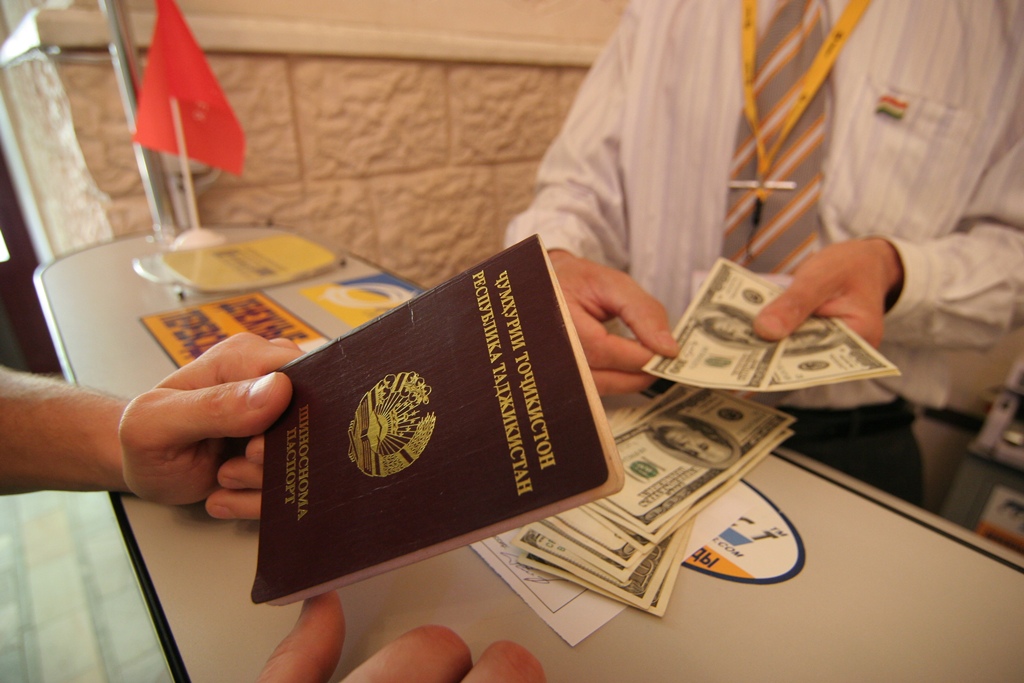
According to the survey findings, more than 85 percent of Tajik citizens send remittances to their families in Tajikistan though money transfer systems.
6.3 percent of those surveyed said they have sent remittances through their relatives, 4.4 percent — through mediators, 2.5 percent — through their friends, 1.2 percent — through non-bank financial institutions, and 0.5 percent of those surveyed said they have sent remittances to their families by others methods.
Meanwhile, 61.7 percent of those surveyed said that remittances sent to them are salaries of their relatives.
The remaining 38.3 percent said remittances sent to them are financial assistance of their relatives.
Remittances sent to Tajikistan are reportedly used by recipients mainly to pay for tuition and medical treatment and for purchasing medicines.
Little more than 11 percent of those surveyed said they use remittances to carry out ceremonies and events.
9.3 percent of those surveyed said they use remittances to purchase a dwelling, 7.1 percent said they used remittances to construct residential buildings, 4.7 percent – to purchase a car; 3.3 percent – to perform Hajj or to make journey, 2.1 percent – to do their own business, 1.3 percent – folk crafts, and 1.1 percent – to purchase jewelries.
Labor migrants are still a critical component in the economy of Tajikistan and remittances keep many struggling families at home above the poverty line.
Recall, a presentation for the processing center was given in Dushanbe on October 1. Speaking at the center-presentation ceremony, Jamoliddin Nouraliyev, the first deputy head of the National Bank of Tajikistan, said that the system of money transfer without opening a bank account has developed significantly in the country in recent years and its share and significance in financial intermediation have significantly increased.
The processing center is reportedly intended to insure against money transfer companies being unable to repay money to the banks in Tajikistan that hand out the cash to recipients. The regulator said its involvement as an intermediary will not imply any additional costs for customers.
“The National Bank of Tajikistan, in its role as regulator, will in future take upon itself all the costs involved in this project, and thereby also help avoid the risk of increased commissions for money transfers for citizens of this country,” Jamoliddin Nouraliyev said.
According to him, based on many years of experience and analysis of the latest developments related to insolvency of a number of foreign payment systems that have negatively impacted the country’s banking sector and as a result of population’s trust in the banking system, the NBT has identified the reasons hindering stability and smooth operation of the country’s banking system:
– lack of the single processing center on money transfer without opening a bank account, which promotes protection of interests and meets requirements of consumers of money transfer services;
– lack of the single exchange on money transfers that promote artificial manipulations in the money transfer market; lack of opportunity for citizens to receive money transfer in any lending agencies of the country;
– Tajikistan’s lending agencies working with various payment systems are forced to open correspondent accounts for work with each of payment systems that lead to additional financial expenses and risks;
– lending agencies pay remittances from their own resources that leads to the risk of non-payment of the paid remittances, which, in turn, can lead to destabilization of the country’s financial market.
Meanwhile, some experts consider that by establishing this center the Tajik authorities intend to monopolize the money transfer system and to keep the banking system solvent.