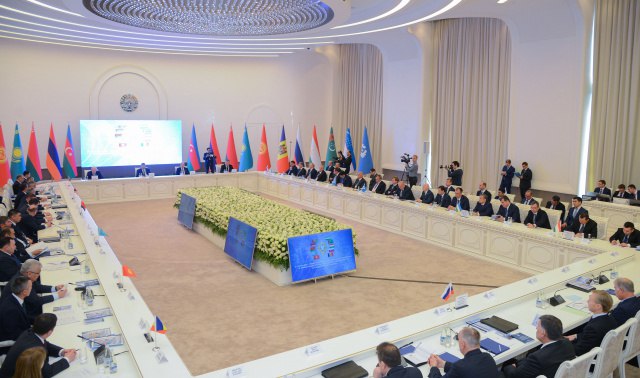
The 47th session of the CIS Council of Heads of Security Agencies and Special Services (Council), presided over by Director of Russia’s Federal Security Service (FSB), Alexander Bortnikov, took place in the Uzbek capital of Tashkent on November 7.
According to Uzbekistan’s UzA news agency, the session participants discussed issues related to threats to international security and joint measures to address them.
They, in particular, discussed issues of further expansion of collaboration in combating international terrorism, drug trafficking and transnational organized crime.
The session participants reportedly outlined joint measures to prevent interethnic and inter-religious conflicts within the CIS area and provide transportation and economic security.
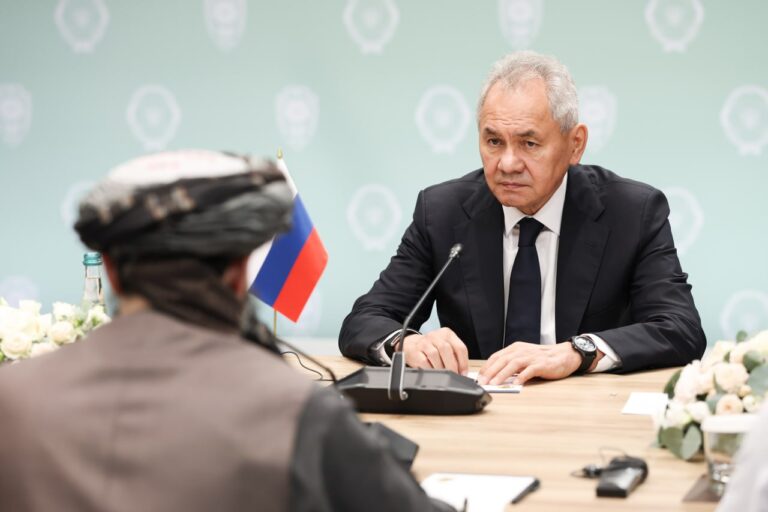
Chiefs of CIS nations’ security and special services also exchanged views on the current situation in Afghanistan in terms of providing regional security in Central Asia.
Council head, Alexander Bortnikov, noted that the Council has made significant contribution to providing regional security, combating terrorism, drug trafficking and transnational organized crime.
“Over the past period, 13 locations of criminal groups posing threat to international security have been revealed, 130 militants have been captured and a large amount of narcotic drugs has been confiscated due to cooperation between the security agencies,” Bortnikov was quoted as saying by UzA.
According to RIA Novosti, Bortnikov noted that militants of the Islamic State (IS) terror group are preparing expansion into CIS.
This expansion will be carried out by the IS militants from among nation of the Central Asian republics, Bortnikov said.
According to him, terrorists are trying to instill an extremist ideology in young people from CIS nations through sermons and lectures given in illegal religious institutions.
FSB director further added that such sermons and lectures are also spread through Internet and jihadists create closed network communities for training of lone terrorists.
Recall, Russian officials have said for several years that the Islamic State (IS) terror group presence in Afghanistan is growing and could threaten Central Asia. They have estimated there are thousands of IS militants in northern Afghanistan, warning of challenges and threats to security in the region.
The Tajik government has also repeatedly warned that national security is under intense threat from militant groups outside the country. Afghanistan has been cited as the most imminent source of danger.