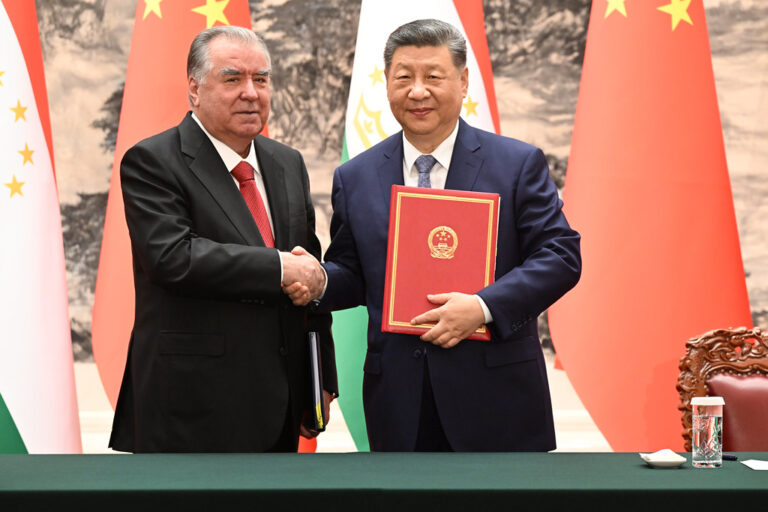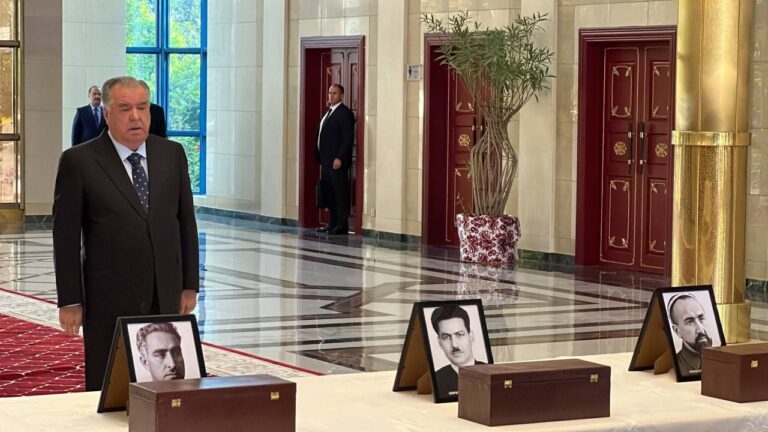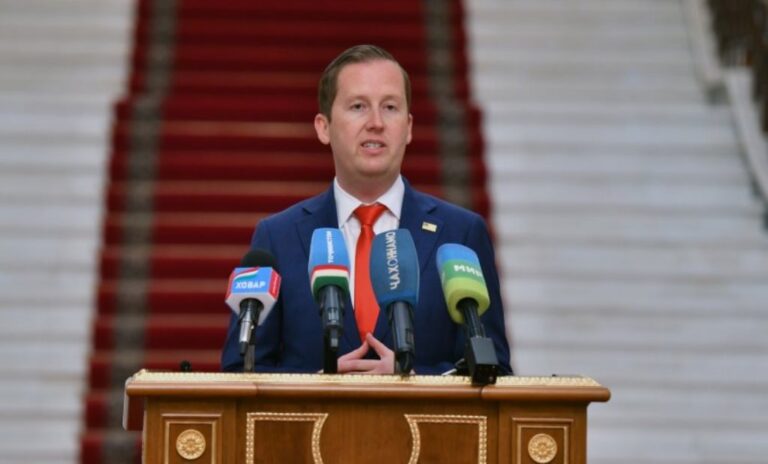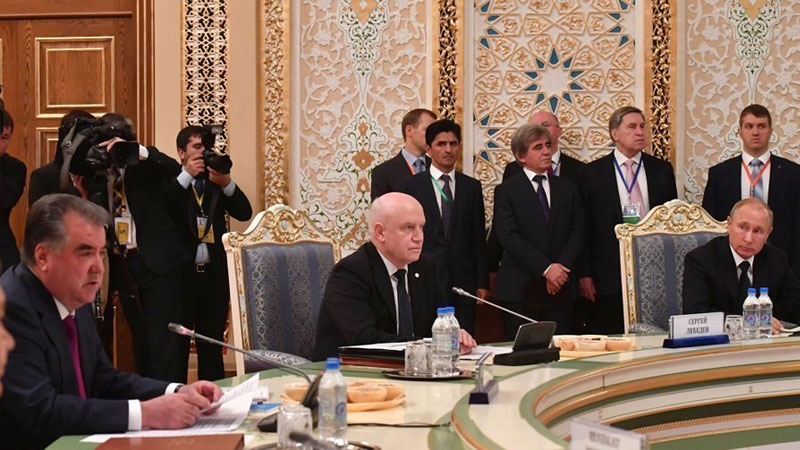
Tajik President Emomali Rahmon today is in St Petersburg to attend an informal meeting of heads of state of the Commonwealth of Independent States (CIS) that is being held in the northern capital of Russia today, according to the Tajik president’s official website.
The leaders of the CIS nations are expected to discuss the agenda of the union and exchange views on the state and prospects of further expansion of cooperation within the CSI area.
While in St Petersburg, Emomali Rahmon is also expected to hold bilateral meeting with a number of his CIS counterparts.
Speaking at the CIS summit in Ashgabat, Russian President Vladimir Putin noted on October 11, “We, with colleagues from the Eurasian Economic Union, agreed to hold a traditional informal meeting on December 20 in St. Petersburg and invite all CIS leaders to join us in a friendly, completely informal atmosphere on the New Year eve to talk on current issues, exchange views on what we could do in the year ahead, make sure we are on the same page on pressing international issues.”'
Established on December 8, 1991 after the dissolution of the Soviet Union, the Commonwealth of Independent States (CIS) is a regional organization. It now consists of Azerbaijan, Armenia, Belarus, Kazakhstan, Kyrgyzstan, Moldova, Russia, Tajikistan, Turkmenistan, Uzbekistan and Ukraine. Georgia pulled out of the organization in 2009.
Although Ukraine was one of the founding countries and ratified the Creation Agreement in December 1991, Ukraine chose not to ratify the CIS Charter as it disagrees with Russia being the only legal successor state to the Soviet Union. Thus it does not regard itself as a member of the CIS. In 1993, Ukraine became an "Associate Member" of CIS. On March 14, 2014, a bill was introduced to Ukraine's parliament to denounce their ratification of the 1991 Agreement Establishing the CIS, following the Russian military intervention in Ukraine and annexation of Crimea, but was never approved. Following the 2014 parliamentary election, a new bill to denounce the CIS agreement was introduced.
In September 2015, the Ukrainian Ministry of Foreign Affairs confirmed Ukraine will continue taking part in CIS “on a selective basis.” Since that month, Ukraine has had no representatives in the CIS Executive Committee building. In April 2018, the then-Ukrainian President Petro Poroshenko indicated that Ukraine would formally leave the CIS. On May 19, 2018, Poroshenko signed a decree formally ending Ukraine's participation in CIS statutory bodies.
Ukraine has also withdrawn from another two agreements on cooperation within the CIS. Kyiv terminated the agreement on mutual preservation of inter-state secrets in the area of legal protection of inventions and quitted the agreement on methodological comparison and creation of a common statistical base of the economic union within CIS.
Ukraine has voiced its intention of discontinuing its work with the CIS due to tensions with Russia. It has already ended a series of agreements with the regional organization, including on economic cooperation and on standardization of weapons and military equipment.