International group helps repatriate hundreds of Tajik nationals stranded In Kazakhstan

The International Organization for Migration (IOM), an intergovernmental organization that provides services and advice concerning migration to governments and migrants, has supported the voluntary return home of hundreds of Tajik migrants stranded at the Kazak-Uzbek border due to restrictions imposed in the wake of COVID-19. According to IOM, the group of 650 people are mainly […]

Asia-Plus

The International Organization for Migration (IOM), an intergovernmental organization that provides services and advice concerning migration to governments and migrants, has supported the voluntary return home of hundreds of Tajik migrants stranded at the Kazak-Uzbek border due to restrictions imposed in the wake of COVID-19.

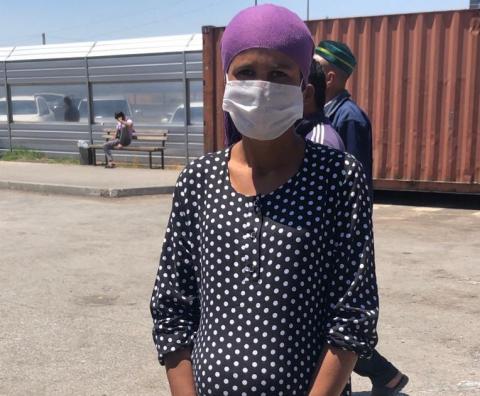
According to IOM, the group of 650 people are mainly migrant workers, and includes women, children and students.  Friday afternoon they were preparing to board buses funded by IOM to make the journey from the border crossing at Zhibek Zholi, through Uzbekistan, to Khujand, the capital of Tajik northern province of Sughd.

They are just some of the tens of thousands of migrant workers in Central Asia who have lost their jobs due to the pandemic.  Many have come from the Russian Federation, Kazakhstan and even further afield. They are typically working in low-paid jobs with little or no job security.

Over a quarter of the returning migrants are reportedly between 15 and 24 years of age including 100 Tajik students from Kazakh universities.  Fifteen percent of the group are women and girls, according to IOM. 

While most of the migrants have only been waiting a few days to get across the border, some have been there for weeks, with little or no shelter and sanitation.

The 180-kilometer journey has been coordinated with the governments of Kazakhstan, Uzbekistan, and Tajikistan.   IOM has provided food, water and hygiene items for the migrants over the past few days while the logistics and paperwork were being organized. 

The governments of the United States and Norway have provided funds, with UNICEF also contributing.

Join us on social media!

Article translations:

Related Article

Оби зулол
Оби зулол
Дидитал Бизнез Астана

Most Read

Recent Articles

Seven threats to water, land, and the future of Central Asia

From water scarcity and glacier melting to air pollution and food risks — Central Asia must seek ways to jointly address these issues.

Uzbekistan to raise electricity and gas rates

Electricity for the population in Uzbekistan will become more expensive than in Tajikistan, but relative to income, the burden on families in the neighboring republic is lower.

‘Asia-Plus is a positive image of Tajikistan and a tool for forming a full-fledged nation’ says Tajik scientist

A Tajik diplomat explained the significance of "Asia-Plus" for the government and why it should be bold.

The Taliban officially legalize child marriages: a bride’s silence is now considered a sign of consent

The new law allows marriages of underage boys and girls, and even not the closest relatives can negotiate the conclusion of such a marriage.

Tajikistan, Kazakhstan increase mutual road freight transport

The transport ministers of the two countries discussed the further development of cooperation.