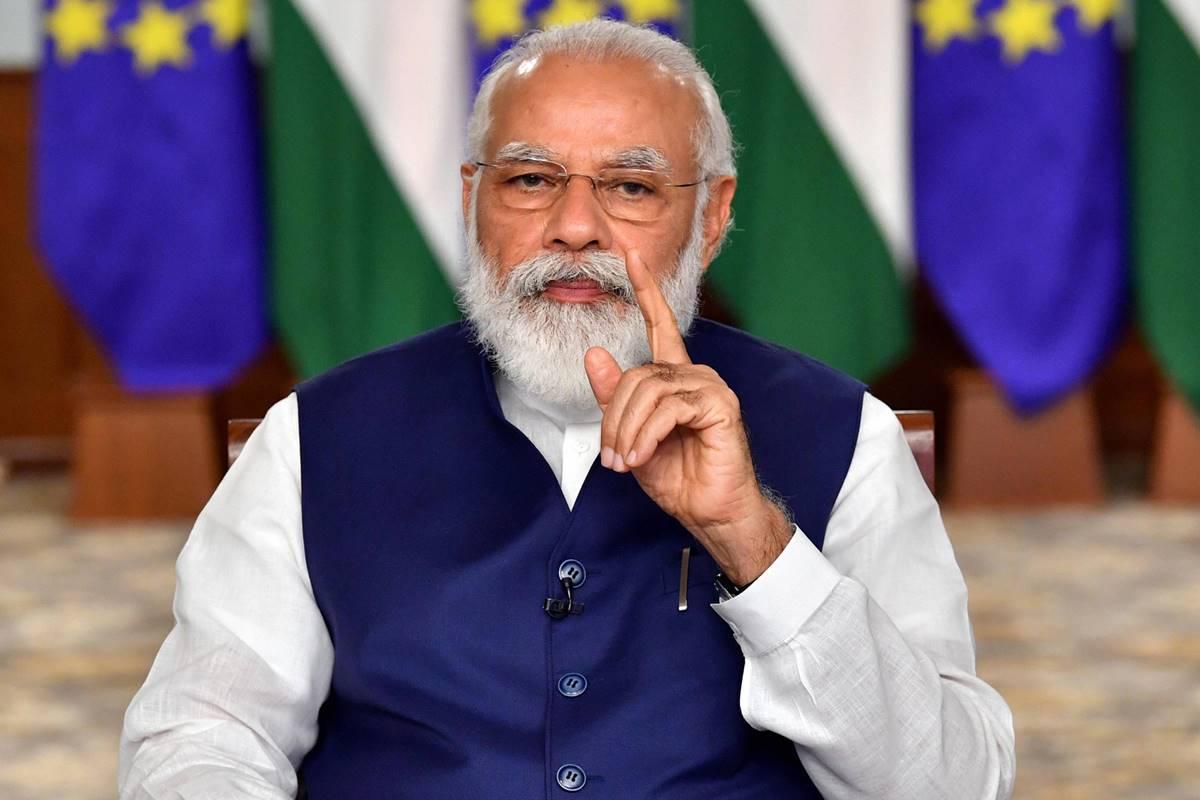
In an address delivered virtually at this year’s High-Level Segment of the United Nations Economic and Social Council (ECOSOC) session statement, Indian Prime Minister Shri Narendra Modi noted on July 17 that “While marching forward on the path to development, we are not forgetting our responsibility towards our planet.”
“Our grass-roots health system is helping India attain one of the best recovery rates in the world in the fight against COVID,” he noted.
The theme of the High-Level Segment of the ECOSOC this year is "Multilateralism after COVID19: What Kind of UN Do We Need at the 75th Anniversary?”
Coinciding with the 75th Anniversary of the founding of the UN, this theme also resonates with India’s priority for its forthcoming membership of the UN Security Council.
Indian Prime Minister reiterated India’s call for a ‘reformed multilateralism’ in a post-COVID-19 world, which reflects the realities of the contemporary world.
In his address, Shri Narendra Modi recalled India’s long association with the ECOSOC and the UN’s developmental work, including for the Sustainable Development Goals. He noted that India’s developmental motto of ‘SabkaSaath, SabkaVikaas, Sabka Vishwas’ resonates with the core SDG principle of leaving no one behind.
Prime Minister pointed out that India’s success in improving the socio-economic indicators of its vast population has a significant impact on global SDG targets. He spoke about India’s commitment to also support other developing countries in meeting their SDG targets.
He spoke about India’s ongoing development efforts, including for improving access to sanitation through the "Swacch Bharat Abhiyan”, empowering women, ensuring financial inclusion, and expanding availability of housing and healthcare through flagship schemes such as the "Housing for All” program and the "Ayushman Bharat” scheme.
Prime Minister also highlighted India’s focus on environmental sustainability and bio-diversity conservation, and recalled India’s leading role in the establishment of the International Solar Alliance and the Coalition for Disaster Resilient Infrastructure.
Speaking about India’s role in its region as a first responder, Prime Minister recalled the support provided by the Indian government and Indian pharma companies for ensuring medicine supplies to different countries, and for coordinating a joint response strategy among SAARC countries.
“Be it earthquakes, cyclones, Ebola crisis or any other natural or man-made crisis, India has responded with speed and solidarity. In our joint fight against COVID, we have extended medical and other assistance to over 150 countries. We also helped create a SAARC COVID emergency fund in our neighborhood,” he added.
This was the second time that Prime Minister addressed the ECOSOC. He had earlier delivered the keynote address at the 70th anniversary of the ECOSOC in January 2016.