Uzbek customs officers found more than 172 kilograms of narcotic drugs hidden in transit freight train running through Uzbekistan

Officers of the Sariasia customs checkpoint at the Uzbek-Tajik border in Uzbekistan’s Surkhandarya region have reportedly discovered nearly 172.5 kilograms of narcotic drugs hidden in a transit freight train running through Uzbekistan from the neighboring country (no country specified). The press center of Uzbekistan’s Customs Committee says a totaled included 11.987 kilograms of heroin, 33.240 […]

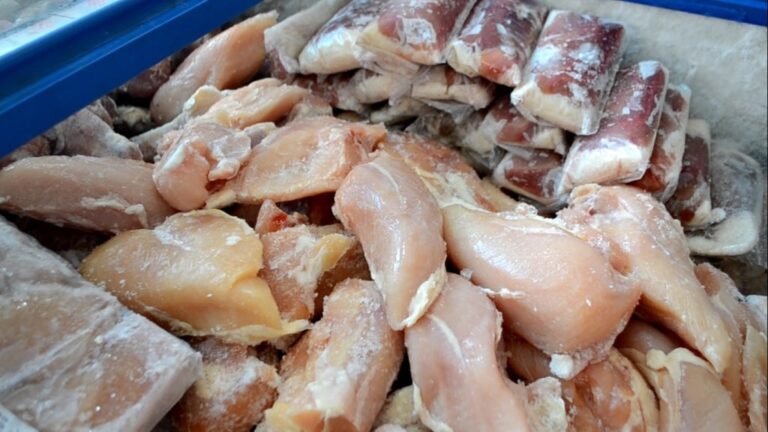
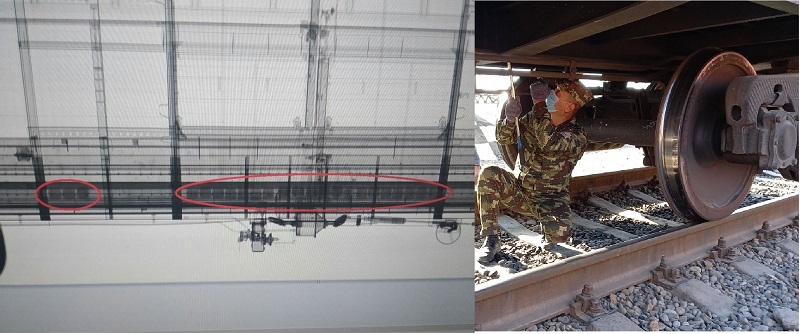
Officers of the Sariasia customs checkpoint at the Uzbek-Tajik border in Uzbekistan’s Surkhandarya region have reportedly discovered nearly 172.5 kilograms of narcotic drugs hidden in a transit freight train running through Uzbekistan from the neighboring country (no country specified).

The press center of Uzbekistan’s Customs Committee says a totaled included 11.987 kilograms of heroin, 33.240 kilograms of hashish and 127, 254 kilograms of hash oil. 
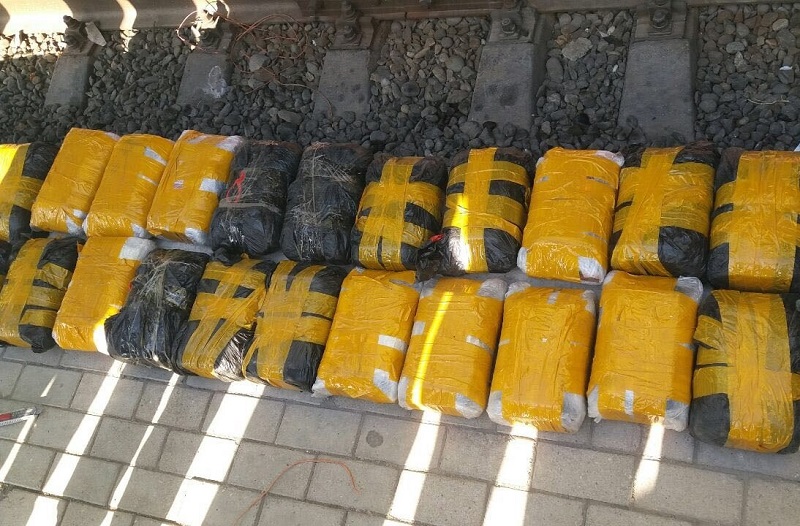
Criminal proceedings have been instituted and an investigation is under way.

Hash oil, also known as honey oil or cannabis oil, is an oleoresin obtained by the extraction of cannabis or hashish.  It is a cannabis concentrate containing many of its resins and terpenes – in particular, tetrahydrocannabinol (THC), cannabidiol (CBD), and other cannabinoids.  There are various extraction methods, most involving a solvent, such as butane or ethanol.  Hash oil is usually consumed by smoking, vaporizing or eating.  

Join us on social media!

Article translations:

Related Article

Оби зулол
Tenisi
Оби зулол

Most Read

Коммерсбонк Точикистон

Recent Articles

RZD announces the restoration of passenger services between Moscow and Dushanbe

Direct rail services between the capitals of Russia and Tajikistan were suspended in March 2020 due to the COVID-19 pandemic.

#AP30/Stories. “Selam! Heller nichek?” How Tatars live today in Sughd province

On the 30th anniversary of "Asia-Plus," we continue to publish reports that remain relevant even after years. This story was told in 2021, and since then, little has changed in the life of the Tatar community in Tajikistan.

15,000 cameras, drones, and robots: how technology monitors pilgrims in Mecca and Medina

During Hajj 2026, Mecca and Medina were under unprecedented digital control.

Another child in Dushanbe removed from family and sent to boarding school

The Ministry of Internal Affairs reports that the parents did not pay adequate attention to the child.

Emomali Rahmon instructs to address issues in seed production following criticism of the industry

Issues have been noted with certification, seed quality, and the material and technical base of the industry.

Water, climate, and a $130 billion deficit: seven key outcomes of the Water Conference in Dushanbe

At the forum, countries and international organizations discussed new mechanisms for cooperation, investments, and technologies that are essential for addressing the global water crisis.

Eskhata Bank introduces a new generation children’s wallet

"Eshkata Bank" has created a full-fledged digital platform that helps children aged 7 to 16 learn how to manage money.