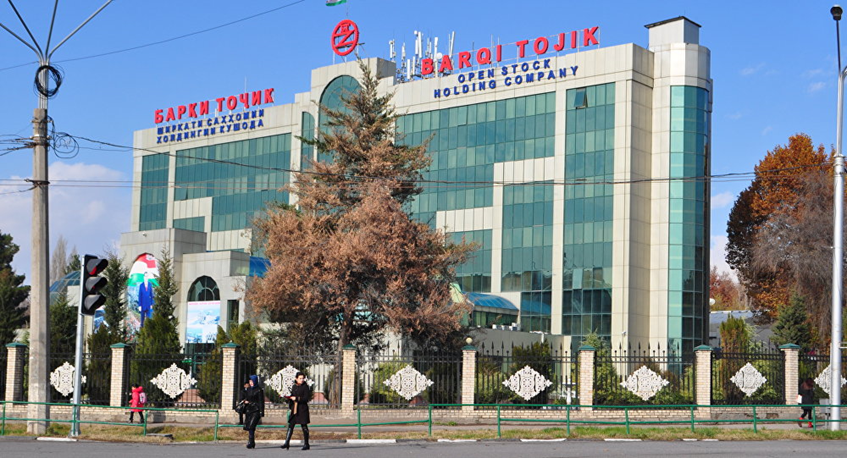
Heads of two joint-stock companies established on the basis of Barqi Tojik (Tajikistan national power utility company) were appointed on November 11. Umedjon Bilolzoda was appointed Director-General of the Open Joint-Stock Company (OJSC) Power Distribution Network and Mirzo Mahmoudzoda was appointed to head OJSC Power Transmission Network.
These companies were established on the basis of the national power utility company in the past summer.
Recall, the process of restructuring of Barqi Tojik began in 2012 and Barqi Tojik was expected to be divided into three independent companies in late 2018: (i) generation; (ii) transmission business; and (iii) distribution.
The main objective of the restructuring of Barqi Tojik is in ensuring transparency in the country’s energy system.
Tajikistan’s power sector is comprised of the vertically integrated energy company, Barqi Tojik, three independent power producers (IPPs), and a concession in Gorno-Badakhshan Autonomous Region (GBAO) combining power generation and distribution.
Barqi Tojik is fully owned by the Government. It owns and operates most of the electricity generating plants and is also responsible for electricity transmission, dispatch, and distribution services to around 8 million people in all regions of the country except for GBAO.
Two of the IPPs – Sangtuda-1 and Sangtuda-2 hydropower plants (HPPs) – were constructed with investments from Russian and Iranian state-owned companies, and supply electricity to Barqi Tojik under 20-year power purchase agreements (PPAs). Third IPP – Roghun HPP – is under construction.
Pamir Energy Company (PEC) generates and supplies electricity to more than 200,000 people in GBAO under 25-year concession agreement.
Tajikistan desperately needs to reform its energy sector. An article “Tajikistan’s Energy Sector Reforms: Is Energy Export the Only Way Out of the Revenue Dilemma?” posted on CABAR’s website, in particular, says that in 2013, over 10 percent of Tajikistan’s enterprises considered unreliable electricity supply as a major constraint to doing business in the country. These enterprises reported 6 electrical outages per month lasting 4 hours on average and resulting in losses equal to 4.4 percent of annual sales. In 2019, the share of local enterprises who considered unreliable electricity supply as a major constraint to doing business fell down to 8.4 percent, still significantly above the average of 3.8 percent across Europe and Central Asia. Tajikistan currently ranks 163rd among 190 countries in terms of ease of getting electricity and 107th among 141 countries for the quality of electricity supply. In 2014, the economic losses associated with unreliable electricity supply equaled to USD 200 million or 3 percent of the country’s GDP.