Tajik President Emomali Rahmon today is participating in a session of the Collective Security Treaty Organization (CSTO) Collective Security Council through video-conferencing.
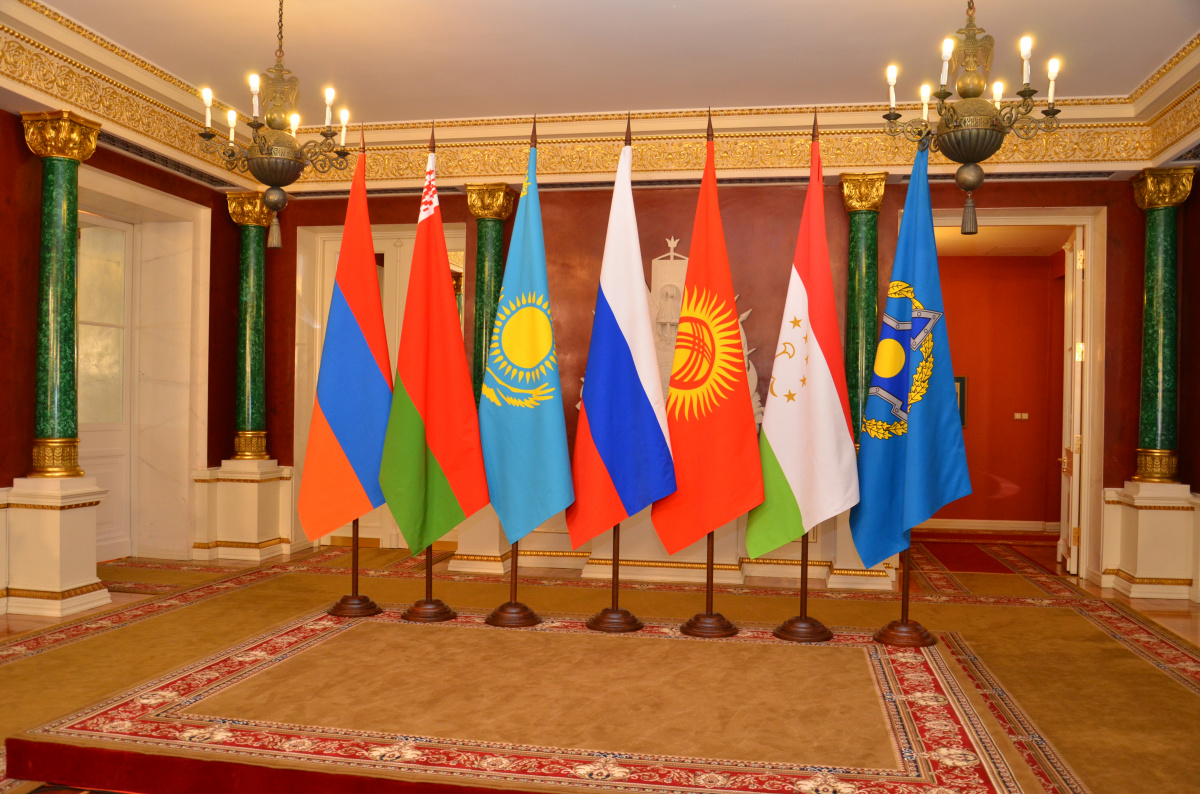
The session, which is being held under the chairmanship of the President of the Russian Federation Vladimir Putin, is also attended by the Prime Minister of the Republic of Armenia Nikol Pashinyan, the President of the Republic of Belarus Alexander Lukashenko, the President of the Republic of Kazakhstan Kassym-Jomart Tokayev, and the Acting President of the Kyrgyz Republic Talant Mamytov. The CSTO Secretary General Stanislav Zas is also participating in the meeting.
For the first time, the CSC is held through video-conferencing, and the CSTO Crisis Response Center is reportedly also involved.
The CSC members are discussing the state of international security and issues of further increasing the effectiveness of the CSTO, the implementation of the decisions of the session of the Collective Security Council and the statutory bodies of the CSTO in the intersessional period, as well as the development and strengthening of inter-parliamentary cooperation of the CSTO member states.
The CSC session’s agenda includes draft decisions of the CSTO CSC concerning the material, technical and medical support of the Collective Forces, as well as additional measures to improve the training system for public authorities of the member states of the Collective Security Treaty Organization. The CSC is also considering the Organization's budget for 2021.
The CSC members are planned to adopt the Declaration of the Collective Security Council and the Statement on the formation of a just and sustainable world order.
They are also expected to approve the Plan for the Development of Military Cooperation between the Member States of the Collective Security Treaty Organization for 2021-2025, and the new Anti-Drug Strategy of the CSTO Member States for 2021-2025.
Tajikistan will hold rotating CSTO presidency next year and President Emomali Rahmon will announce the priorities of Tajikistan in the next intersessional period.
The day before, on December 1, meetings of the Council of Foreign Ministers (chaired by Russian Foreign Minister Sergey Lavrov) and the Council of Ministers of Defense (chaired by the Russian Defense Minister Sergei Shoigu) were held. They were also held through video-conferencing. The meetings reportedly discussed issues submitted to the session of the Collective Security Council, as well as issues on the development of interaction between the CSTO and the United Nations and the CSTO's participation in peacekeeping activities under the auspices of the UN, challenges and threats to military security in the regions of collective security.
The regional security organization was initially formed in 1992 for a five-year period by the members of the CIS Collective Security Treaty (CST) — Armenia, Kazakhstan, Kyrgyzstan, Russia, Tajikistan, and Uzbekistan, which were joined by Azerbaijan, Georgia, and Belarus the following year. A 1994 treaty reaffirmed the desire of all participating states to abstain from the use or threat of force, and prevented signatories from joining any “other military alliances or other groups of states” directed against members states. The CST was then extended for another five-year term in April 1999, and was signed by the presidents of Armenia, Belarus, Kazakhstan, Kyrgyzstan, Russia, and Tajikistan. In October 2002, the group was renamed as the CSTO. Uzbekistan that suspended its membership in 1999 returned to the CSTO again in 2006 after it came under international criticism for its brutal crackdown of antigovernment demonstrations in the eastern city of Andijon in May 2005. On June 28, 2012, Uzbekistan announced that it has suspended its membership of the CSTO, saying the organization ignores Uzbekistan and does not consider its views. The CSTO is currently an observer organization at the United Nations General Assembly.