Tajik experts have somewhat similar opinions about the political future of Kyrgyzstan and its possible impact on Tajikistan.
Khursand Khurramov, Radio Ozodi analyst and expert on international relations, considers that a politician came to power in Kyrgyzstan who is perhaps the most understandable to the masses by his character and biography.
Taking into account the referendum, which was also conceived by the team of the new president, Japarov intends to strengthen the vertical of power in Kyrgyzstan modeled on neighboring countries.
“Parliamentarism, which the country began to strive for since 2010, does not suit it, because it turns into the prerogative of several parties, not the people. But the question remains to what extent he will be able to maintain a consensus between various elite groups and ensure their political participation under the presidential form of government,” Khurramov said.
Besides, promises to solve existing problems brought him an election victory, the expert noted.
“Japarov led the country during the most difficult period for it, when it was hit by an acute financial and economic crisis — decrease in remittances from migrants and lack of any hopes to attract investments. His promises to solve these problems brought him the election victory, but also made him responsible for all possible failures that will face the country in the near future,” Khurramov said.
At the same time, Khurramov believes that no serious influence on the region is expected from the change of power in Kyrgyzstan.
“I do not see much influence on the region from coming of new president to power in Kyrgyzstan. However, his initiative to switch to the presidential form of government strengthens the argumentation of persons questioning the validity of the parliamentary system of government in the region,” said the expert.
“As far as Tajikistan is concerned, Japarov pledged to solve border problems as soon as possible, but without specifying details. However, taking into consideration socioeconomic problems existing in Kyrgyzstan, I consider that maintaining the status quo in border areas would be a great achievement for the newly elected president.”
Another Tajik expert, Qosim Bekmuhammad, also believes that Japarov’s initiative to switch to the presidential form of government will be welcomed by authorities of other countries of the region.
“I think that the return to the presidential form of government in Kyrgyzstan will be supported by the authorities of all Central Asia’s countries, because lately they have looked at Kyrgyzstan as a laboratory where the parliamentary system of government was put to the test,” Bekmuhammad said
Therefore, the ruling elites of the region were to some extent worried that in case of success of the parliamentary system of government in Kyrgyzstan, political parties and civil societies in other countries of the region could put pressure on their governments to create conditions for the transition to the full parliamentary system of government, the expert noted.
“This experience of Kyrgyzstan proved unsuccessful, and I think the authorities of other Central countries have sighed with relief at the return of Kyrgyzstan to the presidential form of government,” Bekmuhammad added.
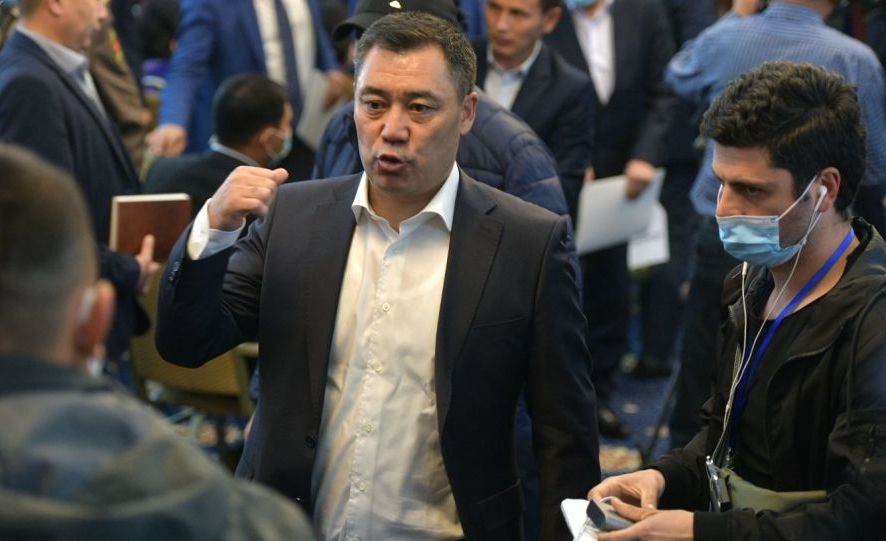
Kyrgyz nationalist politician Sadyr Japarov won presidency on January 10 with a landslide. The Central Election Commission of Kyrgyzstan said Mr. Japarov had won 79% of votes cast. More than 80% of voters have also supported a proposal to reform the Constitution to give the President greater powers at parliament's expense, the Commission said.
Meanwhile, the observers from the Organization for Security and Cooperation in Europe's Office for Democratic Institutions and Human Rights (ODIHR) and the OSCE Parliamentary Assembly (OSCE PA) said in a preliminary report on January 11 that candidates in the January 10 vote “could mostly campaign freely” but the campaign was “dominated by one candidate who benefited from disproportionate financial means and misuse of administrative resources, resulting in an uneven playing field.”