Barqi Tojik’s debt to Open Joint-Stock Company (OJSC) Sangtudinskaya GES-1, which operates the Sangtuda-1 hydroelectric power plant (HPP), has reached 1.73 billion somonis (equivalent to more than 153 million U.S. dollars).
According to OJSC Sangtudinskaya GES-1, the rate of payment for the supplied electricity over the first three months of this year was only 32.4 percent.
Over the reporting period, the Sangtuda-1 HPP has reportedly supplied more than 556 million kWh of electricity to Barqi Tojik (Tajikistan’s national power utility company).
Over the first quarter of this year, the Sangtuda-1 HPP has used only 38.7 percent of its installed capacity, which is 5.8 percent fewer than in the same period last year.
Recall, OJSC Sangtudinskaya GES-1 seeks an opportunity to sell electricity generated by the Sangtuda-1 HPP itself.
The company has repeatedly raised the issue of increasing the supply of electricity generated by the Sangtuda-1 HPP and independently exporting it at different levels.
Representative of OJSC Sangtudinskaya GES-1 told Asia-Plus in an interview that according to the agreements concluded, the company has the right “to sell electricity generated by the Sangtuda-1 HPP in accordance with direct contracts and export it by itself.”
These rights are reportedly enshrined in a government-to-government agreement between Tajikistan and Russia on a procedure and conditions for joint participation in construction of the Sangtuda-1 HPP and in a government-to-government agreement on operation of this hydropower plant.
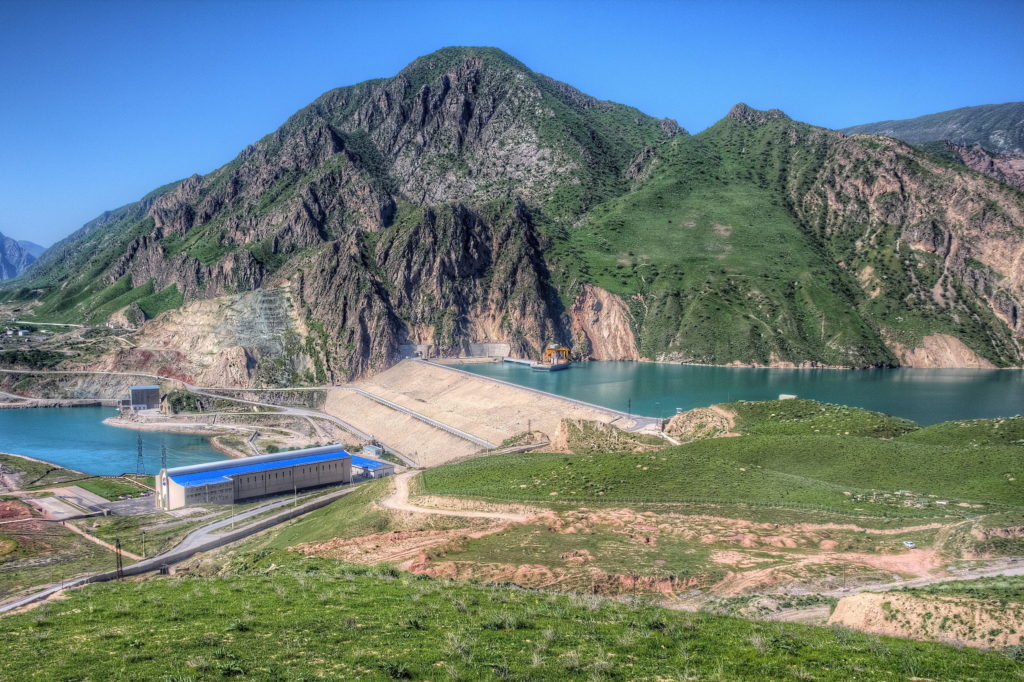
The construction of the Sangtuda-1 hydropower plant located some 110 kilometers southeast of Dushanbe began in the late 1980s. By the early 1990s, only 20% of the construction work had been completed, and further construction was suspended due to a civil war that broke out in Tajikistan in the early 1990s. The talks between Russia and Tajikistan on completing the construction of the Sangtuda-1 HPP began in 2003 and in 2004 the parties signed an inter-governmental agreement.
Russian-Tajik OJSC Sangtudinskaya GES-1 was established to complete the construction of the Santuda-1 power plant. Russia’s Inter RAO YeES and the Ministry of Energy and Industries of Tajikistan signed an agreement on the establishment of the company in Dushanbe on February 16, 2005.
Russia owns 75% percent of the shares minus one share and Tajikistan assumes the 25% ownership interest plus one share in Sangtudinskaya GES-1.
The Sangtuda-1 HPP was officially commissioned on July 31, 2009. The plant now reportedly provides around 15% of Tajikistan’s electricity output.