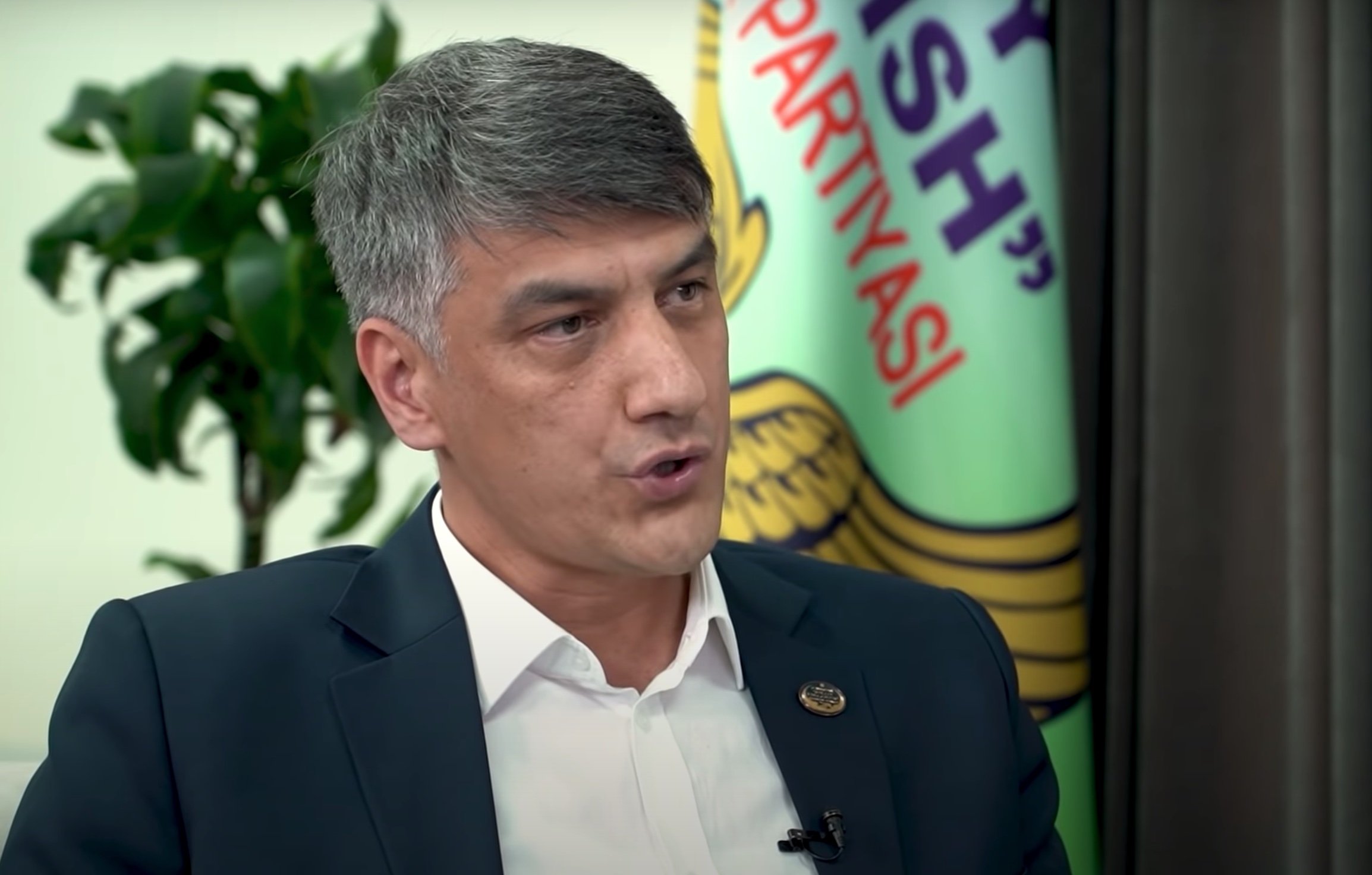
Eurasianet says the head of one of Uzbekistan’s leading political parties has suggested depriving gays, lesbians and transgender people of citizenship and deporting them as a way of ending the national conversation on LGBT issues.
Alisher Kadyrov, who heads Milliy Tiklanish, or National Revival, which bills itself as a champion of tradition and family values, said in an interview published on June 7 on the Alter Ego YouTube channel that withdrawing citizenship from LGBT people would force other countries to provide them with refuge.
“When I put forward this proposal on social networks, up to 100 LGBT people got in touch with me and agreed with what I had said. They said that they cannot get visas from those countries that condemn Uzbekistan for its attitude towards LGBT people,” Kadyrov said.
In his interview, Kadyrov cast his own would-be solution as a compassionate gesture, since he was adamant that even though Uzbekistan might be going through a process of social modernization, the public would never – “even after 1,000 years” – change its mind on this particular area.
Kadyrov did not specify which countries he believes have a formal policy of stripping gays, lesbians and transgender people of citizenship and subsequently deporting them. Neither did he explain how his proposal might work in practice.
The LGBT issue is at the center of public discussions at all stems from the government’s refusal to heed calls from international rights groups to remove an article from the criminal code that penalizes same-sex relations.
When pressed on this point at a March 2020 review on Uzbekistan in the UN Human Rights Committee, Tashkent’s representative stated that any such moves would meet “strong public opposition, and not only from Muslims.” The official sought to defend Uzbekistan’s position by also stating that there were “no laws on the books restricting the employment or health care of members of the lesbian, gay, bisexual, transgender and intersex community.”
Meanwhile, Human Rights Watch (HRW) noted in its report published in March that the people it interviewed for its research said that “they faced arbitrary arrests, threats, extortion, psychological pressure, and physical attacks by both police and non-state actors for being gay.”
On March 28, a mob of several dozen men chanting “Allah hu Akbar” descended onto Tashkent’s central Amir Temur square hunting for a purported LGBT gathering. The event was in fact a get-together of teen fans of K-Pop and Japanese anime comics. Some young people were nonetheless assaulted.