Tajik men will be able to legally avoid serving their mandatory two-year military service by paying a fee to the Ministry of Defense (MoD).
A government resolution enforcing legislation allowing Tajik men between the ages of 18 and 27 to pay 25,200 somonis (equivalent to 2,200 U.S. dollars) in order to avoid conscription was made public on August 16.
“Those who choose to pay the fee will still have to go through a one-month military training session but avoid the full two-year service requirement, Colonel Faridoun Mahmadalizoda, a spokesman for a MoD, told Asia-Plus in an interview.
Recall, the new regulations were approved by lawmakers on January 20 this year.
Presenting the bill to lawmakers, Defense Minister Sherali Mirzo noted that only 10 percent of eligible young people are enlisted to do military service each year.
According to him, a one-month basic reserve service will be organized for a certain fee for those who did not perform conscript service. “At the end of basic reserve service they will receive military cards,” the defense minister said.
According to the new regulation, men who graduate from universities that offer military training in addition to their regular studies will be granted officer ranks only if they serve at least one year in the armed forces. Until now, such officer ranks were awarded immediately after graduation.
The new regulation also bans those who did not serve in the army from working as officials in the prosecutor’s offices, courts, customs, anti-corruption agencies, and governmental executive entities.
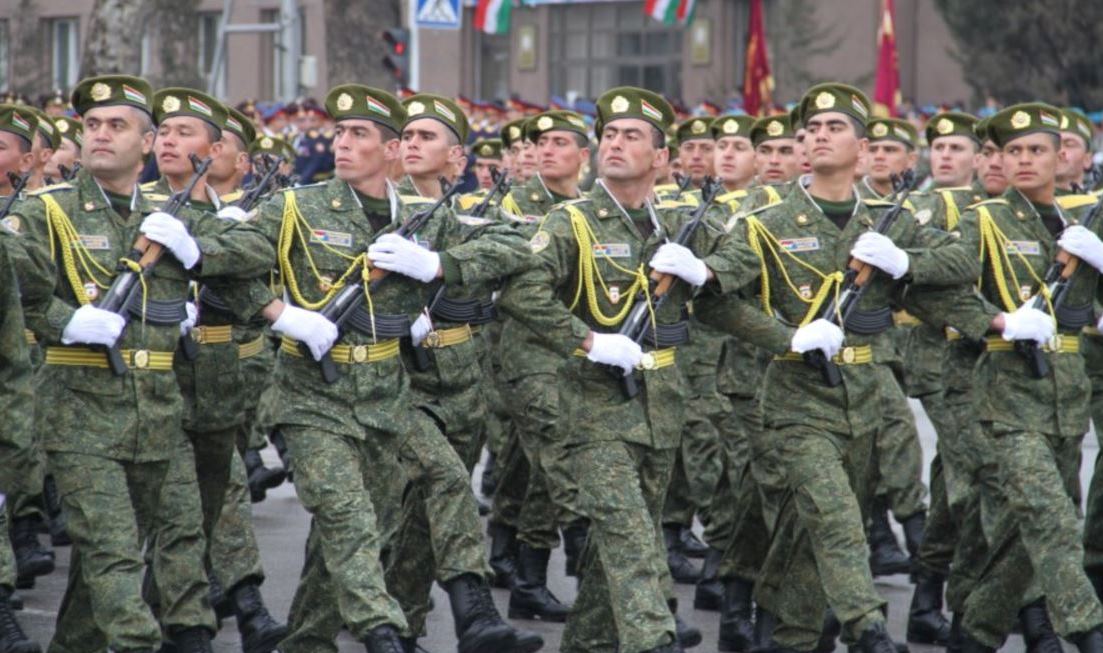
Tajikistan inherited a Soviet-era conscription system, according to which every male between 18-27 years of age must serve in the army for two years.
According to the MoD, every year, some 15,000-16,000 young Tajik men are drafted into the country’s armed forces.
The two-month-long effort seeking to enlist young men aged 18-27 for the two-year compulsory military service takes place twice a year, in the spring and in the autumn.
Young Tajiks can avoid or postpone military service if they are ill, studying at university, an only son, or if they have two children.
Tajikistan’s armed forces consist of Ground Forces, Mobile Forces (paratroopers of the armed forces of Tajikistan), Air Force and Air Defense Force.
MoD representatives say the practice of seizing young men in streets and markets and sending them into military service known as “oblava” will also be eliminated due to the new law on military service. “Oblava” has been a common practice in Tajikistan for years. That policy sparked a public outcry and sharp criticism by human rights defenders.