Taliban declares general ‘amnesty’ for Afghan government officials, urges women to join government

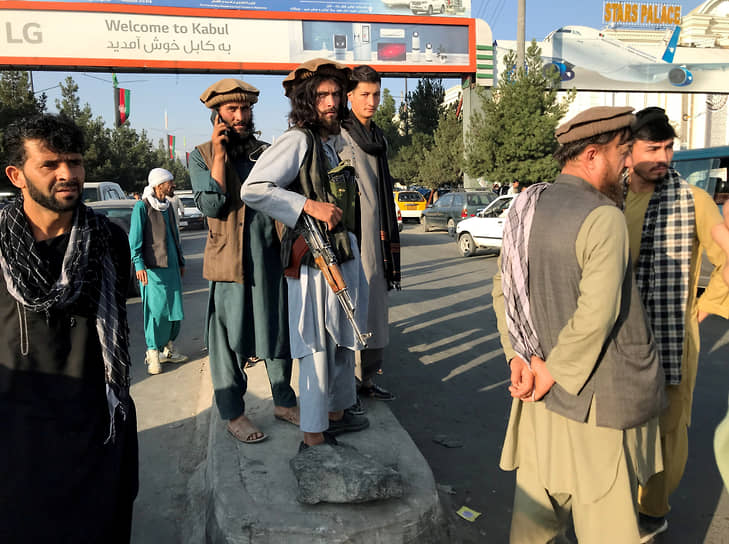
Media reports say the Taliban declared a "general amnesty" for all government officials on August 17 and urged them to return to work.  They also urged women to join the government.   The promises of amnesty from Enamullah Samangani, a member of the Taliban’s cultural commission, were the first comments on how the Taliban might govern […]

Media reports say the Taliban declared a "general amnesty" for all government officials on August 17 and urged them to return to work.  They also urged women to join the government.  

The promises of amnesty from Enamullah Samangani, a member of the Taliban’s cultural commission, were the first comments on how the Taliban might govern on a national level.  However, his remarks remained vague, however, as the Taliban are still negotiating with political leaders of the country’s fallen government and no formal handover deal has been announced, according to the Associated Press (AP).

Women would also be allowed to join the government in accordance with sharia law, he said.

“The Islamic Emirate doesn't want women to be victims,” Samangani said, using the militants' term for Afghanistan. “They should be in the government structure according to Shariah law.”

“The structure of government is not fully clear, but based on experience, there should be a fully Islamic leadership and all sides should join,” he added.

Suhail Shaheen, one of the Taliban's official spokesmen, has also tried to calm fears that women would be relegated to diminished status in the new Afghanistan.  “Their right to education is also protected,” he said late Monday, according to France 24.

Following a blitz across Afghanistan that saw many cities fall to the insurgents without a fight, the Taliban have sought to portray themselves as more moderate than when they imposed a brutal rule in the late 1990s.  But many Afghans remain skeptical.

AP says Rupert Colville, a spokesman for the United Nations’ high commissioner for human rights, noted both the Taliban’s vows and the fear of those now under their rule.

“Such promises will need to be honored, and for the time being — again understandably, given past history — these declarations have been greeted with some skepticism,” he said in a statement.  “There have been many hard-won advances in human rights over the past two decades. The rights of all Afghans must be defended.”

Join us on social media!

Article translations:

Related Article

Оби зулол
Tenisi
Оби зулол

Most Read

Коммерсбонк Точикистон

Recent Articles

RZD announces the restoration of passenger services between Moscow and Dushanbe

Direct rail services between the capitals of Russia and Tajikistan were suspended in March 2020 due to the COVID-19 pandemic.

#AP30/Stories. “Selam! Heller nichek?” How Tatars live today in Sughd province

On the 30th anniversary of "Asia-Plus," we continue to publish reports that remain relevant even after years. This story was told in 2021, and since then, little has changed in the life of the Tatar community in Tajikistan.

15,000 cameras, drones, and robots: how technology monitors pilgrims in Mecca and Medina

During Hajj 2026, Mecca and Medina were under unprecedented digital control.

Another child in Dushanbe removed from family and sent to boarding school

The Ministry of Internal Affairs reports that the parents did not pay adequate attention to the child.

Emomali Rahmon instructs to address issues in seed production following criticism of the industry

Issues have been noted with certification, seed quality, and the material and technical base of the industry.

Water, climate, and a $130 billion deficit: seven key outcomes of the Water Conference in Dushanbe

At the forum, countries and international organizations discussed new mechanisms for cooperation, investments, and technologies that are essential for addressing the global water crisis.

Eskhata Bank introduces a new generation children’s wallet

"Eshkata Bank" has created a full-fledged digital platform that helps children aged 7 to 16 learn how to manage money.