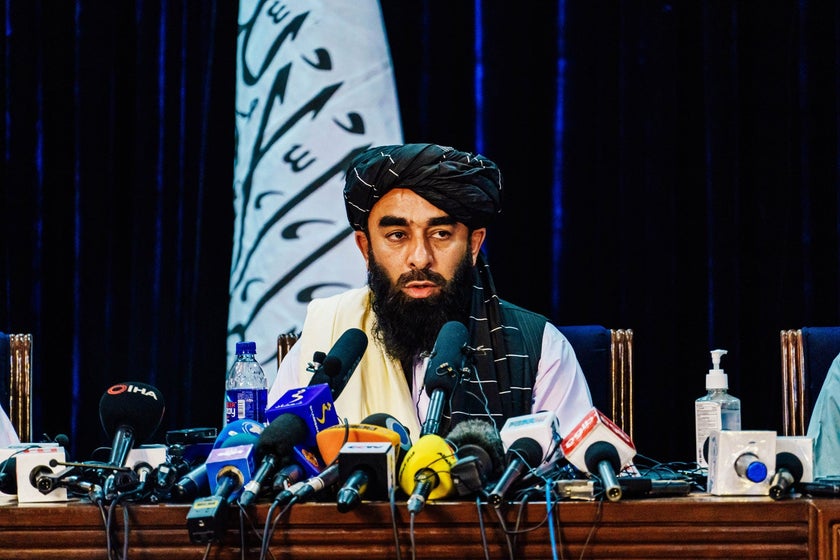
Mr. Joshua Keating, a foreign policy analyst, staff writer and author of the World blog at Slate, and a former writer and editor at Foreign Policy magazine, noted on August 18 that the Taliban’s initial pledges that it will not seek to punish those who worked for the U.S.-backed regime and wants to include women in its government are probably aimed at seeking the approval—or at least the toleration—of outside powers.
The last time the Taliban ruled Afghanistan, from 1996 to 2001, it was an international pariah. Under heavy international sanction for its support for terrorism, abuses of human rights, and involvement in drug trafficking, it was officially recognized by just three other countries—Pakistan, the United Arab Emirates, and Saudi Arabia. Even those few allies reportedly backed away from the Taliban after the 9/11 attacks.
Little is known about how the group now plans to govern the country it once again rules.
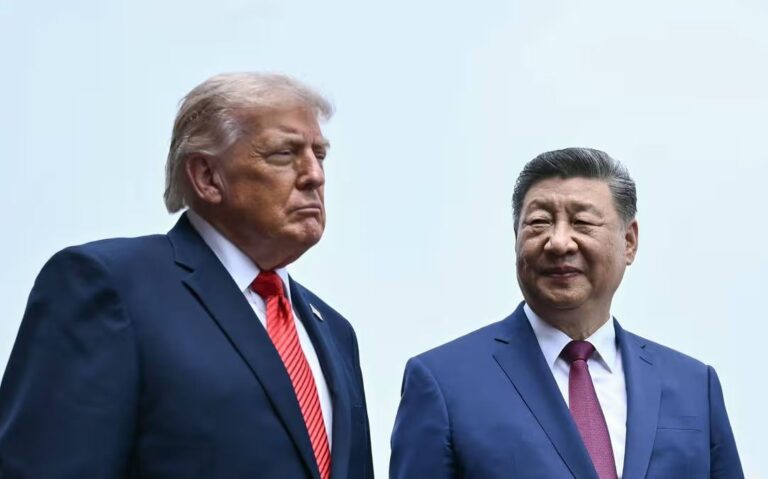
Mr. Keating says that it in some sense, the U.S. already conferred “legitimacy” with the Taliban by negotiating with it over the withdrawal of U.S. troops, but this is not the same thing as official diplomatic recognition. In fact, the original agreement negotiated by the Trump administration in 2020 was awkwardly titled “Agreement for Bringing Peace to Afghanistan between the Islamic Emirate of Afghanistan which is not recognized by the United States as a state and is known as the Taliban and the United States of America.”
The United Arab Emirates and Saudi Arabia, both of whom maintained relations with the Taliban in the 1990s, have responded cautiously to events in Afghanistan. A statement from the Saudi foreign ministry said vaguely that the kingdom “stands with the choices that the Afghan people make without any interference.”
Pakistan is reportedly a more complicated case, according to Keating. Experts consider that it is more likely Pakistan will “follow the international community” in deciding whether to give the Taliban its formal favor.
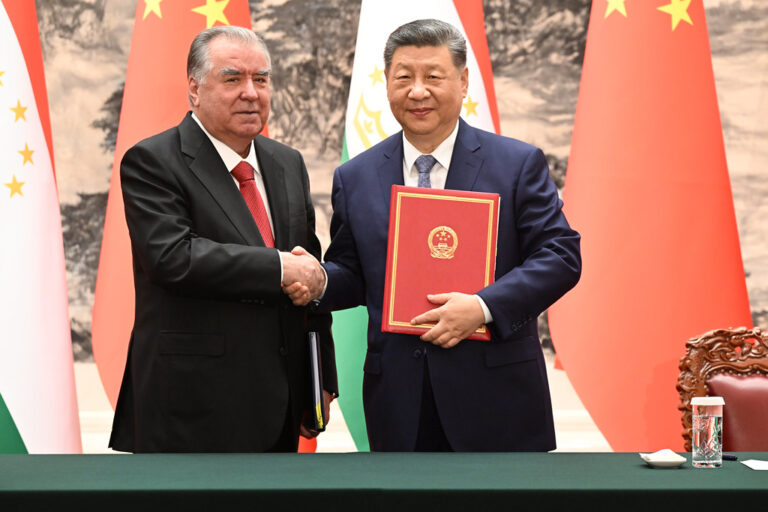
Keating notes that the main country that could shift that balance is China. Some media reports have suggested Beijing may be considering formalizing its relations with the Taliban. If this happened, numerous others countries would likely follow suit. According to him, Yun Sun, director of the China program at the Stimson Center, noted, “Recognition is possible but not very probable at this point.” “It depends on whether the Taliban is going to have a ‘clean’ ending to the civil war. If it is not, that means that the Taliban’s legitimacy is being questioned domestically,” she said.
Keating says another country to watch for possible overtures to Afghanistan’s new rulers is Russia. Russians reportedly have no positive interest in Afghanistan and they’re just trying to manage the situation. That management has included direct outreach to the Taliban. But the Russians, too, may be in no hurry to make anything official.
All the same, divisions between the world’s major powers’ views of the Taliban and that of Western powers were reportedly already evident in a U.N. Security Council meeting about the crisis on Monday. Richard Gowan, U.N. analyst at Crisis Group, says China and Russia both indicated a significant degree of willingness to take the Taliban seriously.”
Keating notes that one potential area of conflict may come over control of Afghanistan’s seat at the United Nations. For the moment, Ambassador Ghulam M. Isaczai, appointed in July, continues to represent Afghanistan and gave an impassioned statement on Monday on behalf of millions of people whose fate, he said, “hangs in the balance.” But the Taliban may soon try to take over that seat.
Right now, from Washington to Beijing, to Moscow, to Islamabad, everyone is reportedly waiting to see what comes next.