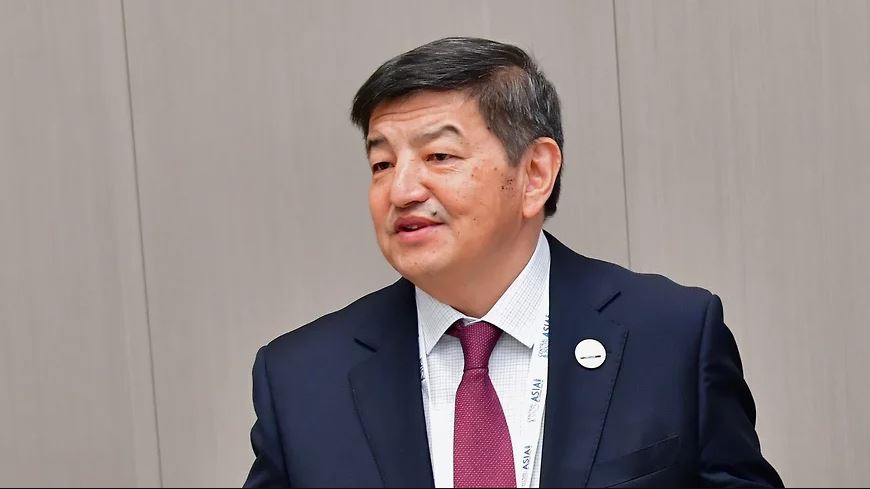
A joint commission on border delineation issues is working incessantly, Kyrgyz Premier Akylbek Japarov told Kommersant in an interview commenting on problems of delineation of a common border with Tajikistan.
There is a commission, which is co-chaired from our side by Vice-Premier Kamchybek Tashiyev, who is also Head of the State Committee for National Security,” said Japarov. “I can only say one thing – we are closer to solving this problem than ever before.”
At the same time, Japarov did not rule out that the border issue is difficult to resolve, because “there is the so-called Osh heroin corridor there, through which drugs go from Afghanistan, and instability benefits certain forces.”
“I do not exclude this fact. But I repeat one more time that it is necessary to take into account the interests of both peoples while resolving this issue,” Kyrgyz official added.
Tajikistan and Kyrgyzstan have not yet resolved the border delineation problem. Many border areas in Central Asia have been disputed since the collapse of the Soviet Union in 1991. The situation is particularly complicated near the numerous exclaves in the Fergana Valley, where the borders of Tajikistan, Uzbekistan, and Kyrgyzstan meet.
The border of Kyrgyzstan and Tajikistan has been the scene of unrest repeatedly since the collapse of the former Soviet Union.
It has been difficult to demarcate the Kyrgyz-Tajik border because over the course of some 100 years Soviet mapmakers drew and redrew the Kyrgyz-Tajik border, incorporating land that had traditionally belonged to one people in the territory of the other Soviet republic.
Exclaves appeared and temporary land use agreements were signed.
All of this survived the collapse of the Soviet Union and people in Kyrgyzstan and Tajikistan have various Soviet-era maps they use to justify their claim to specific areas along the border.
Border talks between Tajikistan and Kyrgyzstan began in 2002. Only slightly more than half of the 970 kilometers of border shared by the two countries has been demarcated despite decades of attempts to bring the matter to a close. The border delineation problem has led to conflicts between rival ethnic communities.
The latest clash along Tajikistan’s common border with Kyrgyzstan that took place in late April was the bloodiest one in the region over the past 20 years. The countries have agreed a complete ceasefire after the worst violence in decades along the Tajik-Kyrgyz border that killed 55 people and wounded more than 300 other people.
In May, Kyrgyzstan unilaterally banned passage of Tajik nationals and transport through its territory.
The Kyrgyz government imposed its temporary restriction on Tajik citizens entering, leaving and transiting its territory on May 21. Authorities also halted the passage and transportation of goods across multiple land crossings. Diplomatic officials and government representatives are exempt from the rules.
The then Prime Minister Ulukbek Maripov said two days later that the restrictions would remain in effect “until problematic issues are resolved.”
Bishkek’s Manas international airport said 177 travelers arriving on May 25 from Dushanbe on a chartered Somon Air flight were made to return within the day. Nine other foreign individuals were permitted to enter Kyrgyzstan.
Recently, Kyrgyzstan, however, decided to allow a limited number of Tajiks to enter the country. Some 1,932 Tajik university students, who were unable to start the academic year due to the disruption, may now cross into the country, Deputy Chairman of the Cabinet of Ministers Edil Baisalov announced on October 21.
Kyrgyz President Sadyr Japarov emphasized that this is the only concession he is ready to make. Other Tajik citizens will not be permitted to enter until the two sides agree on the precise whereabouts of their border.