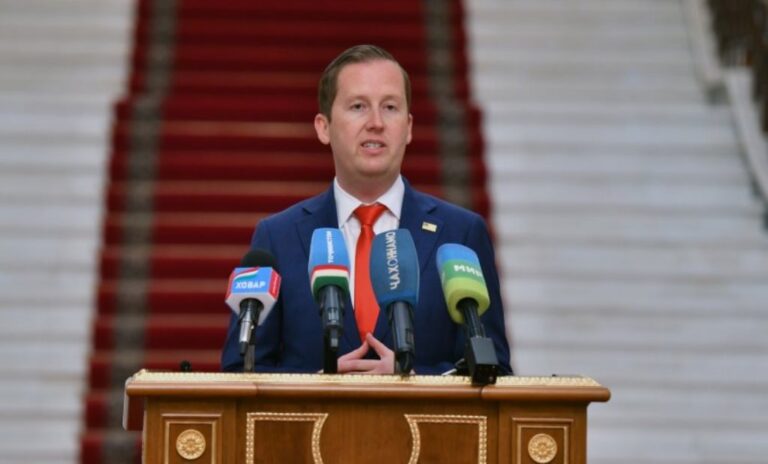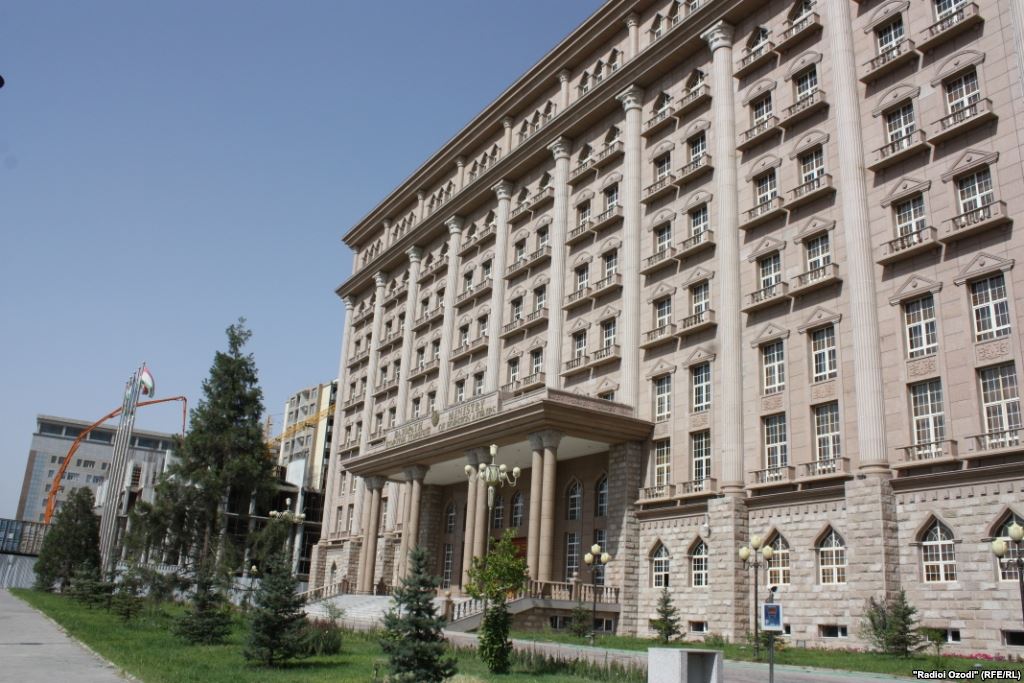
Tajikistan’s Ministry of Foreign Affairs has commented on the latest developments in Kazakhstan and made a statement regarding Tajikistan’s participation in the Collective Security Treaty Organization (CSTO) operation to provide military assistance to this country.
"…With grave concern we note cases of violence against peaceful residents and law enforcement officers, seizure of administrative buildings, robberies. Of particular concern is the fact that unauthorized actions have led to the emergence of illegal armed groups, who had lethal weapons and special equipment at their disposal,” reads the statement.
The statement further notes that following its allied obligations within the framework of the Collective Security Treaty Organization Tajikistan intends to participate in the collective peacekeeping operation on providing assistance to Kazakhstan “in order to eliminate the threat that has arisen.”
Meanwhile, RIA Novosti says the CSTO has already sent peacekeeping forces to Kazakhstan.
Their task is to protect government and military facilities and provide assistance to the law enforcement agencies, says the CSTO Secretariat.
The CSTO has agreed to intervene in Kazakhstan’s spiraling unrest, the first time in the organization’s 30-year history.
The Russia-led security bloc acceded to a request by Kazakhstan’s President Kassym-Jomart Tokayev on January 5 to send military assistance, which he said was needed "to help Kazakhstan overcome this terrorist threat."
Armenian Prime Minister Nikol Pashinyan – the current chair of the CSTO’s Collective Security Council – announced that the organization had agreed.
The Armenian president’s official website says Prime Minister Nikol Pashinyan noted that in connection with the appeal of the President of Kazakhstan Kassym-Jomart Kemelevich Tokayev and in light of the threats to national security and sovereignty to the Republic of Kazakhstan, including from external interference, the CSTO agreed to send the organization’s collective peacekeeping forces to Kazakhstan in accordance with Article 4 of the Collective Security Treaty for a limited period of time with the aim of stabilizing and normalizing the situation.
Article 4 of the Collective Security Treaty states that: “In the case of aggression (an armed attack threatening safety, stability, territorial integrity and sovereignty) against any Member States, all other Member States at request of this Member State shall immediately provide the latter with the necessary aid, including military.”
Meanwhile, the CSTO Secretariat, commenting on the situation in Kazakhstan, notes that in the appeal of the Kazakh side for assistance, the situation in this country was considered as “invasion of bandit formations trained abroad.”
There is no indication that the popular unrest in Kazakhstan has any external origin – it began over fuel prices in the far west of the country before quickly spreading nationwide – but that is the line that Kazakhstan’s beleaguered authorities have been pushing, according to Eurasianet.
"Kazakhstan is facing armed aggression from terrorist groups trained outside of the country,” Kazakhstan’s Ministry of Foreign Affairs said in a statement early in the morning January 6.
This is the first time that the CSTO has agreed to deploy military forces to support an ally. It has refused requests on at least two other occasions: from Kyrgyzstan, during massive ethnic unrest in 2010; and from Armenia in 2021, as Azerbaijan pushed its post-war advantage by carrying out military incursions into Armenian territory.
On October 6, 2007, CSTO members agreed to a major expansion of the organization to create a CSTO peacekeeping force that could be deployed under a U.N. mandate or without one in its member states.
On December 10, 2010, the member states approved a declaration establishing a CSTO peacekeeping force and a declaration of the CSTO member states, in addition to signing a package of joint documents.
Created in 1992, the Collective Security Treaty Organization is a Russia-led military alliance grouping the six former Soviet republics of Armenia, Belarus, Kazakhstan, Kyrgyzstan, Russia and Tajikistan.