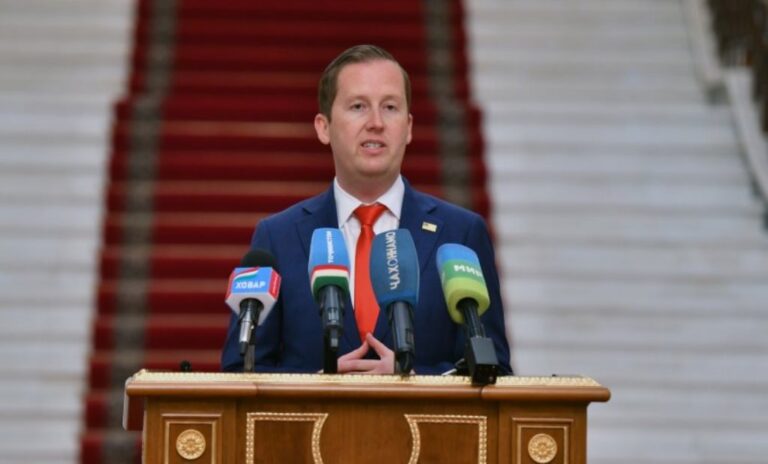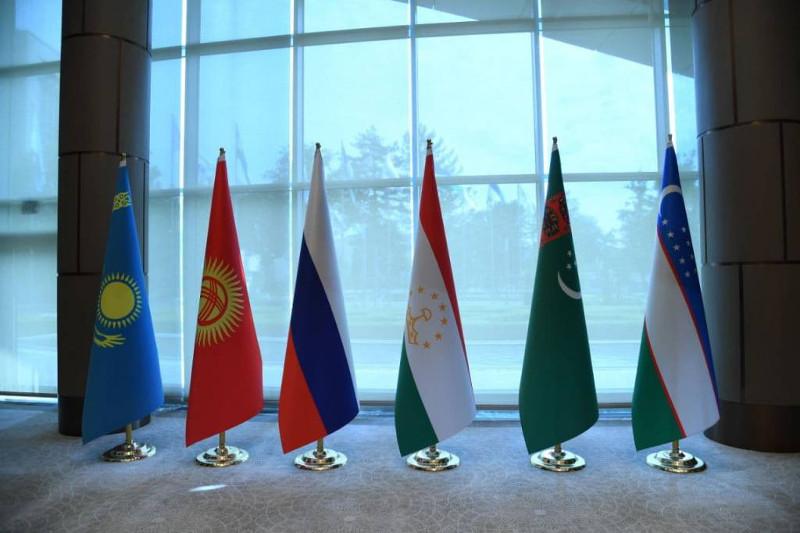
Following a meeting of the European Union (EU) and Central Asia Special Envoys for Afghanistan that took place in Uzbekistan’s capital on February 23, Special Representatives and Special Envoys of the EU, Kazakhstan, Kyrgyzstan, Tajikistan, Turkmenistan and Uzbekistan adopted a joint statement on Afghanistan.
The Special Representatives and Envoys exchanged views on the current situation in Afghanistan and its implications for the region, according to the EU Delegation to Tajikistan.
They reportedly reaffirmed EU and Central Asia cooperation opportunities, in support of the Afghan people and security and resilience in a wider region.
“To that end, the Special Representatives and Envoys:
“1. Reiterated the ambition to see Afghanistan develop into a stable, secure, independent and prosperous country in which all Afghan women and men can enjoy the full rights and freedoms afforded to them by the international commitments to which Afghanistan is a signatory, and that threats to others do not emanate from Afghanistan in line with the United Nations Security Council Resolution 2513, including freedom of movement, and provision of safe passage.
“2. Reviewed the political and socio-economic situation in Afghanistan and expressed strong concern about the impact on the Afghan population. The seriousness of the humanitarian and economic crisis requires a strong and concerted response from the international community, by addressing in a coordinated manner all dimensions of the situation and full access for humanitarian assistance to all Afghans in need in line with the humanitarian principles of humanity, neutrality, impartiality and independence and full respect of International Humanitarian Law.
“3. Stressed a continuous need to ensure good governance and service delivery, promote and respect rule of law, universal human rights and fundamental freedoms of all Afghans, in particular of women and girls as well as children and persons belonging to ethnic groups and minorities, and the establishment of an inclusive and representative government through a credible and legitimate political process in which meaningful participation by all ethnic and political stakeholders, including women and minorities is respected.
“4. Welcomed the UN Security Council resolution 2615 providing for a humanitarian exemption to the sanctions regime established by resolution 1988 (2011) and the general licenses issued by the US, enabling the provision of humanitarian aid to Afghanistan and stressed the need to find solutions for addressing the severe liquidity crisis in Afghanistan.
“5. Underlined the importance of preventing the Afghan territory from being used as a base for hosting, financing or exporting terrorism and violent extremism to other countries.
“6. Reaffirmed the need for strengthening cooperation on preventing the unsafe and irregular movements of people and countering trafficking in human beings, arms and illegal drugs.
“7. Expressed support for the work of the International Community and welcomed the report by the United Nations Secretary General and its recommendations for continued United Nations political presence in Afghanistan with the aim to promote effective, responsible and inclusive governance and reconciliation; strengthen respect and protection of fundamental rights and freedoms for all men and women; support for essential services and contribute to creating social and economic conditions that can lead to self-reliance.
“8. Underlined the important role of strengthened regional cooperation to support an inclusive political process in Afghanistan that is vital for future social and economic development of the country.
“9. Noted the importance and potential of regional connectivity in promoting resilience, prosperity and regional cooperation for the future development of the region.
“10. Noted the EU commitment to support countries neighboring Afghanistan and in Central Asia in its Afghanistan Support Package announced by the European Commission President von der Leyen, in order to mitigate the effects of the humanitarian and socio-economic situation in Afghanistan on countries in the region.
“11. The Special Representatives and Special Envoys agreed to continue meeting in this regional format on a regular basis at alternating venues as a platform for consultation, coordination and cooperation in an effort to support the people of Afghanistan.”