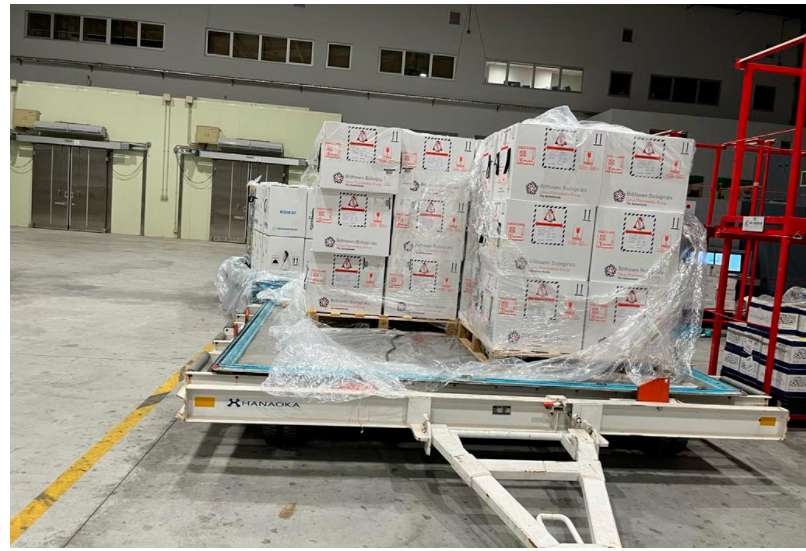
Tajikistan has received another consignment of Pfizer-BioNTech COVID-19 vaccine through the COVID-19 Vaccines Global Access (COVAX) facility.
An additional 198,900 doses of the Pfizer-BioNTech COVID-19 vaccine was delivered to Tajikistan by the United States through the United States Agency for International Development (USAID) on April 4, according to the Ministry of Health and Social Protection of the Population (MoHSPP).
Meanwhile, the U.S. Embassy in Dushanbe says that with this delivery, the United States has donated more than 2.8 million doses of Pfizer and Moderna vaccines to Tajikistan.
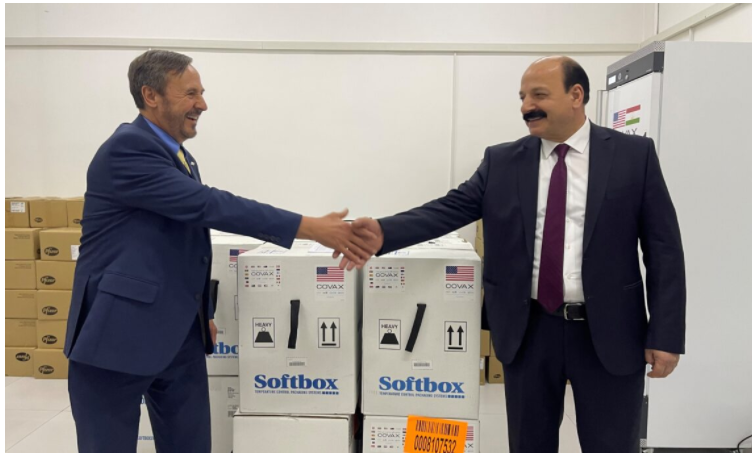
Since March 2020, the United States has provided more than US$13.5 million in equipment and technical support to help the Tajikistan fight against COVID-19. This support has been used to procure medical supplies and personal protective equipment, upgrade laboratories, train public health and medical professionals as well as support vaccination efforts in Tajikistan. The United States will continue partnering with Tajikistan to end the COVID-19 pandemic, mitigate its devastating social and economic impacts and improve preparedness to respond to future outbreaks.
To accelerate the global fight against COVID-19 and reinforce the United States’ ongoing efforts to get more shots in arms, the U.S. government has donated more than 1.2 billion of the COVID-19 vaccines to the countries most in need — safely, equitably, and with no strings attached. To date, USAID has provided US$5.7 billion to provide vaccines worldwide, with more on the way.
USAID is the world’s premier international development agency and a catalytic actor driving development results.
The Pfizer–BioNTech COVID-19 vaccine is an mRNA-based COVID-19 vaccine developed by the German biotechnology company BioNTech and for its development collaborated with American company Pfizer, for support with clinical trials, logistics, and manufacturing. It is authorized for use in people aged five years and older in some jurisdictions, twelve years and older in some jurisdictions, and for people sixteen years and older in other jurisdictions, to provide protection against COVID-19. Vaccination required two doses given 21 days apart, but the interval was later extended to up to 42 days in the United States and up to four months in Canada.
The vaccine is the first COVID‑19 vaccine to be authorized by a stringent regulatory authority for emergency use and the first cleared for regular use. In December 2020, the United Kingdom was the first country to authorize its use on an emergency basis. It is authorized for use at some level in the majority of countries. On August 23, 2021, the Pfizer–BioNTech vaccine became the first COVID-19 vaccine to be approved in the United States by the Food and Drug Administration (FDA) for those aged sixteen years and older.
Five types of the COVID-19 vaccine are used in Tajikistan for vaccination of the population: CoronaVac; AstraZeneca; Moderna; Pfizer; and Sputnik V.
In Tajikistan, COVID-19 vaccination is compulsory for people aged 18 and over; in all, 5,826,301 people in Tajikistan must be vaccinated against COVID-19.
5,162,424 people (92.2 percent of adult population of Tajikistan) have reportedly been vaccinated against the COVID-19 as of March 27, 2022, according to MoHSPP.
At least 87.5 percent of the country’s adult population (4,900,199 people) has reportedly got both COVID-19 vaccine shots as of March 27.
Meanwhile, the COVID-19 revaccination campaign is under way in Tajikistan and a MoHSPP says 19.5 percent of Tajikistan’s adult population (1,089,922) has received the third dose of the COVID-19 vaccine as of March 27.