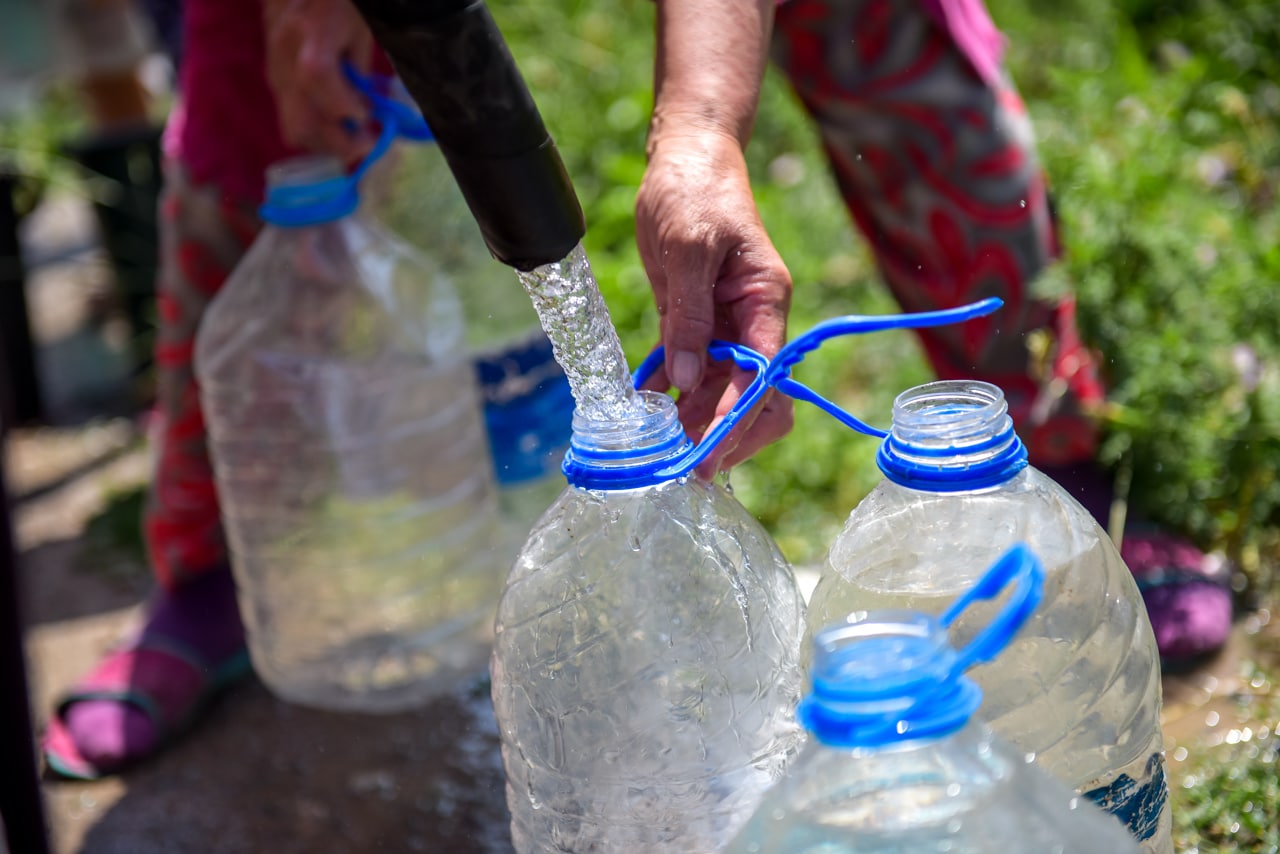
The World Bank’s Board of Executive Directors on June 23 approved a US$45 million International Development Association (IDA)’s grant for the Tajikistan Water Supply and Sanitation Investment Project.
According to the World Bank Country Office for Tajikistan, the overall goal is to support Tajikistan in improving access of rural populations to safe water supply services, and investing in the capacity of institutions to deliver better quality water supply and sanitation services.
“Access to safe drinking water has always been a priority for the World Bank in Tajikistan, because it is a critical element for building healthy and productive human capital,” said Ozan Sevimli, World Bank Country Manager for Tajikistan. “Poor access to water and sanitation disproportionally impacts poor households living in rural areas, especially women and children. Without proper investments in rural water supply and sanitation, achieving our common goals of poverty reduction and economic growth is impossible.”
Although access of the population to improved water sources in Tajikistan has increased from over 75% in 2012 to over 84% in 2020, Tajikistan still has the lowest share of population in Central Asia, around 55%, with access to safely managed water supply services.
Over the past decade, Tajikistan has embarked on a process of important water sector transformation, which is yet to be completed. The country adopted a new Law on Drinking Water Supply and Wastewater, introduced revisions to the National Water Code and revised the legislative and regulatory framework documents for the sector.
Given the lack of reliable data on coverage and quality of water supply services, Tajikistan initiated in 2021 the development of a National Water Supply and Sanitation Program until 2030, which sets a baseline and strategic vision for ensuring universal coverage of the population with safely managed and affordable water supply services.
The Tajikistan Water Supply and Sanitation Investment Project is considered to be the first in a series of projects aimed at supporting the implementation of key water and sanitation investments and reforms in line with the Government reform agenda and building on the World Bank’s support to the sector over the past decades.
The first project will focus on extending access to safe water in the poorest and largest province of Tajikistan, Khatlon, through investments in infrastructure. It will benefit around 250,000 residents of mostly rural communities within Jaloliddini-Balkhi and Dousti districts of the region. It will also invest in strengthening the operational and financial management capacity of targeted water utilities in these districts, as well as the reform of the main water utility, the State Unitary Enterprise "Khojagii Manziliyu Kommunali" aimed at optimization of the sector’s governance framework.
In addition, with project support, investments are planned to improve WASH conditions in schools and rural health centers in the same districts, benefitting around 15,000 people, mainly children. Awareness raising campaigns will be supported to improve WASH practices (including prevention of water source contamination, water conservation, connection and payment practices) among schoolchildren and the general rural population.
Several preparatory studies are planned to assess different types of sanitation and wastewater collection and treatment models and prepare the next stages of investments in line with the investment plan under the Government’s National Water Supply and Sanitation Program 2030, which is currently under preparation.
The project will be implemented by the Ministry of Energy and Water Resources and State Unitary Enterprise "Khojagii Manziliyu Kommunali" till 2027.
Currently, the World Bank is financing 25 projects in Tajikistan totaling at $1.39 billion. Since 1996, the World Bank has provided over $2.44 billion in IDA grants, highly concessional credits, and trust funds for Tajikistan.