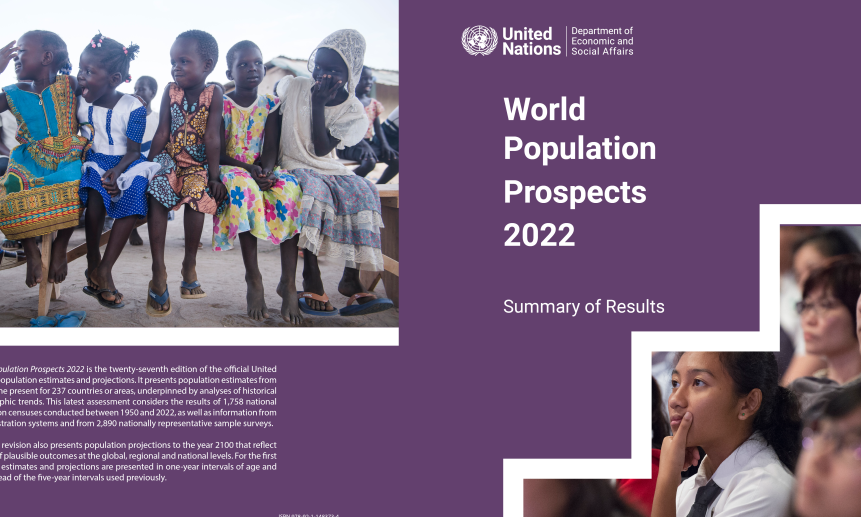
A United Nations report, released on July 11, forecasts that global population is projected to reach 8 billion by mid-November.
The reports says that today, the world’s population is more than three times larger than it was in the mid-twentieth century.
According to it, the global human population will reach 8.0 billion in mid-November 2022 from an estimated 2.5 billion people in 1950, adding 1 billion people since 2010 and 2 billion since 1998.
In World Population Prospects 2022, the U.N. also predicts India will surpass China as the world’s most populous country by 2023.
The report also predicts the world’s population will reach 8.5 billion by 2030 and 9.7 billion by 2050, with eight countries accounting for half of the globe’s projected population increase: Egypt, Ethiopia, India, Nigeria, Pakistan, the Congo, the Philippines and the United Republic of Tanzania.
The U.N. expects the planet’s population to peak at 10.4 billion during the 2080s and stagnate at that level until 2100.
Worldwide population growth is in part linked to increasing life expectancy. In 2019, global life expectancy reached 72.8 years, a spike of almost 9 years since the 1990s. Life expectancy is expected to shoot up to 77.2 years by 2050, according to the report.
But while the global population continues to rise, the planet’s population rate of growth is not what it used to be.
In 2020, global population growth fell under 1 percent for the first time since 1950 according to the report, with the decline in part connected to decreasing birth rates in dozens of countries.
In 2021, the worldwide average fertility rate was 2.3 births per every woman over her lifetime, a drop of 5 births per woman since 1950, the report states.
Today, two-thirds of humanity live in a part of the world where women are giving birth to fewer than 2.1 children in their lifetime.
World Population Prospects 2022 is the twenty-seventh edition of the official estimates and projections of the global population that have been published by the United Nations since 1951. They form a comprehensive set of demographic data to assess population trends at the global, regional and national levels. This report provides an overview of global population trends focusing on the period from 1950 to 2050 and presents a summary of key demographic prospects during the second half of the present century.
The United Nations population estimates and projections are used in the calculation of many development indicators used by the United Nations system, including about one-quarter of the indicators used to monitor global progress towards the achievement of the SDGs.