Tajik authorities plan to increase significantly electricity production within the next five years through the use of renewable energy resources.
The Government of Tajikistan on March 1, 2023 approved the renewable energy program designed for 2023-2027.
Renewable energy is energy produced from sources like the sun and wind that are naturally replenished and do not run out. Renewable energy can be used for electricity generation, space and water heating and cooling, and transportation. The major types of renewable energy sources include solar energy, wind energy, geothermal energy, hydropower, and bioenergy.
The 2023-2027 renewable energy program of Tajikistan, in particular, notes that specialists are currently assessing resources and potential of the solar, wind and geothermal energies renewable energy as well as hydropower in Tajikistan.
The program says that according to the preliminary data, current resources of the renewable energy (large hydropower plants not included) in Tajikistan are more than 35,754.55 megawatts.
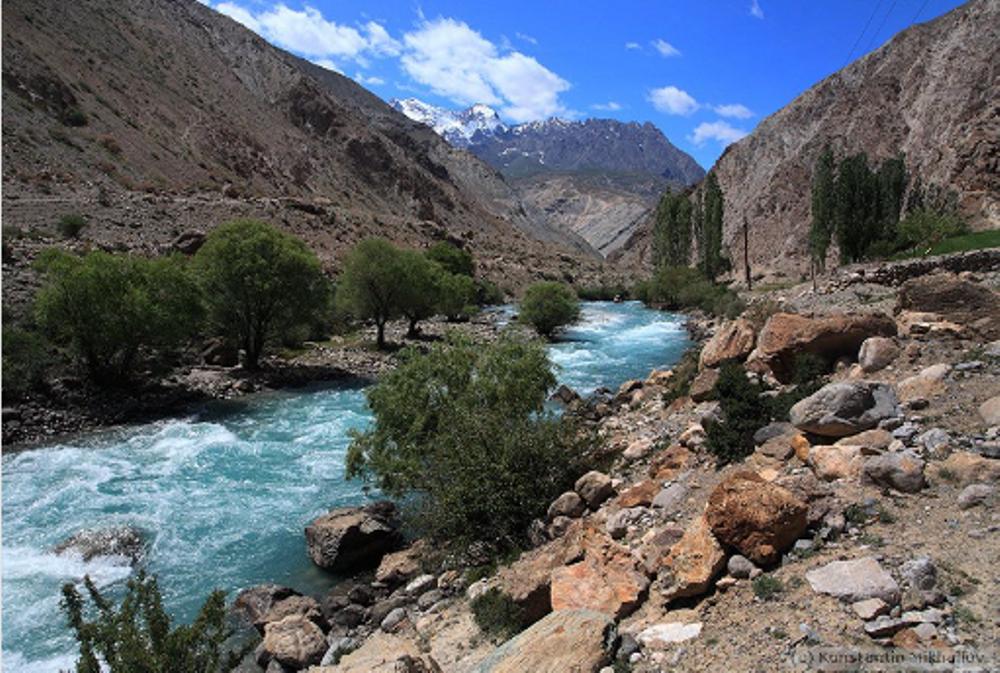
Thus, the potential of small rivers for construction of small hydropower plants is estimated at 32,500 megawatts with the ability to generate more than 100 billion kWh of electric power per year.
The program authors consider it important to use effectively the solar energy, noting that annual duration of sunshine in Tajikistan fluctuates from 250 to 330 days.
The wind energy potential in Tajikistan is estimated at 1,900 megawatts and the country’s bioenergy potential is estimated at 807 megawatts.
1.6 billion somonis (TJS, equivalent to some 150 million US dollars), including 3.6 million somonis of budgetary funds, are expected to be channeled for implementation of the program. The remaining amount is expected to be received from development partners.
According to the program, 34 investment programs worth 57.2 billion somonis have been implemented to date to solve the problems of the energy sector and improve the state of power supply to consumers in the country and the region as a whole.
17 other such problems worth 16.4 billion somonis are reportedly under implementation.
The program also notes that new power plants with a total capacity of more than 2,000 megawatts have been built in the country over the years of independence.
Tajikistan is home to some of the world’s largest hydropower plants and is ranked eighth in the world for hydropower potential with an estimated 527 terawatt-hours (TWh), following China, Russia, the United States, Brazil, Zaire, India and Canada. Currently only 4% of the country’s hydro potential is exploited.
According to data from the Agency for Statistics under the President of Tajikistan, 21.4 billion kWh of electricity was generated in Tajikistan last year (91.1 percent of electric power was generated by hydropower plants, about 6.9 percent of electricity was generated by combined heat and power (CHP) plants and only 0.001 percent of electric power was produced by solar power plants).
With abundant water potential from its rivers, natural lakes and glaciers, Tajikistan is almost exclusively reliant on hydro for electricity generation.
For comparison, Kazakhstan last year produced 112.8 billion kWh of electricity (94.5 percent was produced by thermal power plants), Uzbekistan – 73.4 billion kWh (more than 80 percent was produced by thermal power plants), Turkmenistan – 24.7 billion kWh (almost 100 percent was produced by thermal power plants), and Kyrgyzstan – 12.8 billion kWh (about 15 percent was generated by thermal power plants).