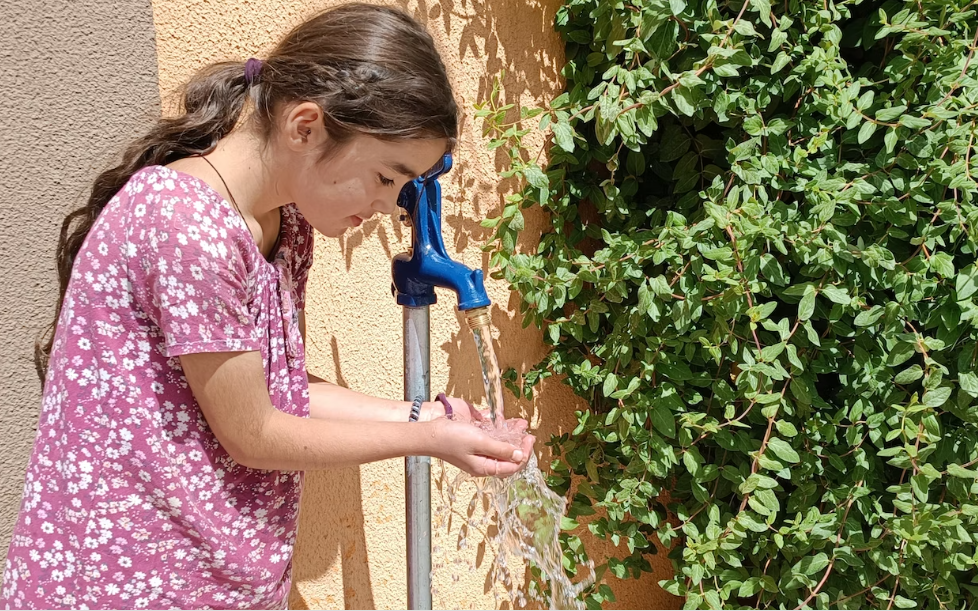
Water is fundamental to human development and easy access to clean drinking water, along with toilets and information on hygiene, reduces diseases, enables girls in particular to attend latrine-equipped schools, and saves women and children from queuing for and carrying water for on average 90 minutes per day, says a press release issued by the Aga Khan Development Network (AKDN) on March 24.
Infrastructure such as irrigation canals, with equitable access, provides water supplies for agriculture and livestock. Energy generation and most industries are also dependent on reliable water supplies.
With two percent of its area covered by lakes, and almost a thousand rivers, Tajikistan has abundant fresh water. Over 95 percent of its electricity is supplied by hydropower. However, the remoteness of much of the Tajik population makes it difficult to provide and maintain water infrastructure. In 2019, the World Bank found that 43 percent of inhabitants lacked basic sanitation facilities, while 35 percent had no drinking water services. Meanwhile, floodwaters and mudslides from glacial lake overflows and surface water threaten lives: water is as much a hazard as a resource.
Pressure on shared natural resources, with the potential for creating conflict within and across national borders, is intensified by climate change. For example, research from the University of Central Asia (UCA) shows that while the population in Sughd is growing, the decrease in winter rain and the loss of glaciers threatens the availability of water in the Isfara River, vital for agriculture.
In response, the National Development Strategy of Tajikistan for the period up to 2030 notes the need for irrigation and effective water management for agricultural development, the potential of hydropower for energy security, and the demands of the national economy and the growing population for investment in water infrastructure.
For almost three decades, AKDN has been working with the Government of Tajikistan and other international partners to improve access to water for drinking, washing and irrigation. The Aga Khan Foundation (AKF) has implemented 600 irrigation schemes to date. These have improved land management and raised farming productivity, helping around 720,000 people increase their food and income security.
A recent program, “Improving stability and natural resource management in Tajikistan and Kyrgyzstan”, helped reduce conflict at the border by working with water and pasture organizations in cross-border areas to improve access to and management of irrigation water, drinking water and grazing lands. Over 100 sites were rehabilitated, comprising improvements to irrigation canals, drinking water systems, access routes to pasture lands and veterinary and watering sites for livestock.
The four-year Integrated Health and Habitat Improvement program, funded by the Swiss Agency for Development and Cooperation, constructed drinking water supply systems that serve almost 144,000 people in Rasht Valley and 42,000 people in Khatlon, alongside school latrines. The program provided training on watershed management, soil bioengineering and natural resource management, strengthening local government capacity to sustain the improvements.
The press release says our community engagement and infrastructure development experience is currently being put to use for Thrive Tajikistan, a five-year, USAID-supported project. The program integrates health, nutrition, agriculture and economic empowerment interventions for vulnerable communities, aiming to reach 165,000 direct and 460,000 indirect beneficiaries. Water, whether viewed as a scarce necessity or in glacial flood form as an existential threat, is a significant element of the work.