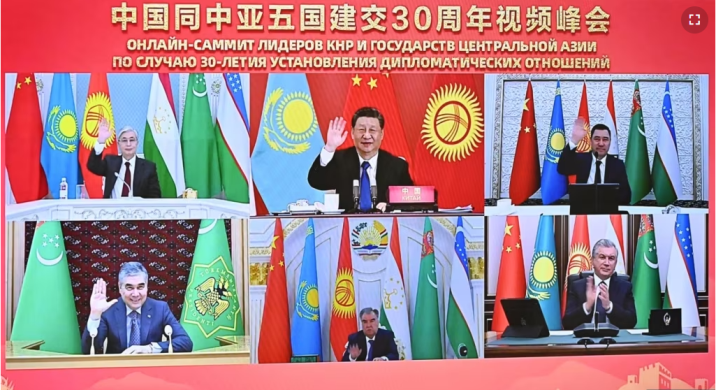
Radio Liberty cites analysts and officials saying that as China continues to reopen its economy and reinvigorate its diplomatic dealings around the world after three years of strict COVID-19 restrictions, Beijing has its sights set on Central Asia, analysts and officials say.
As trade and commerce links between Beijing and the five countries in Central Asia continue to rebound from the shutdowns caused by the pandemic, the Chinese city of Xi’an will host the first Central Asia-China summit from May 18-19.
China will use the summit to try to build on the major progress it has made recently by establishing visa-free travel deals with several regional governments.
A new bilateral deal came into effect this month between Kazakhstan and China that allows passport holders of the countries to stay in the other country for 30 days. The move comes after Uzbekistan approved two weeks of visa-free travel for Chinese tourists and with Kyrgyzstan currently in talks for its own visa-free regime with Beijing that it hopes will boost its economy through increased cross-border trade, investment, and tourism.
The current push in Central Asia reportedly comes as China looks to breathe new life into its multibillion dollar Belt and Road Initiative (BRI) foreign-policy project and attempt to normalize the situation in its western Xinjiang Province, which borders Kazakhstan, Kyrgyzstan, and Tajikistan.
China views Central Asia as integral to its long-term economic strategy for Eurasia and experts say Beijing is looking to send a symbolic message to the region as its domestic economy gathers steam again since its reopening, according to Radio Liberty.
Recall, the Central Asian five leaders were last seen together at May 9 Victory Day events in Moscow.
Eurasianet cited China’s Foreign Ministry spokesman Wang Wenbin as saying on May 8 that China and Central Asian countries are friendly neighbors and comprehensive strategic partners. “The two sides have been growing their relations following the principles of mutual respect, good-neighborly friendship, solidarity in trying times and win-win cooperation,” Wang said.
China’s state-run news agency Xinhua reported that in addition to participating in the summit, the leaders of Kazakhstan, Uzbekistan, Kyrgyzstan and Tajikistan would conduct state visits in the days before and after the joint gathering. Each Central Asian presidents will hold individual discussions with Chinese leader Xi Jinping.
Turkmenistan’s president, Serdar Berdimuhamedov, reportedly already paid a state visit to China in January, and thus will not get a one-on-one with Xi later this month.