Kazakhstan ratifies document on the ‘coordinating state’ concept as part of the CSTO

Kazpravda.kz  reports that Kazakhstan’s lower chamber (Mazhilis) has ratified a protocol on making amendments to the Collective Security Treaty Organization (CSTO) agreement on the Organization peacekeeping activities issued on October 6, 2007.   The protocol reportedly introduces the concept of "coordinating state” and stipulates that under its auspices, the CSTO collective peacekeeping forces would be set […]

Kazpravda.kz  reports that Kazakhstan’s lower chamber (Mazhilis) has ratified a protocol on making amendments to the Collective Security Treaty Organization (CSTO) agreement on the Organization peacekeeping activities issued on October 6, 2007.  

The protocol reportedly introduces the concept of "coordinating state” and stipulates that under its auspices, the CSTO collective peacekeeping forces would be set up for using in UN peacekeeping operations.    

According to the protocol, the coordinating state is one of the states designated by the Collective Security Council to resolve organizational issues  and the issues of comprehensive support for the use of the CSTO peacekeeping force in the UN peacekeeping operations. 

Recall, the protocol was signed in Dushanbe on September 16, 2021. 

CSTO member nations on October 6, 2007 agreed to a major expansion of the organization to create a CSTO peacekeeping force that could be deployed under a UN mandate or without one in its member states.

On December 10, 2010, the member states approved a declaration establishing a CSTO peacekeeping force and a declaration of the CSTO member states, in addition to signing a package of joint documents.

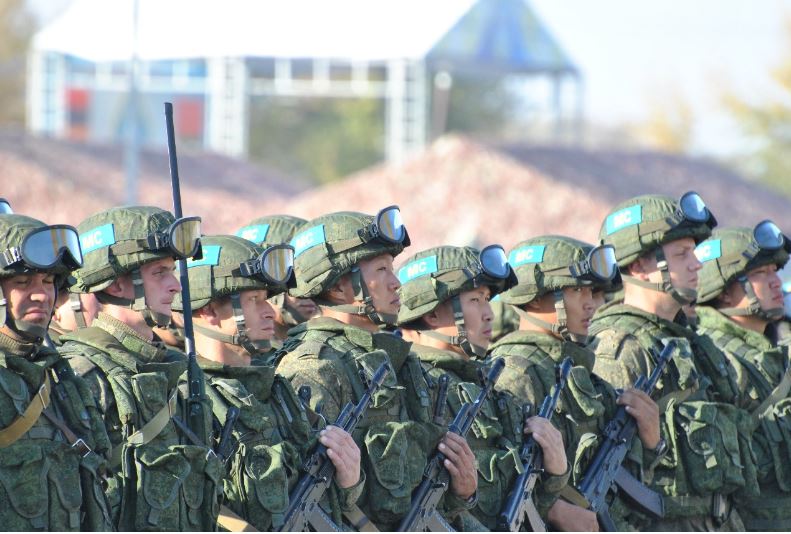
The CSTO peacekeeping force is composed of troops from member states and is designed to provide stability and security in the region.

According to Article 3 of the Agreement, the decision on peacekeeping activities in the territory of one of the CSTO member states is made by the CSTO Collective Security Council, based on the respective official application of the given state and immediately informing the UN Security Council.

The composition of the Collective Peacekeeping Forces may include military, police and civilian personnel, from which are formed: combined Command; combat units (units); police units (police); a group of military observers; units (units) of combat, technical and rear support; and other bodies and departments to ensure the implementation of the tasks.

Created in 1992, the Collective Security Treaty Organization is a Russia-led military alliance grouping the six former Soviet republics of Armenia, Belarus, Kazakhstan, Kyrgyzstan, Russia and Tajikistan.
Join us on social media!

Article translations:

Related Article

Tenisi
Оби зулол
Оби зулол

Most Read

Коммерсбонк Точикистон

Recent Articles

RZD announces the restoration of passenger services between Moscow and Dushanbe

Direct rail services between the capitals of Russia and Tajikistan were suspended in March 2020 due to the COVID-19 pandemic.

#AP30/Stories. “Selam! Heller nichek?” How Tatars live today in Sughd province

On the 30th anniversary of "Asia-Plus," we continue to publish reports that remain relevant even after years. This story was told in 2021, and since then, little has changed in the life of the Tatar community in Tajikistan.

15,000 cameras, drones, and robots: how technology monitors pilgrims in Mecca and Medina

During Hajj 2026, Mecca and Medina were under unprecedented digital control.

Another child in Dushanbe removed from family and sent to boarding school

The Ministry of Internal Affairs reports that the parents did not pay adequate attention to the child.

Emomali Rahmon instructs to address issues in seed production following criticism of the industry

Issues have been noted with certification, seed quality, and the material and technical base of the industry.

Water, climate, and a $130 billion deficit: seven key outcomes of the Water Conference in Dushanbe

At the forum, countries and international organizations discussed new mechanisms for cooperation, investments, and technologies that are essential for addressing the global water crisis.

Eskhata Bank introduces a new generation children’s wallet

"Eshkata Bank" has created a full-fledged digital platform that helps children aged 7 to 16 learn how to manage money.