Evgeniy Sysoyev, Director of the Commonwealth of Independent States (CIS) Anti-Terrorism Structure, has warned that the Taliban leaders' statements regarding the "export of Sharia" are a danger to Central Asia.
Sharia is a body of religious law that forms a part of the Islamic tradition. It is derived from the religious precepts of Islam and is based on scriptures of Islam, particularly the Quran and the Hadith.
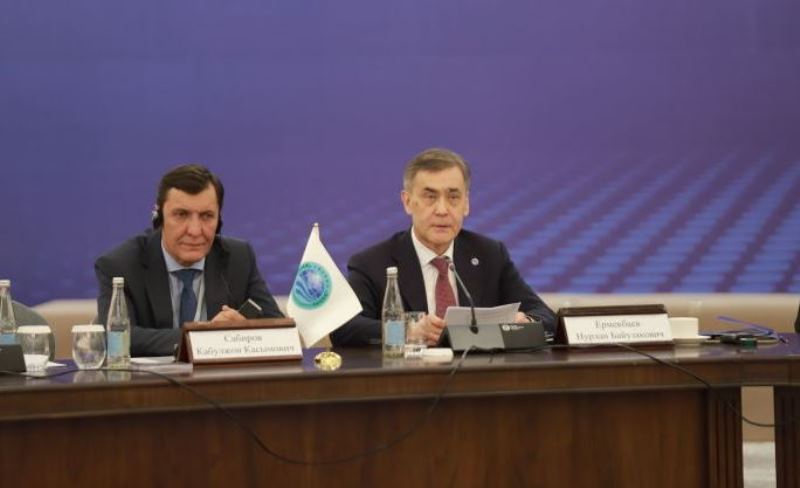
Speaking at a conference in Tashkent, Uzbekistan, Mr. Sysoyev noted on November 7 that Afghanistan is a source of "one of the special concerns."
Russian media reports say the 9th International Scientific and Practical Conference of Shanghai Cooperation Organization (SCO)’s Regional Anti-Terrorist Structure (ATS), entitled “Confidence, Cooperation and Professionalism as the Key to a Safe Future”, was held in Uzbekistan’s capital, Tashkent, on November 7-8.
TASS and RIA Novosti news agencies report that in his statement delivered at the meeting, Mr. Sysoyev considered the ethnic and religious prejudices and the "Pashtunization of the political elites" of Afghanistan as one of the current challenges facing the country.
Pashtunization, also called Pathanization, is a process of cultural or linguistic change in which someone or something non-Pashtun becomes acculturated to Pashtun influence. Pashtuns are the largest ethnic group in Afghanistan and second-largest in Pakistan.
ATS chief also said that although the Taliban have declared the fight against terrorism, they cannot cope with the increasing influence and capabilities of the ISIS affiliate, known as the Islamic State Khorasan Province or ISIS-K, which is now estimated to have a force of up to 6,000 militants and poses a direct threat to Central Asia’s nations.
ISIS-K is active in South Asia and Central Asia. ISIS-K has been active in Afghanistan and its area of operations includes Pakistan, Tajikistan and India where they claimed attacks, as well as Sri Lanka, the Maldives, Bangladesh and China where individuals have pledged allegiance to it. The ISIS-K and Taliban consider each other enemies.
The group was created in January 2015 by disaffected Taliban in eastern Afghanistan, although its membership includes individuals from various countries notably Pakistan, Bangladesh, India and Myanmar. Its initial leaders, Hafiz Saeed Khan and Abdul Rauf Aliza, were killed by US forces in July 2016 and February 2015, respectively. Subsequent leaders have also been killed; its leader Abdullah Orokzai was captured in April 2020 by Afghanistan's intelligence service.
The Commonwealth of Independent States Anti-Terrorism Structure (CIS ATS) was established on June 1, 2000. The CIS ATS is a CIS permanent specialized institution of the Commonwealth of Independent States providing coordination of cooperation of the CIS security agencies and special services in the field of combating terrorism and extremism. Nine CIS member-states are parties to the Center’s work: Azerbaijan, Armenia, Belarus, Kazakhstan, Kyrgyzstan, Moldova, Russia, Tajikistan and Uzbekistan.
The legal status, main tasks and functions of the ATS are governed by the Regulation on the Commonwealth of Independent States Anti-Terrorism Structure approved by the Decision of the Council of the CIS Heads of States as of December 1, 2000.
The Program for 2023-2025 is currently in effect. The Council of the Heads of Security Agencies and Special Services of the CIS member-states (SORB) execute principal management of the Center's activity.
The head of the CIS Anti-Terrorism Structure is appointed for a three-year period (released) by the decision of the Council of the Heads of CIS States. The CIS ATS is headquartered in Moscow, Russian Federation.