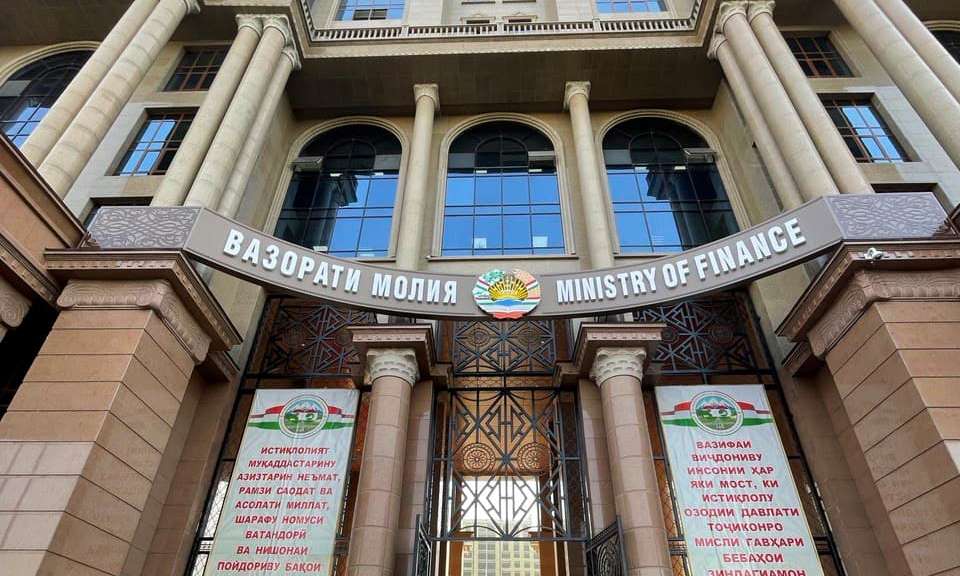
The secondary market for sale of securities is expected to be established in Tajikistan, according to the Ministry of Finance (MoF)’s official website.
Presentation of the first issue of government securities at the country’s organized market reportedly took place in Dushanbe on January 9.
The event participants (Roadshow) were familiarized with the terms of issue and placement of government bonds of the Republic of Tajikistan.
A roadshow is a series of presentations made in various locations leading up to an initial public offering (IPO). The roadshow is a sales pitch or promotion made by the underwriting firm and a company's management team to potential investors before going public. Roadshows generally take place in major cities and are meant to drum up interest in the upcoming offer. Potential investors are introduced to the company, its history, and its key personnel.
Heads of a MoF, the National Bank of Tajikistan (NBT) and senior representatives of a number of relevant ministries and agencies as well as international financial institutions active in the country participated in the meeting.
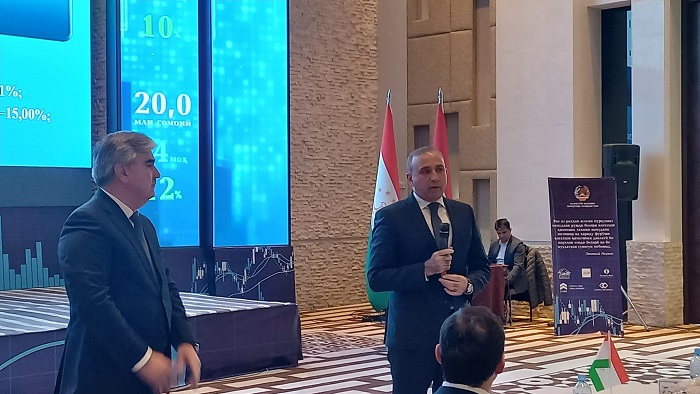
One of the meeting participants, who wanted to remain unnamed, told Asia-Plus that the presented government bonds are planned to be sold both legal (commercial banks, companies and other organizations) and physical entities.
The money collected is expected go to the budget to finance important industries and sectors.
The establishment of the second securities market is associated with an instruction made by President Emomali Rahmon at a joint meeting of both chambers of parliament on December 28, 2023.
Recall, the president noted in his address to the meeting that within the next two years, the Ministries of Finance, Economic Development and Trade, as well as the National Bank and other relevant ministries and agencies, should implement a non-cash payment system in all sectors, including in the trade and service points, and assure the integration of efforts in this direction.
“The above ministries and agencies should take the required steps to develop securities market, particularly the «green» securities and secondary market in order to attract domestic and foreign capital,” Rahmon said.
The secondary market is where investors buy and sell securities from other investors.
The secondary market is important for several reasons:
- The secondary market helps measure the economic condition of a country. The rise or fall in share prices indicates a boom or recession cycle in an economy.
- The secondary market provides a good mechanism for a fair valuation of a company.
- The secondary market helps drive the price of securities towards their genuine, fair market value through the basic economic forces of supply and demand.
- The secondary market promotes economic efficiency. Each sale of a security involves a seller who values the security less than the price and a buyer who values the security more than the price.
- The secondary market allows for high liquidity – stocks can be easily bought and sold for cash.
There are two types of markets to invest in securities – the Primary Market and Secondary Market.
The primary market is the market where securities are created. In the primary market, companies sell new stocks and bonds to investors for the first time. It is usually done through an Initial Public Offering (IPO).
The secondary market is the market where securities are traded. Investors trade securities without the involvement of the issuing companies. Investors buy and sell securities among themselves. The secondary market does not provide financing to issuing companies – they are not involved in the transaction. The amount received for a security in the secondary market is income for the investor who is selling the securities.