Three Tajikistanis – victims of human trafficking – returned home from Myanmar

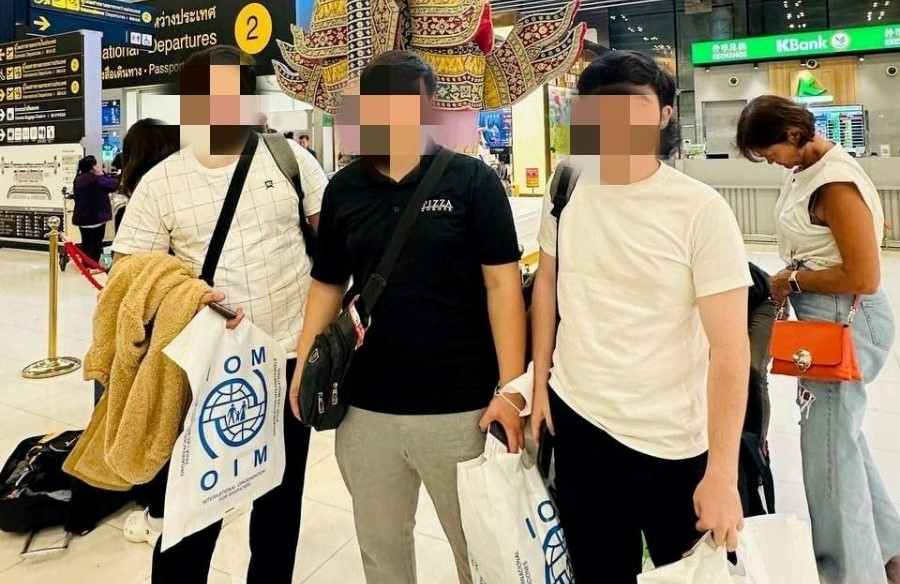
The Tajik Foreign Ministry information department reports that three citizens of the Republic of Tajikistan, who had been victims of human trafficking in Myanmar, were returned to their homeland on January 20, 2024 under the coordination of the Embassy of the Republic of Tajikistan in Malaysia and in cooperation with the Royal Thai authorities, the […]

Asia-Plus

The Tajik Foreign Ministry information department reports that three citizens of the Republic of Tajikistan, who had been victims of human trafficking in Myanmar, were returned to their homeland on January 20, 2024 under the coordination of the Embassy of the Republic of Tajikistan in Malaysia and in cooperation with the Royal Thai authorities, the Embassy of Myanmar in Malaysia, as well as the International Organization for Migration (IOM) and the International Justice Mission (IJM).

The relevant Tajik authorities are reportedly carrying out rehabilitation and psychological work with these citizens and are taking the necessary preventative measures to prevent similar situations in the future.

The Ministry of Foreign Affairs of Tajikistan expresses its gratitude to the authorities of Thailand and Myanmar, as well as to the International Organization for Migration and the International Justice Mission, for their assistance in protecting the rights and interests of Tajik citizens and facilitating their return home.

Meanwhile, the Global Slavery Index 2023, produced by human rights group Walk Free, reveals the 10 countries with the highest prevalence of modern slavery are North Korea, Eritrea, Mauritania, Saudi Arabia, Turkiye, Tajikistan, United Arab Emirates, Russia, Afghanistan, and Kuwait.

“Modern slavery permeates every aspect of our society.  It is woven through our clothes, lights up our electronics, and seasons our food. At its core, modern slavery is a manifestation of extreme inequality.  It is a mirror held to power, reflecting who in any given society has it and who does not.  Nowhere is this paradox more present than in our global economy through transnational supply chains,” said Founding Director of Walk Free, Grace Forrest.
Join us on social media!

Article translations:

Related Article

Оби зулол
Оби зулол

Most Read

Recent Articles

Media: the US struck Iranian ports but denies resuming war

Iran's military opened fire on forces that attempted to attack a pier on Qeshm Island.

Uzbekistan implements digital residency registration system

It will be possible to process it online through Face-ID.

The only GPW veteran in Dushanbe allocated more than 80,000 somoni

The mayor's office of Dushanbe allocated him 25,000 somoni.

GITEX AI Kazakhstan 2026: how Almaty became the main AI hub of Central Asia

More than 300 companies and startups, over 200 speakers and 100 investors from 50 countries — the region is entering the global stage.

A trade and economic park to be built at the border junction of Tajikistan, Kyrgyzstan, and Uzbekistan

President of the Kyrgyz Republic Sadyr Japarov familiarized himself with the project.

A project to protect soil from degradation to be developed in Central Asia

The initiative is of great significance for the mountainous countries of the region, including Tajikistan.

Mudslide, death, and destroyed homes: hundreds of families in Tajikistan left homeless

A correspondent from "Asia-Plus" visited Kulob and spoke with the families of those who died and were affected by the disaster.

Spring 2026 bright event: new issue of VIPzone now on sale

This issue is about people and ideas that change everything: from business and investments to fashion, food, and urban environment.