Turbli, a turbulence forecast tool, ranks Tajikistan 89th among 172 countries and territories in terms of turbulence in January 2004.
The other Central Asian countries rank as follows: Kazakhstan 161st; Kyrgyzstan 75th; Uzbekistan 155th; and Turkmenistan 151st.
The rankings are reportedly made using Turbli's historical database, built from the daily forecasts provided by NOAA and the UK Met Office.
Turbulence eddy dissipation rate (edr), normalized to 0-100. Light (0-20), Moderate (20-40), Strong (40-60), Severe (60-80), Extreme (80-100)
Turbulence timeline for Tajikistan
Variation of the turbulence strength, every 12 h (edr)
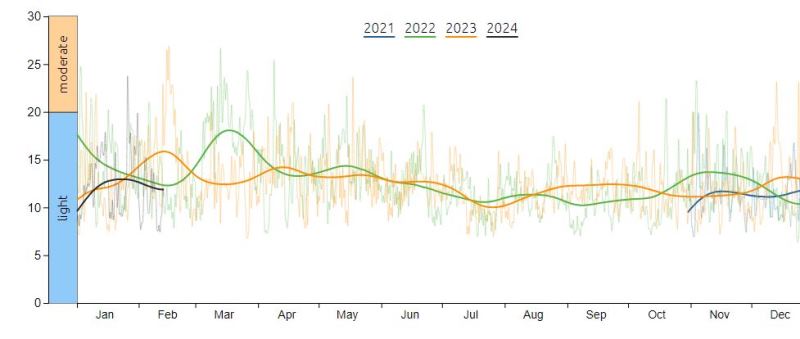
eddy dissipation rate or EDR is an aircraft-independent meteorological field expressed in m²/s³. Simply put, an atmosphere that causes eddies to dissipate rapidly is one that is likely turbulent.
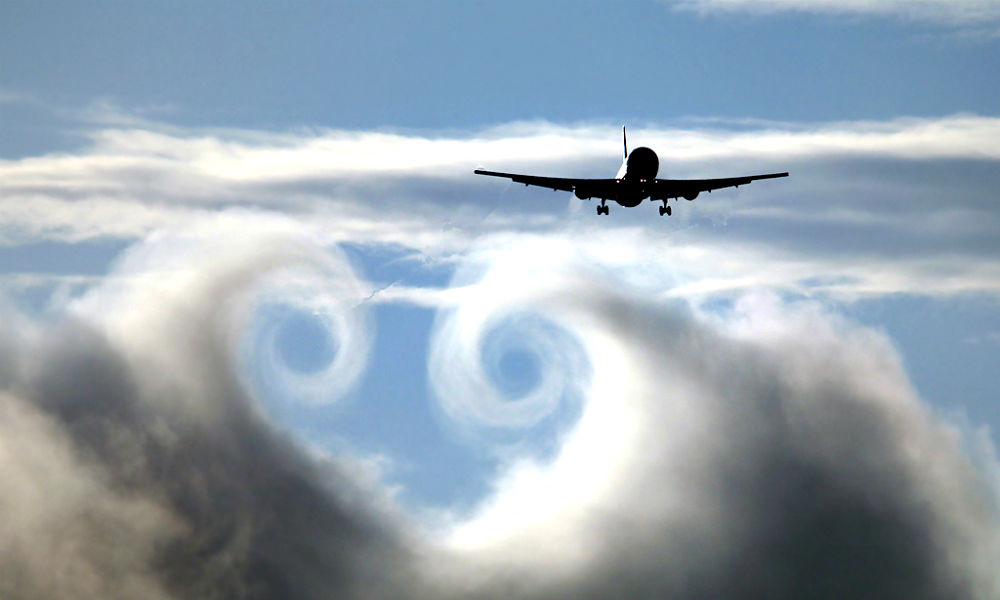
Turbulence is one of the most unpredictable of all the weather phenomena that are of significance to pilots. Turbulence is an irregular motion of the air resulting from eddies and vertical currents. It may be as insignificant as a few annoying bumps or severe enough to momentarily throw an airplane out of control or to cause structural damage. Turbulence is associated with fronts, wind shear, thunderstorms, etc.
Turbulence is usually classed as light, moderate, severe or extreme. The degree is determined by the nature of the initiating agency and by the degree of stability of the air.
Light turbulence momentarily causes slight changes in altitude and/or attitude or a slight bumpiness. Occupants of the airplane may feel a slight strain against their seat belts.
Moderate turbulence is similar to light turbulence but somewhat more intense. There is, however, no loss of control of the airplane. Occupants will feel a definite strain against their seat belts and unsecured objects will be dislodged.
Severe turbulence causes large and abrupt changes in altitude and/or attitude and, usually, large variations in indicated airspeed. The airplane may momentarily be out of control. Occupants of the airplane will be forced violently against their seat belts.
In extreme turbulence, the airplane is tossed violently about and is impossible to control. It may cause structural damage.