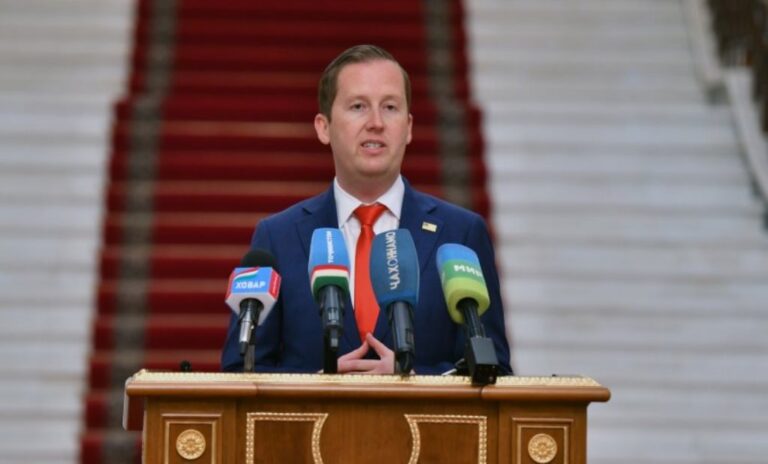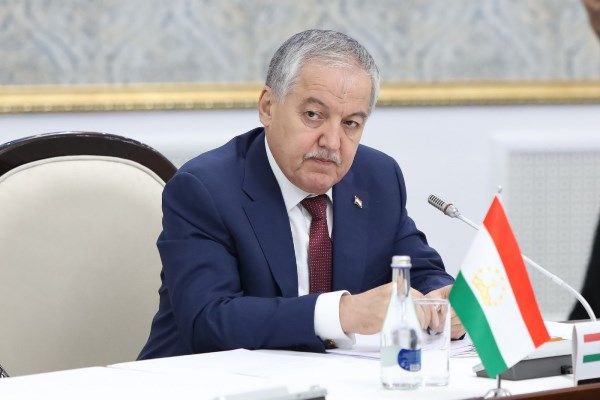
The meeting of the CIS Council of Foreign Ministers kicked off in Minsk, Belarus on April 12.
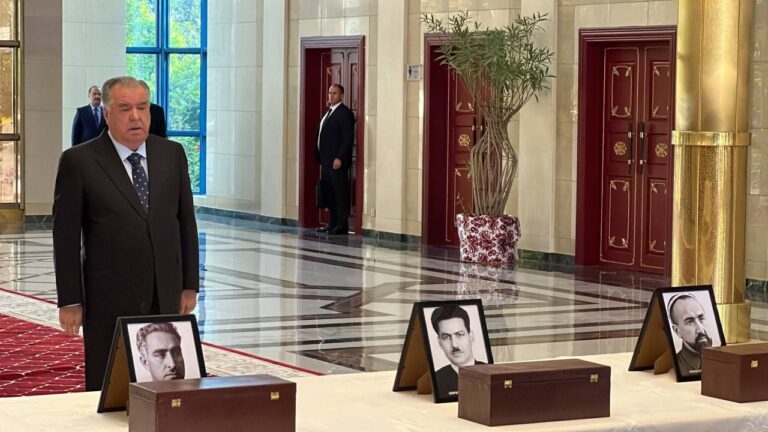
At the start of the meeting, the ministers honored the victims of the terrorist attack in the Crocus City Hall with a minute of silence.
“I invite all the participants to observe a minute of silence in tribute to the memory of the victims of the terrorist attack in the Crocus City Hall,” Belarusian Minister of Foreign Affairs Sergei Aleinik said opening the meeting, according to BelTA.
An official source within the Foreign Ministry of Tajikistan told Asia-Plus that speaking at the meeting in Minsk, Tajik Foreign Minister Sirojiddin Muhriddin noted that when investigating the March 22 terrorist attack, Russian law enforcement authorities must comply with the norms and principles of international law and legal requirements, especially regarding the presumption of innocence, prohibition of torture and ill-treatment of detainees.
He further noted that “demonstration in the open information space of footages of the detention of suspected perpetrators of a terrorist act with the use of torture against them in the form of bodily mutilation is unacceptable.” “The price of confessions obtained in this way is well known to everyone,” the minister noted.
“As a result of an ill-conceived information campaign, a negative perception of citizens of Tajikistan and Tajiks is being formed,” the top Tajik diplomat said, adding that “the formation of an atmosphere of hatred, xenophobia and racism should not be allowed in information space of the CIS countries.”
Muhriddin noted that Tajikistan hope that the investigation into the Crocus City Hall terrorist attack will be impartial and fair.
“All criminals must be punished: the organizers, the perpetrators, the accomplices, and the masterminds of this monstrous crime,” Muhirididn added.
Recall, people detained on suspicion of being involved in the Crocus City Hall terrorist attack were tortured. In photos and videos from the courtroom, the men show visible signs of torture. Dalerjon Mirzoyev’s face is covered with bruises and pieces of a plastic bag hang around his neck. Faridoun Shamsidin’s cheek is severely swollen and Saidakram Rajabalizoda’s ear is bandaged. Muhammadsobir Fayzov is brought in on a stretcher, wearing a catheter
Experts note that victims of torture often admit to things they didn’t do in order to free themselves from violence at least for a while and whether the confessions extracted in this way can be considered valid.
Asia-Plus contacted Tajik Human Rights Ombudsman Umed Bobozoda in early April to find out if he intends to contact the authorized bodies of Russia regarding the use of torture against Tajik citizens.
Umed Bobozoda stated in a written response that this issue is within the competence of the Prosecutor-General’s Office.
“For the purpose of non-interference in investigative actions and the administration of justice, the Human Rights Ombudsman of Tajikistan has so far refrained from contacting the Investigative Committee of Russia or making any statements through media,” Bobozoda added.
Meanwhile, Interfax reported on March 26 that the Commissioner for Human Rights of the Russian Federation, Mrs. Tatiana Moskalkova, has condemned the use of torture against the terrorism suspects.