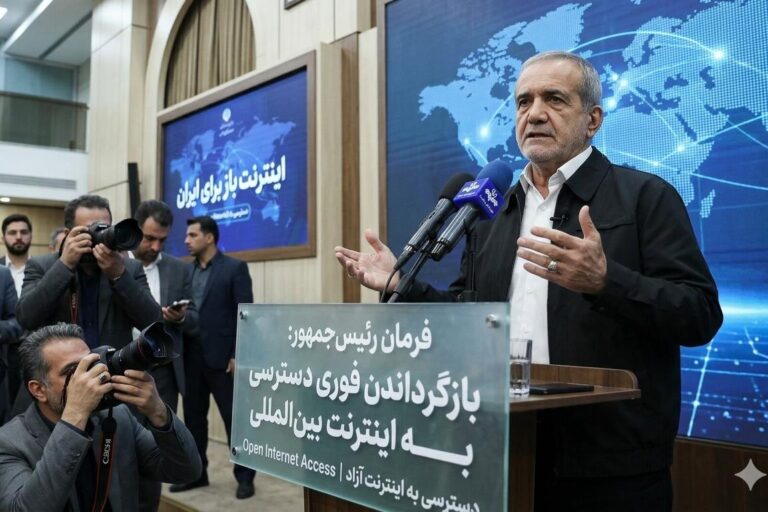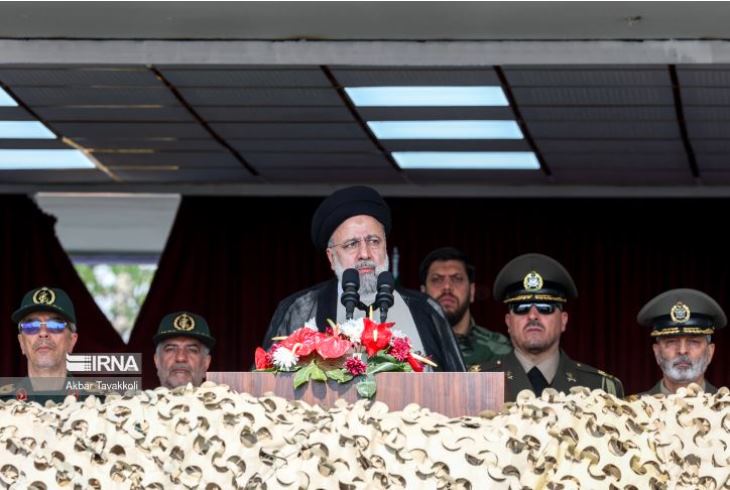
Iranian media reports say Iranian President Ebrahim Raisi warned today that if the Zionist regime makes the slightest act of aggression on Iran’s soil, it will be dealt with a powerful and fierce blow.
President Raisi reportedly also said that Iran’s retaliatory operation against the Israeli regime, dubbed Operation True Promise, was “limited” and “punitive”.
He made the remarks at the parade of the Islamic Republic of Iran Army on the occasion of National Army Day, according to IRNA.
On April 16, Iranian President Ebrahim Raisi held phone talks with his Russian counterpart Vladimir Putin.
IRNA reports that Putin appreciated Iran’s response to a last week Zionist attack against Iran’s consular building in Damascus, describing the measure as the best way for punishing the aggressor and indicative of the tact and rationality of Iranian leaders.
Referring to the inaction of the UN Security Council and other international organizations in dealing with this aggression, Raisi said that Iran’s counterattack occurred in accordance with Article 51 of the UN Charter as a self-defense measure.
He reportedly stressed that any further act against Iran’s interests will be responded stronger and in a larger scale.
Meanwhile Ghatham House reported on April 15 that Iran’s attack on Israel was not the failure many claim but it has ended Israel’s isolation. The strikes reportedly demonstrated a more assertive approach from Tehran, but the region’s security now depends on Israel’s ability to play a longer game.
Iranian-Israeli tensions have long simmered in the shadows of the broader Middle East. Since the 1979 revolution, Iran has reportedly taken an anti-Israeli posture and “… has cultivated and financed support for the ‘axis of resistance’ network in Lebanon, Syria, Iraq, Yemen and Palestine, surrounding Israel’s borders.”
Ghatham House notes that today these groups no longer proxies but rather partners who have domestic autonomy and coordinate transnationally.
In addition to the war in Gaza, since 7 October Israel has reportedly been strategically targeting key coordinating figures of the axis of resistance as well as Iranian assets and individuals across its borders. In fact, over the past six months, over 18 IRGC Qods force members have been killed alongside the attack on Iran’s Damascus embassy compound.
Iran’s consistent message has been that it seeks to avoid a broader regional war and this may have factored into Israel’s calculations around its new approach.