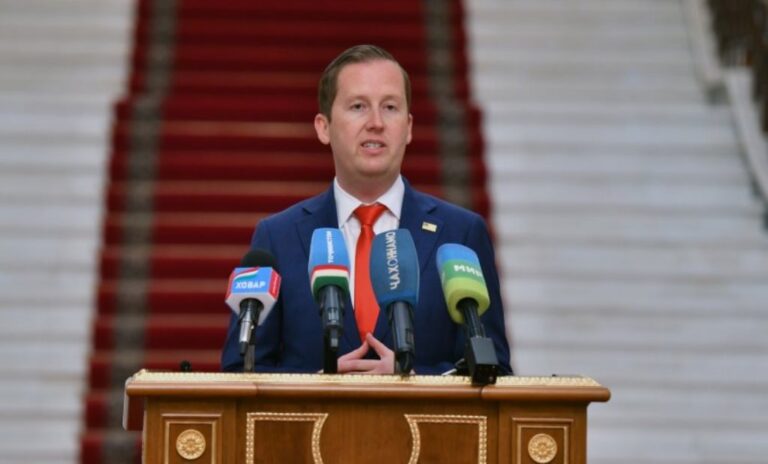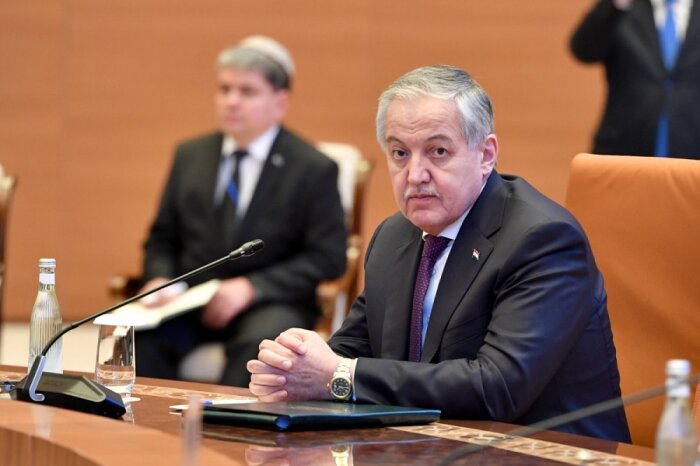
Speaking at a meeting of the Collective Security Treaty Organization (CSTO) Council of Foreign Ministers in Almaty, Kazakhstan, the top Tajik diplomat Sirojiddin Muhriddin suggested on June 21 that the CSTO Humanitarian Response Center be established in Tajikistan’s Khatlon Province, according to the Ministry of Foreign Affairs of Tajikistan (MFA).
An official source within the Foreign Ministry says Mr. Muhriddin noted that the Center’s activities will be aimed at promptly responding to potential threats and humanitarian crises.
According to him, Tajik foreign minister also emphasized the significance of completion of the multi-year negotiation process on the development of the target interstate program to strengthen the Tajik-Afghan border and proposed to initiate the signing of the relevant decision of the CSTO Collective Security Council in July this year.
Muhriddin reportedly paid special attention to the problems of religious radicalism.
“For the Central Asian region, the most serious challenge is promoting the destructive ideology of religious radicalism,” the top Tajik diplomat said.
Tajik foreign minister reportedly also expressed the need for expert study of the initiative to create the system of protection of the CSTO information space.
Besides, Sirojiddin Muhriddin emphasized Tajikistan’s readiness to host the SCTO military exercise, dubbed Rubezh 2024 (Frontier 2024), the source added.
Meanwhile, Russia media reports say top diplomats from the CSTO member states are discussing the current international and regional landscape, reviewing the outcomes of various CSTO collaborations, and deliberating on enhancing coordination in foreign policy.
The CSTO Council of Foreign Ministers is reportedly expected to approve several draft decisions. The foreign ministry of Kazakhstan, which holds the organization’s rotating presidency this year, said the ministers are expected to sign several documents aimed at improving the organization’s work, and to adopt a number of political statements.
Armenian Foreign Minister Ararat Mirzoyan is not attending the meeting in Kazakhstan, making it the first such event without Armenia’s participation.
Prime Minister Nikol Pashinyan said in February 2024 that his country was suspending its participation in the CSTO. In his words, permanent withdrawal from the organization will be his country’s next logical step. At the same time, the CSTO Secretariat said it still viewed Armenia as a full member of the group.
TASS says the ministers are also expected to discuss Russian President Vladimir Putin’s earlier call for a broad discussion on bilateral and multilateral collective security guarantees in Eurasia.
The CSTO was established in 2002 based on the May 15, 1992, Collective Security Treaty. The organization currently brings together Armenia, Belarus, Kazakhstan, Kyrgyzstan, Russia and Tajikistan. The Russian Foreign Ministry pointed out on May 15 that CSTO allies were ramping up efforts to combat international terrorism, extremism, drug trafficking, cross-border organized crime and illegal migration. The parties regularly practice ways to carry out anti-terrorism operations as part of joint drills.
The Moscow-led security bloc is currently made up of six countries: Armenia, Belarus, Kazakhstan, Kyrgyzstan, Russia and Tajikistan.