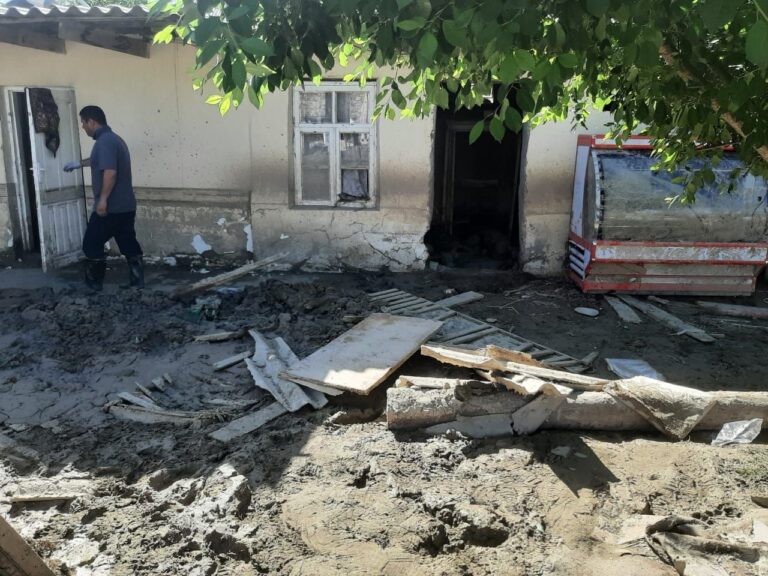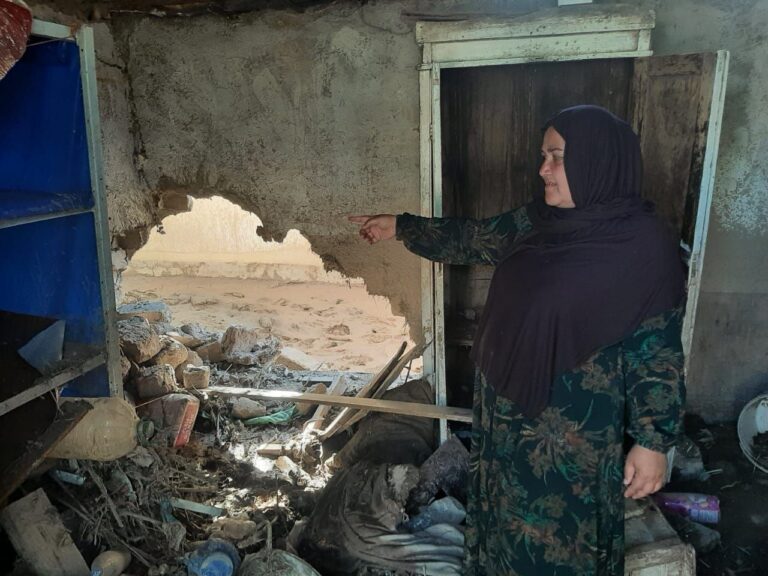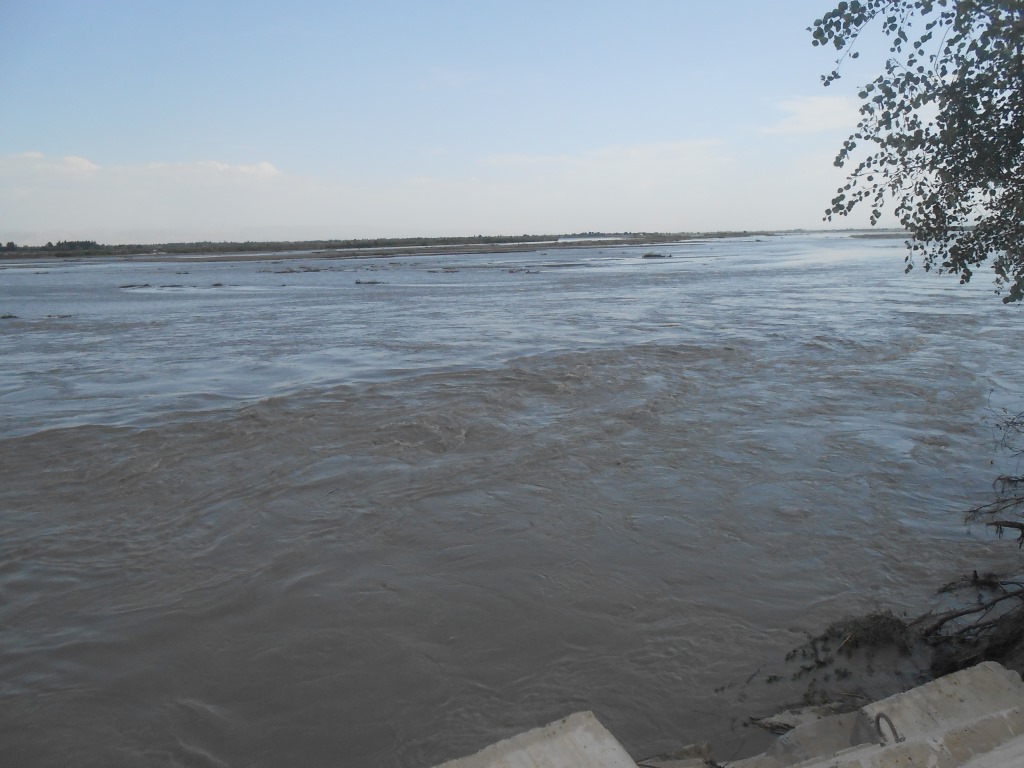
The weak embankments of the Panj River could impact over 80,000 residents in Khatlon province. The turbulent river poses a particular threat to inhabitants of villages in Farkhor district. According to village elders, the river's water level rose significantly in 1973. However, at that time, the water was used for irrigation in district farmlands and did not threaten the population. Today, villages have expanded into these former agricultural lands, and the overflowing river has flooded villagers' homes.
Under control by authorities with business support
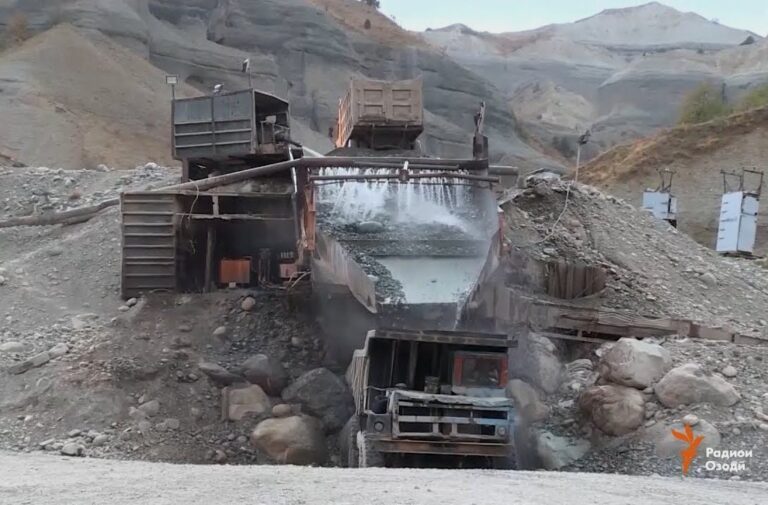
District and country’s authorities have taken control of the situation. A special commission has been set up under the leadership of the head of Farkhoro district to eliminate the threat. The riverbank protection works are being reinforced with large boulders brought from nearby mountains, and the work is being conducted around the clock.
"In case the water destroys the embankment, about 8,400 houses—more than 80,000 residents—could be affected," says Zarif Naziri, the chairman of Farkhor district. "The villages of Darkad, 20th Anniversary of Tajikistan, and Farkhor are at risk, but the greatest threat is to the Muhojirobod jamoat. The water has moved 260 meters closer to the settlements, and the strong current threatens to erode the embankment."
Currently, according to the official, 2,000 boulders have been brought in with the help of provided equipment, reinforcing the dangerous parts of the embankment. Prime Minister Qohir Rasoulzoda, who visited the site during a working visit, is also aware of the situation. Naziri notes that support comes not only from the authorities but also from local entrepreneurs, who have helped bring in stones for embankment work with 450 trucks.
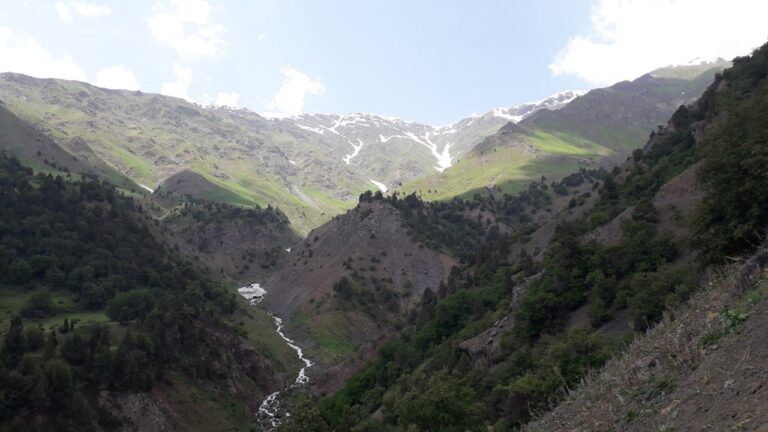
"In some places, we are strengthening the embankment by lowering concrete blocks to the bottom of the river at depths of 18-24 meters. The active season of snow and ice melting has begun at the sources of the Panj River, which will continue until August. This means that the water level will not decrease until the end of the summer season," the district head emphasized.
Large funds needed
Trucks deliver reinforcement blocks only at night since the movement of heavy trucks is restricted during the hot season. Zarif Naziri pointed out that the embankment reinforcements near the Afghan border were installed during the Soviet era. However, due to the river's changing course, the strong current has eroded them. Restoring the previous structures on this section requires substantial funds.
"In 2012, a similar situation occurred in the Khuton jamoat. The river overflowed due to heavy mudflows, destroying the road to the border outpost," said Abdullo Husaynov, head of the Farkhor Irrigation and Land Reclamation Department. "The work then, as now, was conducted around the clock. The reinforcements and embankment were strengthened with concrete blocks, and today, the water in this jamoat does not threaten the population."
Project to protect vulnerable areas
Hamadoni district periodically faces the threat of high water. A similar situation occurred in Chubek. The situation was managed with the support of the authorities and equipment provided by the irrigation and land reclamation departments of Farkhor and Kulob districts.
"Following the recent visit by Qohir Rasoulzoda, a directive was issued to prepare a project addressing the dangerous areas of the Panj, Surkhob, and Yakhsou rivers and present it to the government. The project should cover five districts at risk: Kulob, Farkhor, Hamadoni, Vose, and Temurmalik," said Nurali Muminov, head of the Kulob Regional Irrigation and Land Reclamation Directorate. "By order of the Government of Tajikistan, 5,500 tons of cement and rebar have already been delivered to these districts, and 1,000 concrete blocks have been prepared."