UN Secretary-General António Guterres started his tour of the region on June 30 with visit to Uzbekistan. At Tashkent airport, he was welcomed by Uzbek Prime Minister Abdulla Aripov, according to Uzbekistan’s Foreign Ministry.
Guterres visited the Hazrati Imam complex, where he was briefed on the history of the mosques and mausoleums. He was also presented with the Center for Islamic Civilization.
On July 1, the UN Secretary-General visited the RiverSide solar power plant in the Tashkent region, as well as a mahalla in Tashkent’s Yakkasaray district.
Afterwards, the UN head met with the President of Uzbekistan, Shavkat Mirziyoyev. According to the press service of the head of state, they reportedly discussed transport connectivity, food, energy, and information security in the region. As a result of the meeting, an agreement was reached on the joint development of a Framework Program for Cooperation with the UN for Uzbekistan's Sustainable Development Goals for 2026-2030.
One of the key themes of Guterres' visit is to discuss climate change problems, as it significantly impacts ecosystems and the economy in Central Asia. The UN Secretary-General will visit projects aimed at reducing the impact of climate change and adapting to it.
In his speech at the SCO summit, Guterres will also address the importance of international cooperation for effectively addressing common threats such as climate change and geopolitical disagreements.
Guterres' visit will also include interactions with local activists and an introduction to their initiatives. This will allow the UN Secretary-General to better understand local issues and hear suggestions for their resolution. Such an approach promotes a deeper understanding of the situation on the ground and helps develop effective support strategies, according to the UN.
According to studies conducted by the World Bank in 2018, Central Asia is highly vulnerable to climate change. The region covers a vast area of 3,994,400 square kilometers or about 10% of the Asian continent, with a population exceeding 70 million people. An important feature of this region is its location in the center of the Eurasian continent and the lack of river outflows to the oceans. The mountains are sensitive to climate change impacts and play an important role in shaping weather over large areas.
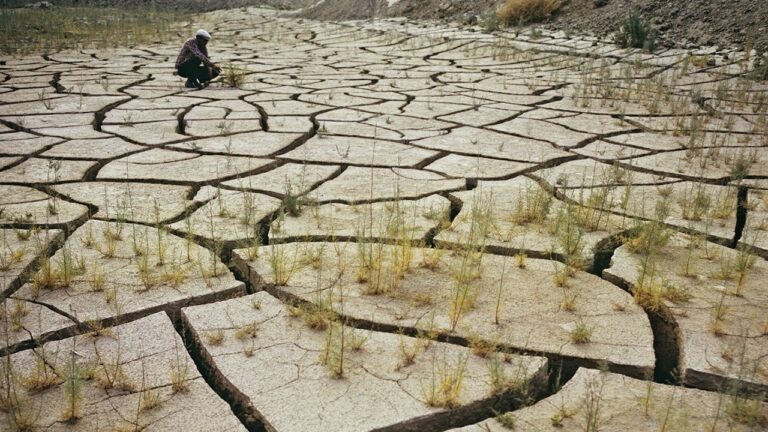
Experts estimate that 50 percent of the water used for irrigation is lost due to inefficient irrigation technologies in Central Asian countries. As a result of climate change, the area of glaciers in the region has decreased by 30 percent over the past 50-60 years, and annual land degradation costs amount to 4 percent of GDP.
These figures indicate that climate change is intensively affecting the Central Asian region. Experts believe Guterres' visit will draw attention to regional issues such as water resources, climate change, and security. Discussing these issues at a high level will facilitate the development of effective solutions and strengthen cooperation between Central Asian countries.