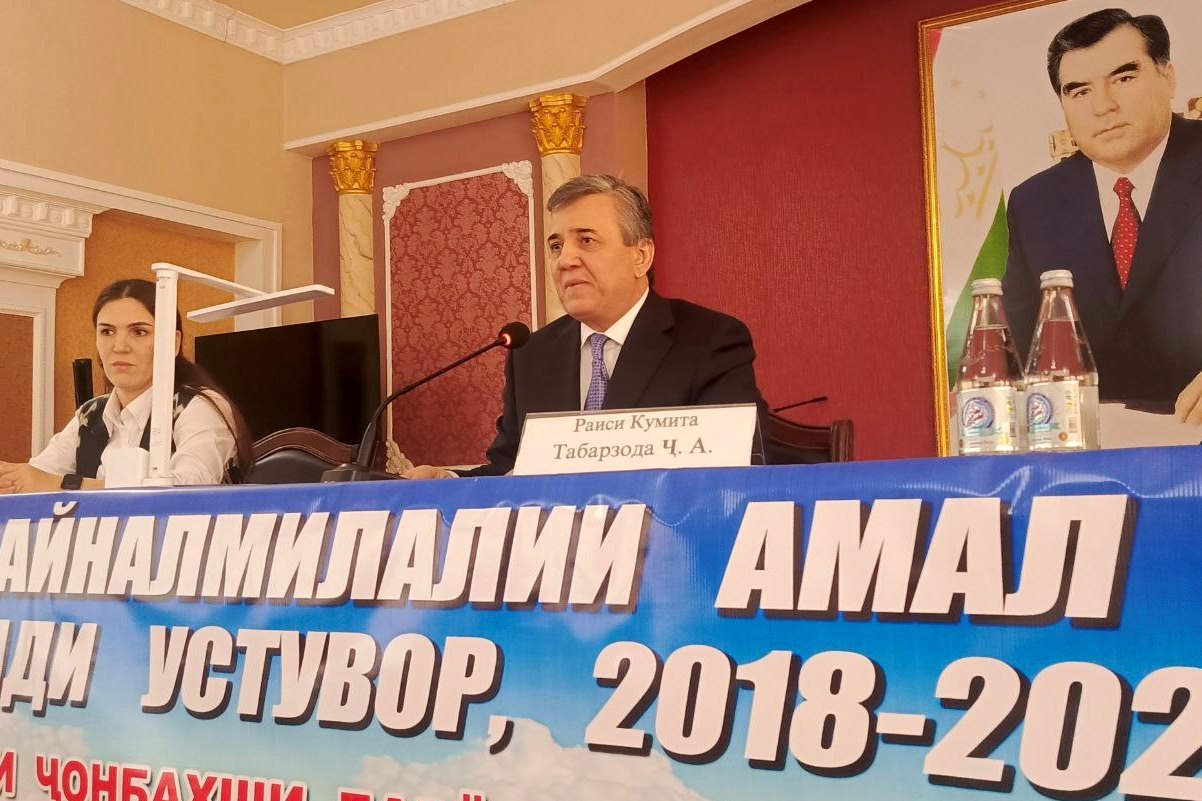
Currently, 67% of Tajikistan’s population has access to clean drinking water, with 41% connected to centralized water supply systems, Jamshed Tabarzoda, the Chairman of the Public Utility Committee (PUC) under the Government of Tajikistan, told reporters in Dushanbe on January27. Annual plans reportedly aim to increase this figure by 2%–3%.
However, growing demands on public utility infrastructure pose serious challenges for the country's housing and utility sector. Despite progress, water supply systems face multiple issues. In some cities experiencing rapid residential construction, centralized water and sewage systems are often overloaded, leading to breakdowns as the infrastructure was not designed to handle such high demand.
The situation is particularly severe in Vahdat and Roudaki districts, where a construction boom is connecting new homes to outdated water systems. Developers often fail to install new networks that meet modern standards, worsening the problem.
PUC Deputy Chairman Abduaziz Dostizoda highlighted that reform programs in the utility sector have provided over 960,000 people with access to clean water since 2020. However, further improvements require infrastructure modernization and stricter enforcement against unauthorized construction and non-compliant developers.
A new committee: expanded powers, growing challenges
Since the establishment of the PUC in September 2024 (it succeeded the State Unitary Enterprise (SUE) Khojagii Manziliyu Kommunali – the state holding company for public utilities) its functions have expanded significantly. The committee now has full authority to monitor compliance with legislation in the utility sector, address negative factors impacting operations, and conduct technical audits of water and sewage systems.
The committee faces urgent challenges. For instance, wastewater management remains insufficient, with coverage at 64% in cities, 10% in towns, and just 0.1% in rural areas. Infrastructure wear and tear exacerbates the issue—32% of urban and up to 60% of rural facilities are outdated.
Water losses are alarmingly high, reaching 60% in large cities and 20% in smaller ones. Low tariffs and inadequate funding hinder necessary modernization efforts.
Poor sanitation and lack of proper wastewater treatment further complicate matters. Rural residents often rely on unprotected water sources, leading to contamination and the spread of infectious diseases.
Under the national strategy, significant improvements are planned by 2040, aiming for 90% of the population to have access to water supply, with drinking water delivered directly to homes in urban and suburban areas.
Water supply tariffs reportedly remain below cost
In July 2024, water supply tariffs in Tajikistan increased by 20%. For households, one cubic meter of water now costs 1.3–1.4 somonis (outside Dushanbe, Khujand, and other major cities), up from the previous rate of 1.09 somonis. Budget institutions pay 2.77 somonis, and commercial entities pay 4.28 somonis per cubic meter, excluding VAT. These rates cover only one-third or one-fourth of actual costs, leaving the utility sector with substantial losses.
The cost of water supply and wastewater management includes various factors such as water extraction, purification, transportation, infrastructure maintenance, repair, electricity, water purchases, and emergency response. On average, the cost per cubic meter exceeds 4.00 somonis.
Outdated infrastructure requiring significant upgrades adds to the challenges. However, low household incomes, particularly in poorer regions, force authorities to reject proposals for further tariff increases. As a result, water supply systems struggle to develop, jeopardizing their sustainability.