Ahead of the 2025 parliamentary elections, Asia-Plus decided to interview the leaders of the country's political parties to understand their goals in this political campaign.
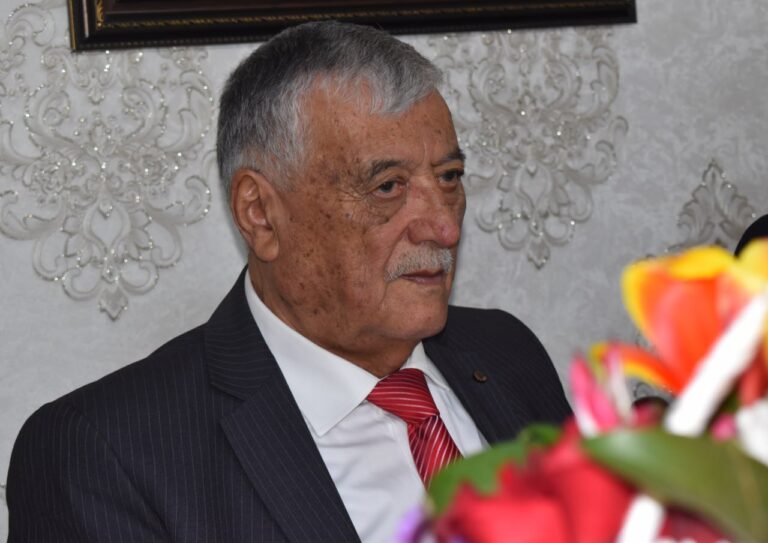
We began our interview series with Rustam Latifzoda, the chairman of the Agrarian Party of Tajikistan (APT) — a party that currently holds seven mandates in parliament.
The APT reportedly does not consider other parties or the government as opponents but rather as political competitors, emphasizing that its election program differs from those of other parties. According to its chairman, although the party primarily focuses on agricultural development, this does not mean that issues of security, economy, education, and migration are overlooked.
According to Rustam Latifzoda, the APT now has more than 70,000, and “the number continues to grow every year. “For example, over the past five years, about 20,000 people have joined APT. However, we focus more on quality—meaning active members. Most of them are rural residents, people connected to agriculture, but we also have members in cities and regional centers,” Latifzoda said, noting that they have a youth wing, which makes up about 34% of all party members.
Asked about APT's voters, Latifzoda noted that they rely not only on rural residents but also on urban residents.
“APT does not focus solely on agricultural issues. We are concerned with other pressing social issues, and our program covers more than just the agrarian sector,” said he. “For example, one of our goals is to promote food security in the country, aligning with the state’s strategic objectives for sustainable development. This issue is crucial for everyone, but without the development of agriculture, which is the foundation of this goal, its implementation will be challenging.”
“It is important to recognize that 60% of the country's workforce is concentrated in rural areas, and about 25% of the GDP is linked to agriculture. Therefore, while our program primarily targets rural residents and farmers, it also considers the interests of urban populations and people from various professions.”
The APT has reportedly nominated 13 candidates for election by proportional representation in a single nationwide constituency and 17 have been nominated to run for parliament in single-mandate constituencies (seven in Sughd province, six in Khatlon province and the rest in Dushanbe and districts subordinate to the cent.
“Among our nominated candidates are current members of parliament, deputies of regional and district councils, the first deputy chairman of a region and a district, business leaders, and university professors,” APT leader said.
Asked whether the APT considers itself an opposition to the ruling People’ Democratic Party of Tajikistan (PDPT) or the government, Latifzoda said: “Everyone has the right to their own opinion. In reality, the APT is a legitimate political force with tens of thousands of members and supporters, seven representatives in the Majlisi Namoyandagon (Tajikistan’s lower chamber of parliament) deputies in parliament), and representatives in executive bodies and academic institutions. We play a role in the country’s socio-political life, and our voice matters. I oppose the use of the term "opposition" because it brings to mind times of chaos. As we have already stated, we are not an opposition party but political competitors. The goal of all political parties is the sustainable development of the country and the improvement of people's living conditions, but each party proposes its own way of achieving these goals. That is why parties are political competitors.”
The Agrarian Party of Tajikistan is the brainchild of its first chairman Amir Qaraqulov. The first deputy head of the party, Rustam Latifzoda, was elected chairman of the Agrarian Party in March 2014 after Amir Qaraqulov’s death.
The Agrarian Party of Tajikistan was registered with the Ministry of Justice in November 2005. Like the Party of Economic Reforms that was also registered with the Ministry of Justice in November 2005, the Agrarian Party is seen as a “pocket party.”
The majority of APT''s members are farmers and peasants, but the upper echelon are agriculture specialists.
Some experts note that the APT has no clear ideological outline, and mainly focuses on the issue of agricultural production. The party advocates for a halt in export of raw materials from Tajikistan, and for the country to switch to the production and export of finished products.
According to some sources, the APT is the second largest political party in Tajikistan after the People’s Democratic Party (PDPT).