Russian state-owned airline changes the rules for carrying children of migrants.

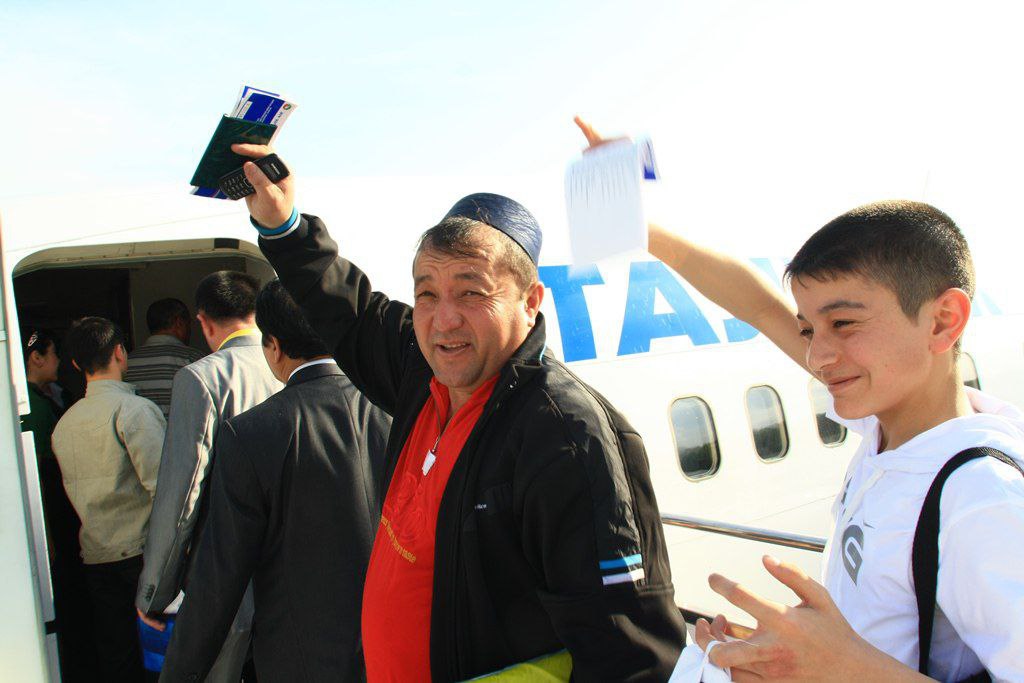
Since the beginning of March, Khabarovsk Airlines has updated its rules for transporting children with foreign citizenship, Komsomolskaya Pravda – Khabarovsk reports. Now, parents of children aged 2 to 12 years who are not citizens of Russia will not be able to take advantage of discounts on airline tickets and will have to pay the […]

Since the beginning of March, Khabarovsk Airlines has updated its rules for transporting children with foreign citizenship, Komsomolskaya Pravda – Khabarovsk reports.

Now, parents of children aged 2 to 12 years who are not citizens of Russia will not be able to take advantage of discounts on airline tickets and will have to pay the full price, the same as for adult passengers.

These changes were made in accordance with federal aviation regulations and apply only to children with foreign citizenship.  Previously, discounts were available for this category of passengers, but now tickets are sold at the regular adult price.

Additionally, the discount for a separate seat for infants under two years old has been canceled.  These children can only travel on their parents' laps without a designated seat.

At the same time, Russian citizens continue to benefit from discounts: their children under 12 years old will receive a 50% discount, and infants under two years old will travel for free with a separate seat.

Earlier, a law was adopted in Russia banning the enrollment of migrant children in schools without knowledge of the Russian language. This law will come into effect on April 1, 2025.

Migrant children will be required to pass a Russian language proficiency test before being admitted to schools.  If they fail the test, they will be denied education.

The law applies to state and municipal schools, specialized schools, and vocational schools.  Admission can now be denied not only due to a lack of available spaces but also due to the absence of documents confirming the legality of stay or insufficient language proficiency.

Established in 2004, Khabarovsk Airlines, stylized KhabAvia, is a Russian state-owned airline with bases at Khabarovsk and Nikolayevsk-on-Amur.  The airline reportedly operates nine Antonov and Let aircraft and flies to ten destinations. In 2020, it became part of Russia's single far-eastern airline, along with four other airlines.  It is currently banned from flying into the European Union.

 

Join us on social media!

Article translations:

Related Article

Оби зулол
Tenisi
Оби зулол

Most Read

Коммерсбонк Точикистон

Recent Articles

RZD announces the restoration of passenger services between Moscow and Dushanbe

Direct rail services between the capitals of Russia and Tajikistan were suspended in March 2020 due to the COVID-19 pandemic.

#AP30/Stories. “Selam! Heller nichek?” How Tatars live today in Sughd province

On the 30th anniversary of "Asia-Plus," we continue to publish reports that remain relevant even after years. This story was told in 2021, and since then, little has changed in the life of the Tatar community in Tajikistan.

15,000 cameras, drones, and robots: how technology monitors pilgrims in Mecca and Medina

During Hajj 2026, Mecca and Medina were under unprecedented digital control.

Another child in Dushanbe removed from family and sent to boarding school

The Ministry of Internal Affairs reports that the parents did not pay adequate attention to the child.

Emomali Rahmon instructs to address issues in seed production following criticism of the industry

Issues have been noted with certification, seed quality, and the material and technical base of the industry.

Water, climate, and a $130 billion deficit: seven key outcomes of the Water Conference in Dushanbe

At the forum, countries and international organizations discussed new mechanisms for cooperation, investments, and technologies that are essential for addressing the global water crisis.

Eskhata Bank introduces a new generation children’s wallet

"Eshkata Bank" has created a full-fledged digital platform that helps children aged 7 to 16 learn how to manage money.