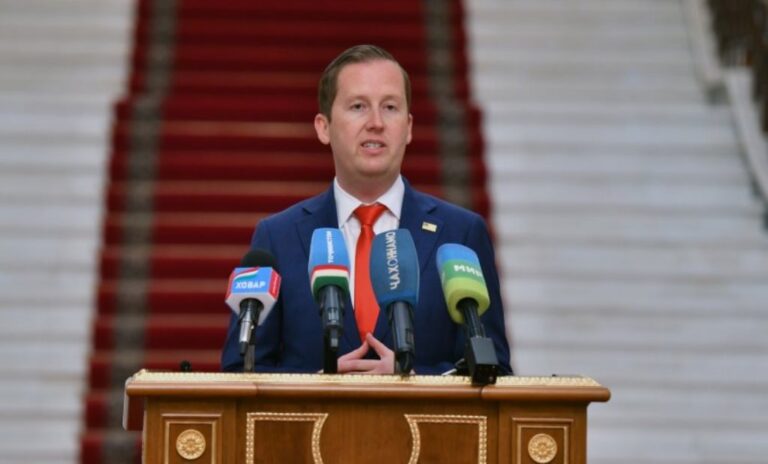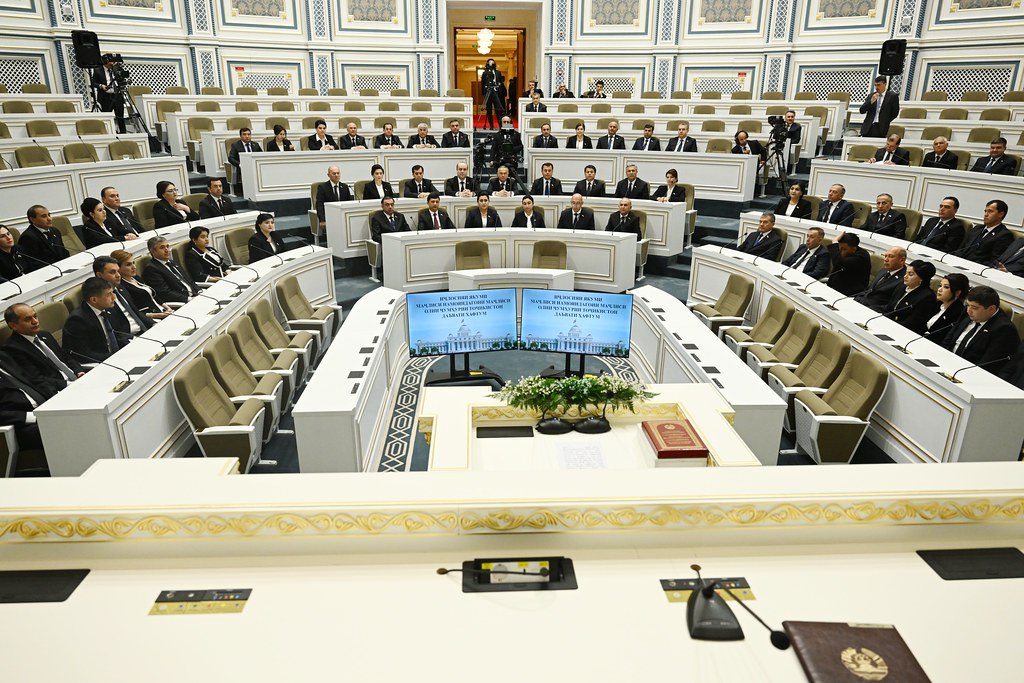
The first sitting of the first session of the Majlisi Namoyandagon (Tajikistan’s lower chambers of parliament) of the seventh convocation took place in Dushanbe on March 19.
The first session of the Majlisi Namoyandagon shall be opened by its eldest member. Agrarian Party (APT) leader Rustam Latifzoda, 64, is the eldest member of the Majlisi Namoyandagon and he opened the first session of the Majlisi Namoyandagon of the seventh convocation.
Latifzoda conducted the session until the chairperson of the Majlisi Namoyandagon was elected.
President Emomali Rahmon also addressed the first session of Majlisi Namoyandagon of the seventh convocation.
Fayzali Idizoda, who was elected to the Majlisi Namoyandagon from single-mandate constituency No 12 (Rasht district), was elected as new speaker of the Majlisi Namoyandagon.
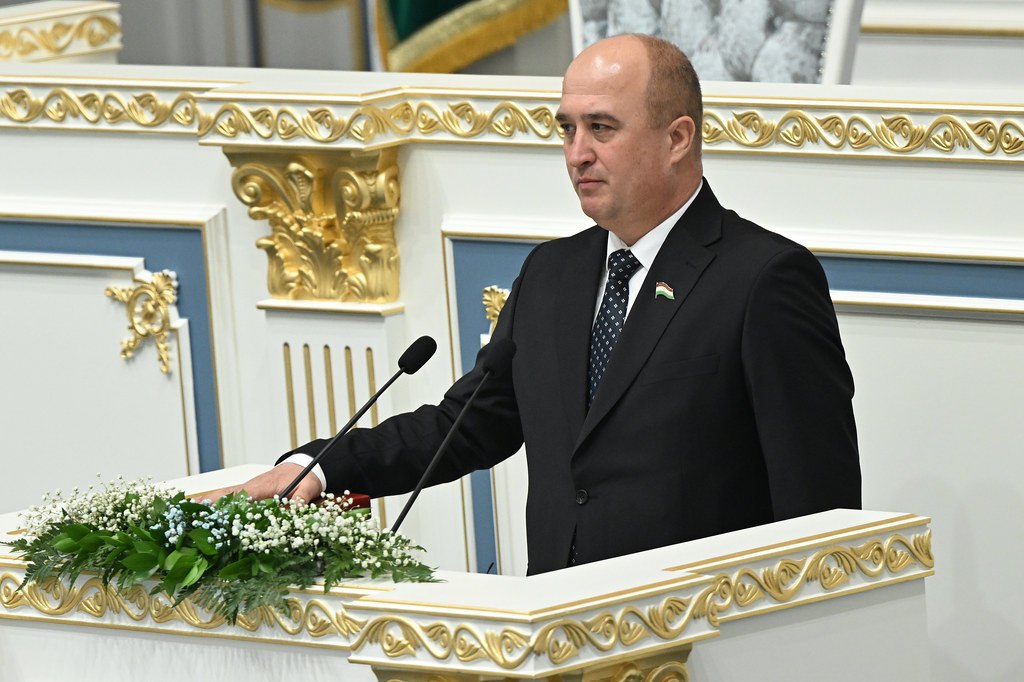
The Chairperson of the Majlisi Namoyandagon is elected by secret ballot by a majority of the total number of its members.
During the first session, deputy chairpersons and heads of the Majlisi Namoyandagon permanent committees and commissions were also elected.
Mr. Shermuhammad Shohiyon, a MP from the nationwide electoral district, was elected as First Deputy Chairman of the Majlisi Namoyandagon.
Mr. Aziz Giyozoda, who was elected to the Majlisi Namoyandagon from single mandate constituency No 41 (GBAO’s capital, Khorog), was elected as Deputy Chairman of Majlisi Namoyandagon.
Ms. Mavsouma Muni, who was elected to the Majlisi Namoyandgon from single mandate constituency No 13 (Sughd’s capital, Khujand), was elected as Deputy Chairperson of the Majlisi Namoyandagon.
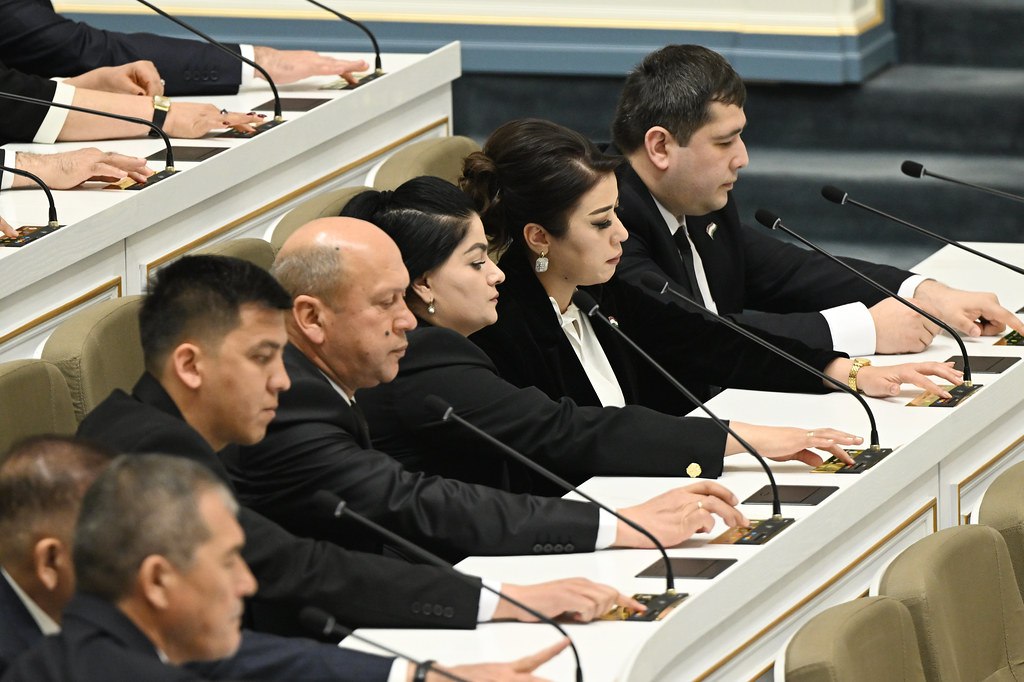
Recall, the parliamentary elections were held in Tajikistan on March 2 and the voter turnout was reportedly 85.3 percent.
The elections to the Majlisi Namoyandagon resulted in a victory for the ruling People's Democratic Party of Tajikistan (PDPT), which secured 49 out of 63 seats in the Majlisi Namoyandagon—two more than in the previous convocation.
Among the participating parties, PDPT received 51.9% of the votes, the Agrarian Party gained 21% (7 seats), the Party of Economic Reforms secured 12.7% (5 seats), the Democratic Party received 5.1% (1 seat), and the Socialist Party garnered 5.3% (1 seat).
The Communist Party of Tajikistan, for the first time, failed to win any seats in parliament.
Notably, the Social-Democratic Party, the only Tajik party to explicitly oppose President Emomali Rahmon, did not participate in the elections. While it had taken part in previous elections, it never secured any mandates.
Members of the Majlisi Namoyandagon (Tajikistan’s lower chamber of parliament) are directly elected for a five-year term according to a mixed majoritarian-proportional system. Of the 63 MPs, 41 are elected from single-mandate districts, with the winning candidate requiring a majority of votes cast. If no candidate receives a majority, a second round is held within two weeks between the two leading candidates. More than 50 per cent of registered voters must participate for the election to be valid; otherwise, repeat elections must be held. The other 22 MPs are elected from a single nationwide district under a proportional, closed-list system with a five percent threshold.