The fields in the mountainous areas of Khatlon province have been invaded by Moroccan locusts. A headquarters has been established in the region to protect agricultural lands, and maps are being created for the necessary work to combat the pests.
According to the press center of the Khatlon governor’s office, the locusts are spreading rapidly, requiring urgent measures to destroy the pests. The locust problem, which annually threatens agricultural lands, has become particularly relevant in recent years due to climate change and deteriorating weather conditions.
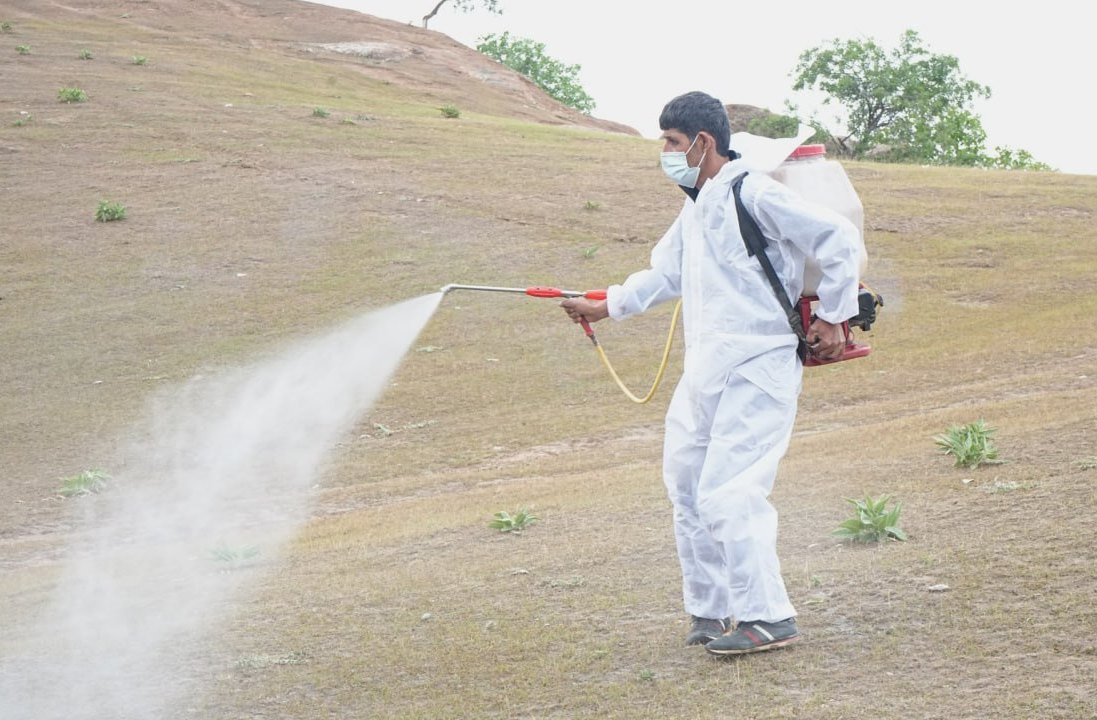
Since March 2025, active chemical measures have reportedly begun in Khatlon province to combat the Moroccan locusts, which lay eggs in areas that are difficult to reach with traditional chemical treatments. The locusts periodically descend from the foothills into the valleys and agricultural lands, which requires the use of highly toxic chemicals and biopesticides. The treatments are carried out in three stages to effectively eliminate the pests at different stages of their life cycle.
As a result of the government’s prompt intervention, a working group for locust control was established to coordinate actions on the ground. A special operational group was formed in Khatlon province for monitoring and protecting the territories, which includes the development of precise maps of infected areas and the identification of risk zones for agricultural lands.
An important part of the battle against the locusts has been the creation of a regional headquarters to prepare for pest control. This headquarters focuses on conducting timely measures to protect agricultural lands, pastures, and forested areas. Specialists are taking precise measurements of infected areas, which helps organize chemical treatments and locust control more effectively.
Organized by the Agriculture Ministry State Locust Control Expedition under support of the Food and Agriculture Organizations of the United Nations (FAO), a series of training sessions on modern methods of locust control concluded in Tajikistan in December 2024 and January 2025. Specialists from Sughd and Khatlon province, as well as districts subordinate to the center (RRP), studied advanced monitoring techniques and response strategies to combat locust infestations. A total of 57 participants were trained in monitoring and data collection on locust populations. They learned about the most effective and environmentally safe methods for treating infested areas.
Locusts pose a serious threat to food security in Tajikistan. In recent years, climate change and extreme weather conditions have increased the likelihood of locust outbreaks. If left unchecked, these pests could destroy crops, leading to economic losses for farmers and higher food prices.