The middle class is a category of the population with a living standard above the minimum and with a focus on development, considered the driving force of the economy. Tajikistan has developed and adopted a special strategic document – the Concept of Productive Employment Development – which envisions the growth of the middle class in the country. According to this Concept, by 2030, the middle class in Tajikistan should make up 50% of the country's population.
Why is the development of the middle class so important? What percentage of the country's population currently belongs to it? What obstacles exist in the way of its growth, and how can they be overcome?
The methods of determining the middle class vary in different countries and research institutions, but the main criteria include income level, savings, real estate, education, professional qualification, social role, the ability to adapt to the current economic situation, and a desire for development.
According to these criteria, the middle class includes those who have a moderate income, education or specific qualifications, property, personal transportation, financial savings, the ability to buy quality goods, provide education for children, travel, and use paid services. People in the middle class typically have clear goals and strive for continuous development. Thus, they contribute to the country's economic and intellectual progress.
For this reason, the growth and strengthening of the middle class is given special attention in countries around the world. In Tajikistan, the growth of the middle class is also one of the strategic tasks outlined in key national programs.
By 2030, the middle class should make up 50% of the population
The National Strategy for Sustainable Development indicates that by 2030, the middle class in Tajikistan should encompass 50% of the population.
Umed Kholov, an employee of the Ministry of Economic Development and Trade of Tajikistan (MoEDT), notes that in 2015, just over 22% of the population belonged to the middle class. By 2021, the middle class made up 30% of the population, in 2022 – 37%, and in 2023 – already 42%.
In his opinion, the growth in the number of jobs, access to education, and the development of entrepreneurship are the main factors contributing to the expansion of the middle class in the country.
“This is the overall picture for the country. There may be differences in certain regions. In large cities, the percentage is higher. Nevertheless, Tajikistan is confidently moving toward the target of 50% by 2030,” says Kholov.
What are the issues?
Kholov highlights that the main obstacles include high unemployment, significant labor migration, particularly among the youth, and the economy's dependence on remittances.
The growth of the middle class is also hindered by weak support for small and medium-sized businesses, high interest rates, limited credit programs, inflation, and unfair competition in the market.
Tajik economist Farida Muminova warns that, in the context of global instability, there is a risk that some members of the middle class may fall back into poverty. Price fluctuations and instability in the markets directly affect household budgets.
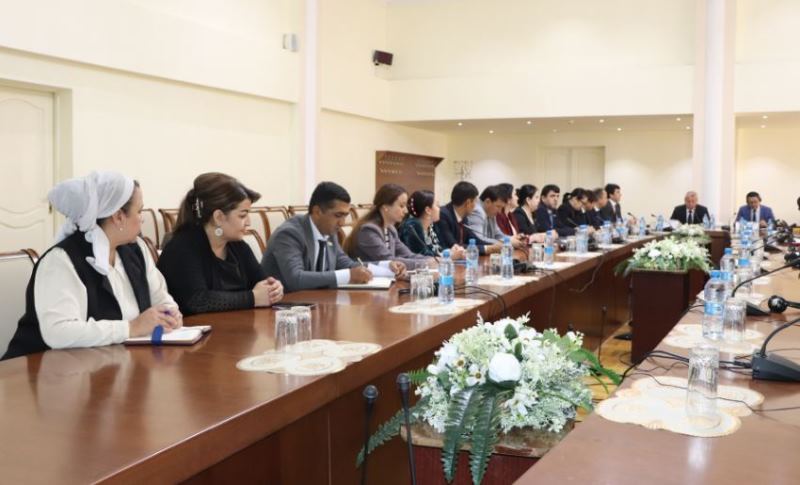
Recall, the Council for Expanding the Middle Class in Tajikistan met in Dushanbe on September 27, 2024. The meeting presented the experience of Tajikistan in reducing poverty, a new methodology for assessing poverty using household budget studies and world experience in assessing the middle class of the population. It was decided to approve a new methodology for assessing poverty using a household budget study, developed in agreement with the members of the Council. At the same time, the Council Secretariat was instructed, in cooperation with the Agency for Statistics, a group of World Bank experts and representatives of relevant ministries and agencies, to develop a draft methodology for assessing the middle class of the population of Tajikistan and submit it for approval to the Council meeting before the end of 2024.