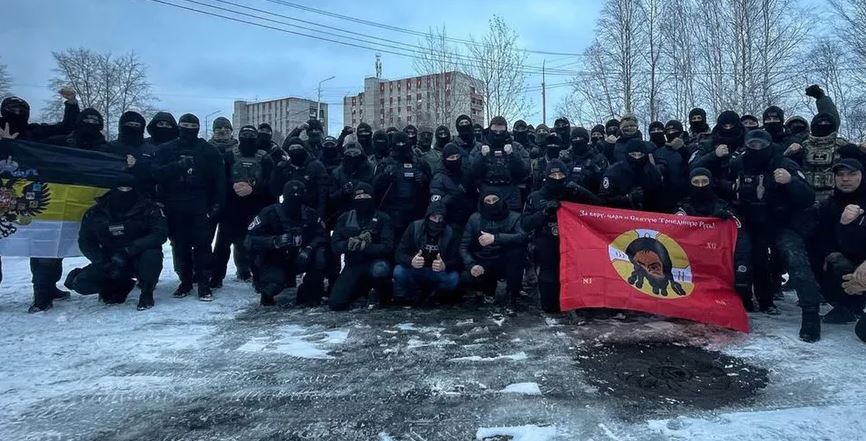
In 2025, Russian authorities continued a large-scale anti-migrant campaign that began after the terrorist attack at Crocus City Hall, Meduza reports. Raids targeting labor migrants who violate the conditions of their stay in the country are still ongoing in the regions. In early April, a law came into force prohibiting the enrollment of migrant children in Russian schools unless they pass a Russian language test. At the same time, researchers are noting a rise in nationalist sentiments.
Alexander Verkhovsky, director of the SOVA Center for Information and Analysis, notes that the high level of intolerance toward “outsiders” seen in the early 2010s has not yet returned.
According to him, the large-scale anti-immigration campaign—supported by both media and high-ranking officials—actually began back in 2021, which also saw a wave of large police raids. If one analyzes the data, 2021 clearly stands out.
It’s possible the campaign was initiated for reasons stemming from within the state apparatus.
It’s clear that after February 24 (2022), the topic of migrants almost instantly disappeared from public discourse. But then it gradually returned—becoming more prominent and louder.
By 2021, tensions with Ukraine were already palpable, though not yet perceived as full-scale war. Around the same time, a network of legal nationalist organizations, like the “Russian Community,” began to activate.
At that time, this movement was barely visible, simply because it had a small number of participants. But in relative terms, its growth rate was significant. Since then, it has continued to grow, and now it’s obvious to anyone monitoring the space that such organizations have become a noticeable part of the socio-political landscape.
“Therefore, I believe that today’s anti-immigrant agenda, which plays a significant role both federally and regionally, has its roots in 2021,” the expert says, noting that public sentiment is more complex. “I’ve already mentioned a Levadna Center study conducted shortly after the Crocus attack—just a month later. This certainly distorts the perception, as the public was in a state of shock. For example, at that time, the word “Tajik” automatically triggered associations with the terrorist attack for most people. Naturally, that influenced the results.”
The increased attention began in 2024, though the growth started in the fall of 2022 when news topics began to shift away from Ukraine. In the first six months after the war began, Ukraine dominated the agenda, but then rhetoric about the “migrant threat” began to reappear.
Since then, attention to the issue has been rising—if not steadily, then at least consistently. The reaction to the Crocus attack was predictable, primarily through police operations. That always happens, even after smaller incidents.
However, systemic initiatives—like statements by officials or legislative proposals—did not appear immediately but only after several months. And these were far more serious than the usual regional or sector-specific work restrictions for migrants.
Measures like employment restrictions are mostly populist posturing—“We’re taking action; we’re in control.” The truly significant changes happened at the federal level. The most symbolic among them was the rapid adoption of a law restricting school access for foreign nationals without Russian language skills or registration. This mainly affects school-age children.
This is, in fact, a radical measure—and frankly, not a very rational one. I can hardly recall another instance where the federal authorities fully implemented a proposal that had previously only come from radical nationalists.
Yes, the problem exists, but for such an extreme initiative not only to be voiced but actually implemented at the state level is unprecedented, as far as I know.
Regarding the activities of far-right groups in Russia, Verkhovsky notes that we’re looking at two different levels—legal and illegal. In my view, these are two distinct spheres that currently either do not intersect at all or do so minimally. At least, I’m unaware of any strong ties between them.
In the legal segment—groups like the “Russian Community”—real changes are taking place. First of all, in terms of numbers: there are more of these groups, they are geographically more widespread, and their activity is increasing.
There is also a reshuffling of influence within this space: while the “Russian Community” was once just one of the prominent groups, it is now the undisputed leader, well ahead of the others.
As for their activities—particularly raids against migrants, which were among their first actions—the dynamics are mixed. That’s because law enforcement agencies see such groups as a potential risk. These activists are not part of any official structures—they aren’t citizen patrols and they’re not accountable. In some cases, their actions have led to conflicts, including violent ones. So even if some police officers sympathize with their rhetoric, institutional instincts likely advise caution and distance.
“I have no doubt that many—if not all—far-right groups have some form of patronage. This could come from big business figures or individual officials,” said the expert. “As for the potential for paramilitarization, this doesn’t apply to groups like the “Russian Community” or “Russian Druzhina.” They don’t have the infrastructure or practices typical of real paramilitary formations, and likely won’t in the near future.”
The real concern lies with anonymous neo-Nazi combat groups. Many of them don’t even have names, but they are active—carrying out attacks on migrants, LGBTQ+ individuals, homeless people, drug users, and supporters of the Communist Party.
According to the SOVA Center, the number of serious attacks last year was already comparable to the levels of 2011. Fortunately, so far, there have been very few killings.
These groups act cautiously, despite being made up mostly of very young members. But there’s a risk that as they grow older, the level of violence could increase—unless they are stopped in time. Yes, law enforcement does occasionally arrest such activists, but it hasn’t been able to stop the movement entirely—it’s difficult to do.
“Is it possible that war veterans might link up with these neo-Nazi groups? Most likely not—mainly due to the age gap (these militant groups are mostly made up of teenagers), and also because these radicals have a very specific ideological agenda. It's not about Russian patriotism—it’s about extreme ideas like “white race purification” and similar concepts. Of course, among veterans, as in any social group, some might share these views. But it’s unlikely to be widespread.”
As for the “Russian Community” and other legal organizations, they reportedly already try to recruit veterans. When they manage to find someone with combat experience who is willing to participate in their events, they frame it as a major achievement and use it prominently in public communications.
Involving veterans certainly raises the status of these organizations—both in terms of external perception and within nationalist circles. It also strengthens their loyalty to the authorities (and it’s worth noting that loyalty is one of the defining traits of today’s Russian nationalists). In the history of this movement, perhaps there has never been a moment when nationalists were so loyal to the current regime.