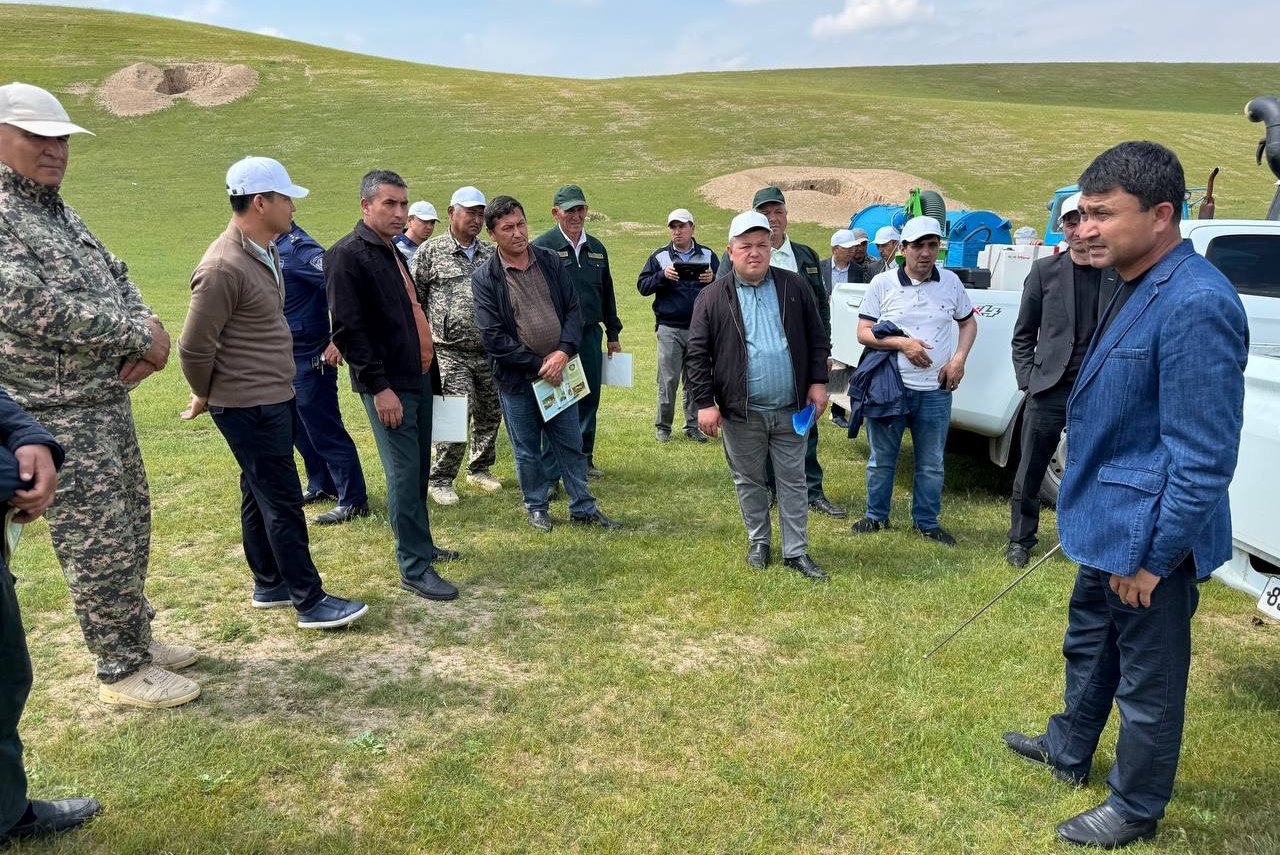
Specialists from Uzbekistan and Tajikistan have held talks In Uzbekistan’s Surkhandarya region to address the threats posed by the Moroccan locust.
Uzbekistan’s Nuz.uz says the meeting focused on key issues related to the current situation in regions affected by the locust infestations. As part of the monitoring conducted by experts from both countries, more than 90,000 hectares of agricultural land were surveyed. Of this, 47,000 hectares are located in Uzbekistan, and 43,000 hectares are in Tajikistan.
During the survey, large concentrations of 1-2-year-old Moroccan locusts were found, with densities exceeding 500 insects per square meter in some areas. This concentration poses a serious threat to agricultural land and the region's ecosystems, threatening crops and the sustainability of natural resources.
In response to this threat, it was decided to carry out chemical treatment of agricultural land. In Uzbekistan, 15,700 hectares will be treated, and in Tajikistan, 18,000 hectares will be addressed. These measures are aimed at curbing the spread of locusts and preventing damage to crops in the affected areas.
As part of the negotiations, the parties signed an agreement on coordinating actions, exchanging information, and creating a notification system between the quarantine agencies of Uzbekistan and Tajikistan. This will enable rapid response to the threat, improving the efficiency of the locust control efforts and ensuring coordinated action between both countries in protecting agriculture.
The primary goal of the agreement is to safeguard agricultural crops from the harmful locust invasion and maintain ecological balance in the border areas.
Experts note that Central Asia's climatic conditions are conducive to locust breeding. Nearly 200 species of these insects have been recorded in the region, with the Asian locust, Moroccan locust, and Italian prus being particularly dangerous. Annually, locusts cause damage to agricultural land over up to 4 million hectares in Central Asia.
In this context, the joint efforts of Uzbekistan and Tajikistan play a crucial role in ensuring regional food security.
The measures being implemented are expected to significantly reduce the risk of locust damage and help preserve the ecosystem of the border zones. The Plant Quarantine Agency continues its efforts to combat locusts in the affected regions, with a focus on the importance of international cooperation in addressing this issue.
The agreement between the two countries is an important step in ecological security and sustainable agricultural development in Central Asia.
Locusts pose a serious threat to food security in Tajikistan and Uzbekistan. In both countries, where agriculture is one of the key sectors of the economy, locust attacks can have devastating consequences for food security. Locusts are particularly dangerous during the period of mass reproduction, and their invasion leads to reduced crop yields and economic losses.
In recent years, climate change and extreme weather conditions have increased the likelihood of locust outbreaks. If left unchecked, these pests could destroy crops, leading to economic losses for farmers and higher food prices.