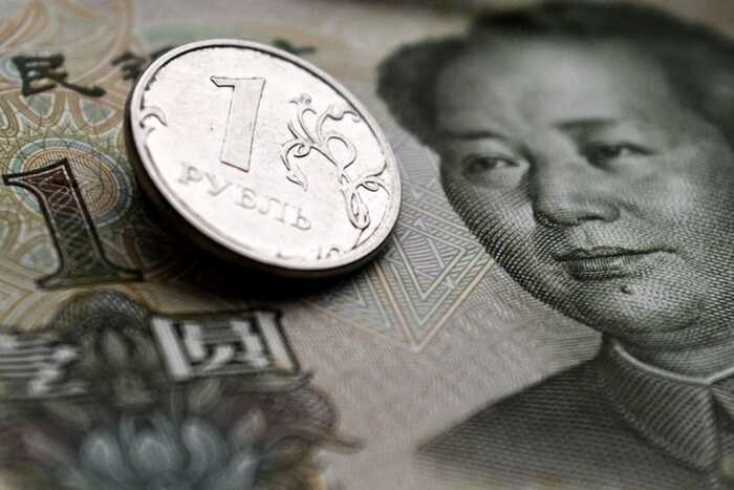
Russian and Chinese banks, with the help of financial institutions from countries considered friendly by Russia, have created a netting payment transfer system. The goal of the project, named The China Track, is to hide transactions from Western regulators and thereby reduce the risk of secondary sanctions.
Reuters, citing banking sources, reported yesterday that major Russian banks have set up a netting payments system dubbed The China Track for transactions with China, aiming to reduce their visibility to Western regulators and mitigate the risk of secondary sanctions.
Russia's trade with China reportedly hit a record US$245 billion last year despite payment problems and commissions running as high as 12%, as Chinese banks had grown too cautious to do business with Russia and jeopardize their ties with the United States.
According to Reuters, the new system has been set up by major sanctioned banks and involves a web of intermediaries registered in countries that Russia considers friendly. The system has been in place for some time and has not yet suffered any major setbacks.
Each bank runs several verified payments agents, some of whom handle payments for exports, and some for imports. All payments are then netted centrally at the bank with all the counterparties involved receiving their money.
Market sources, who spoke on condition of anonymity due to the sensitivity of the issue, reportedly noted that the banks settle trade in both directions.
The banks provide guarantees for payments' settlement as well as financial instruments insuring against a possible default of a payment agent or a counterparty. The system does not use the SWIFT messaging system or accounts in Western banks.
Some bankers reportedly say that the netting system allows payments to be made directly to any Chinese bank without delay, provided that the goods are not under sanctions and the counterparty is registered in one of the selected 11 provinces of China.
Reuters reminds that speaking in parliament in April, Russia's Central Bank Governor Elvira Nabiullina acknowledged that Western sanctions complicated cross-border payments for Russian companies, but said that alternative payments channels are being developed.
This scheme is primarily used by large corporations due to its drawbacks, such as the need for authorization of each transaction and issues with the VAT refund process. However, the system allows direct operations with 11 Chinese provinces where the majority of goods sent to Russia are produced. Moreover, the value is calculated at the official exchange rate, without markups.
As explained by the source, this approach is very beneficial for Russian businesses: while previously the service for transferring money between countries cost up to 12% of the amount, now it costs 1% for import operations and 0.5% for exports. Funds are delivered within two days. However, currently, sessions are held once a week on Thursdays, but from the end of April, the number of sessions is expected to increase due to the high demand for mutual trade.