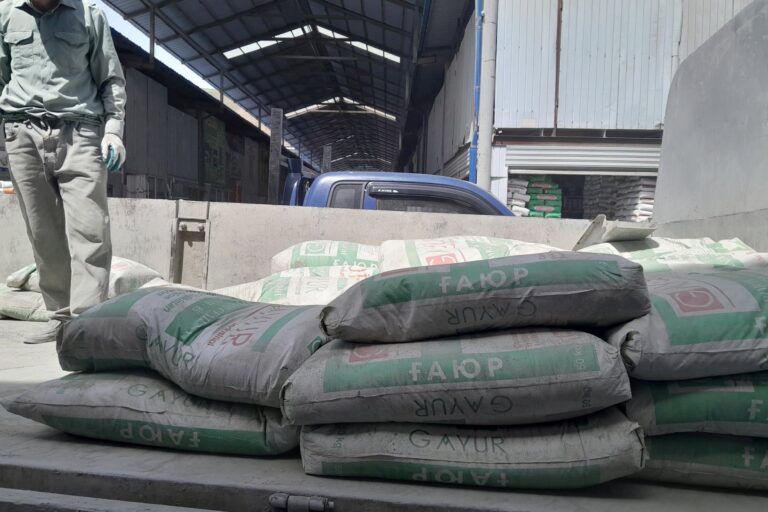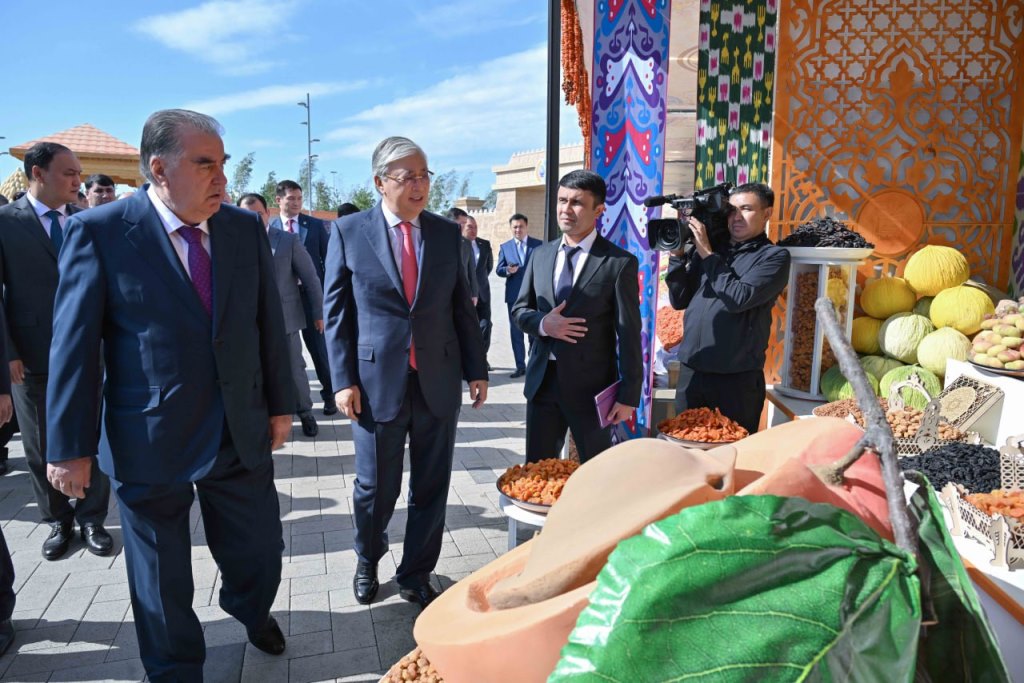
Last year, Kazakhstan significantly reduced its import of Tajik vegetables and fruits, and this trend continues into 2025.
As of March 2025, in 2024, Kazakhstan reduced the import of Tajik onions and garlic to 17.9 thousand tons, which is 3.3 times less than the previous year. The import of fresh fruits, including apricots, peaches, and grapes, from Tajikistan also decreased.
This is due to the increase in supplies from China, which has altered the structure of the vegetable market in Kazakhstan, rising prices due to reduced volumes, and a high harvest in Kazakhstan itself, where, with a need for 315,000 tons, 1.1 million tons of onions were produced.
In early 2024, Kazakhstan introduced quotas and permits for imports, which also impacted imports.
Despite this, the value of the remaining supplies increased, indicating a rise in agricultural product prices. In 2024, the export of Tajik onions to Kazakhstan amounted to US$3.2 million, which is half of what it was the year before. Kazakhstan also introduced quotas and permits for exports, which affected the vegetable market.
The bilateral trade between Tajikistan and Kazakhstan
A two-way trade between Tajikistan and Kazakhstan has undergone significant changes in recent years.
In 2016, the trade volume was US$676.1 million, and by 2017 it increased to US$838.9 million. In 2018, trade remained stable at US$836.6 million. In 2019, there was significant growth to US$957.7 million. However, in 2020, due to the pandemic, a decline was observed, dropping to US$909.8 million.
In 2021, trade grew again, reaching US$1.18 billion, and in 2022, a record was set at US$1.44 billion. In 2023, the trade turnover decreased to US$1.15 billion, but in 2024, a recovery was observed, bringing the figure to US$1.29 billion.
It should be noted that Kazakhstan has consistently been among Tajikistan’s top three major trading partners.
Agricultural products make up the majority of the trade, with 40% of the turnover attributed to them. Kazakhstan has expressed its readiness to increase exports of wheat, flour, and confectionery. It is expected that trade cooperation between the two countries will actively develop, with the possibility of reaching a trade turnover of US $2 billion.
Dynamics of exports from Tajikistan to Kazakhstan: from growth to sharp decline
The export of goods from Tajikistan to Kazakhstan has shown significant fluctuations over the past ten years, reflecting both internal economic changes and global trade factors.
In 2016, exports were US$194.86 million, marking the beginning of subsequent growth. In 2017, it increased to US$324.34 million due to improved production conditions and an expanded range of products. However, in 2018, exports fell to US$299.97 million due to instability in international markets. In 2019, exports saw further decline, totaling US$218.38 million, which was related to external economic barriers. In 2020, the COVID-19 pandemic significantly impacted trade, and exports dropped to US$152.21 million due to logistical restrictions.
In 2021, exports recovered to US$360.08 million, and in 2022, they reached a record US$483.92 million. In 2023, the figures again decreased to US$254.53 million, and in 2024, they fell to US$197.35 million. In the first two months of 2025, exports amounted to US$17.99 million, and it is planned to increase several times by the end of the year.
How imports from Kazakhstan to Tajikistan have changed: from $481 million to $1.1 billion
Over the past 10 years, there has been a noticeable growth in the import of goods from Kazakhstan into Tajikistan, despite some fluctuations in recent years. The import volume increased every year, reaching its highest point in 2024 at US$1.1 billion.
In 2016, imports were US$481.3 million, and the following year saw steady growth. In 2017, imports increased to US$514.6 million, and in 2018, they reached US$536.6 million. The most significant growth occurred in 2019 when the import volume sharply increased to US$739.3 million. In the following years, growth continued, reaching US$757.5 million in 2020 and US$818.5 million in 2021.
The year 2022 was a record year for this period, with imports reaching US$957.3 million. However, in 2023, there was a slight decline to US$892.9 million. In 2024, a new surge was observed, bringing the figure to US$1.1 billion, significantly surpassing previous years.