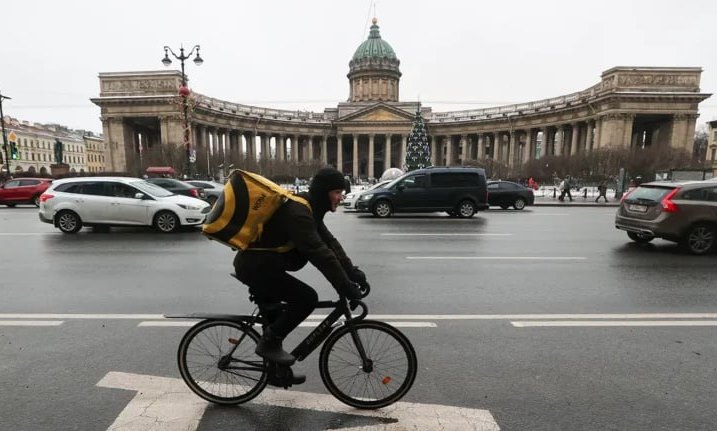
Starting July 1, 2025, St. Petersburg plans to ban the hiring of foreign workers on patents in the taxi and courier delivery sectors. This decision, outlined in a draft resolution posted on the city government’s website, has sparked widespread debate.
The new regulations will give companies three months to comply. The Labor and Employment Committee is also tasked with proposing a similar ban for 2026. Experts estimate that 25,000-27,000 taxi drivers and 14,000 couriers work in St. Petersburg, with a significant portion being migrants.
Impact on prices
Experts predict that the ban will drive up the cost of taxi rides and deliveries. Alexander Mityukov, president of the Interregional Association of Courier Services, warned that delivery prices for residents could double, while taxi prices could increase by 10-50%. Experts also anticipate longer wait times for services.
Challenges in replacing migrants
The market’s ability to replace foreign workers remains a key concern. Mityukov and others believe quickly filling the labor gap will be difficult due to the unattractiveness of these jobs for most Russians. As a result, wages in these sectors are likely to rise, further increasing service costs.
Effects on small businesses
Small businesses in St. Petersburg, including cafes and restaurants, rely heavily on taxi and courier services. A shortage of workers will force these businesses to compete for staff with large delivery and taxi services, leading to higher costs and lower service quality. Experts warn the ban could also push migrants into illegal work, negatively impacting tax revenues and the economy.
Taxi industry outlook
Mikhail Blinkin, a professor at the Higher School of Economics, warned that the ban could severely affect not just taxi prices but the entire transport system. He noted that taxis make up about 15-20% of the city’s transport system, and limiting drivers could increase pressure on public transportation.
Social stability concerns
There are concerns about what will happen to the migrants who lose their jobs. While authorities believe they will find work in other sectors, experts warn that the transition may not be easy. The potential rise in social tension and crime has also been discussed, though Kirill Kabonov, head of the National Anti-Corruption Committee, downplayed these risks.
Consequences
The ban could push migrants into the shadow economy, reducing tax revenue and complicating labor oversight. Despite the risks, authorities may need to reconsider their decision as the consequences for the economy and residents’ quality of life could be far-reaching.