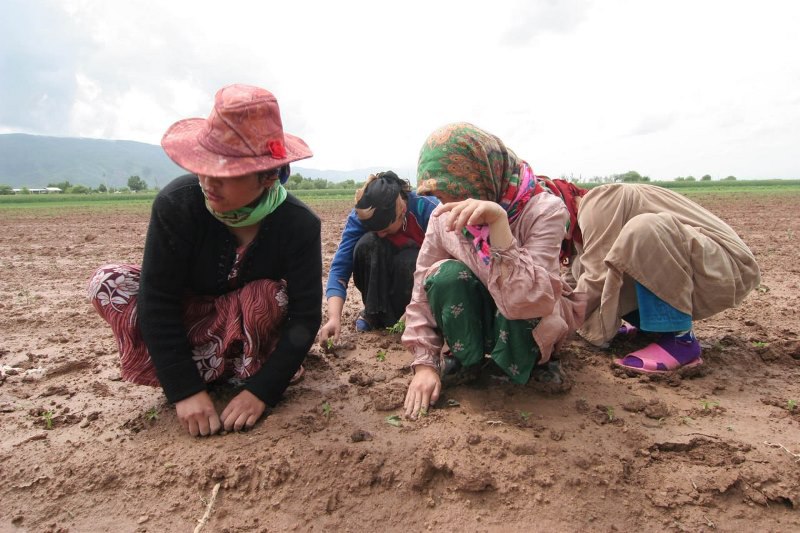
Climate change is becoming a serious threat to agriculture in Tajikistan, exacerbating the process of soil degradation. According to experts, nearly 70% of the country’s arable land is at risk of destruction, and about 10% of the population lives in areas where soil quality is deteriorating. This problem is already significantly affecting agricultural crops such as cotton, with yields dropping due to the poor condition of the soil.
Accelerated degradation: cause and effect
According to Murod Ergashev, a researcher at the Soil Science and Agrochemistry Institute of the Academy of Agricultural Sciences of Tajikistan, one of the main factors contributing to degradation is rising temperatures and changing precipitation patterns. This leads to an increased need for irrigation water, which in turn promotes higher evaporation levels and soil salinization. For example, over the past five years, cotton yields in some areas have dropped by 25%, and the average yield in the 1980s was 26-30 quintals per hectare, whereas it has now decreased to 15-20 quintals.
Climate changes also increase the number of irrigation cycles — from three to five per season. This leads to greater water consumption and higher evaporation levels. It is expected that climate changes will result in the disappearance of local tomato varieties and other crops, posing a challenge for the development of drought-resistant varieties.
Salinization and erosion — additional threats
Soil salinization remains one of the main problems facing Tajikistan’s irrigated agriculture. About 8% of the country’s irrigated land is affected by salinization, which reduces agricultural productivity. In conditions of limited land, where each person has only 0.65 hectares of irrigated land, the consequences are catastrophic. The country loses up to 100,000 tons of cotton and other agricultural products annually due to the decline in quality from salinized fields.
Another serious challenge is soil erosion, especially in mountainous areas, where improper land use leads to the washing away of the topsoil. This worsens soil structure and reduces productivity. The loss of humus — the process in which soil loses its ability to retain moisture and nutrients — also significantly reduces its fertility.
How Tajikistan is addressing soil degradation
In response to these challenges, Tajikistan is actively developing measures to restore and protect its soils. A significant step is transitioning to sustainable farming methods, such as crop rotation, the use of organic fertilizers, and drip irrigation. International organizations, including the Food and Agriculture Organization of the United Nations (FAO) and the World Bank, support these efforts.
Tajikistan’s State Environmental Program for 2023-2028 includes a range of initiatives aimed at combating erosion and restoring salinized soils. Key measures include improving irrigation and drainage systems, as well as regulating livestock grazing on pastures. Special attention is given to expanding forested areas to protect the soil from erosion, which also helps improve soil quality.
To effectively combat soil degradation, new technologies in land reclamation must be introduced, and environmental requirements should be considered when developing new land areas. Only a comprehensive approach will allow Tajikistan to cope with the threat of soil degradation and ensure long-term food security.
Problems requiring a comprehensive solution
The environmental situation in Tajikistan continues to worsen, and urgent measures are needed to protect agricultural lands. If current trends persist, this will lead to significant economic and ecological consequences for the country. Sustainable agriculture, efficient water resource management, and the introduction of innovative agricultural practices may hold the key to solving the soil degradation problem in Tajikistan.