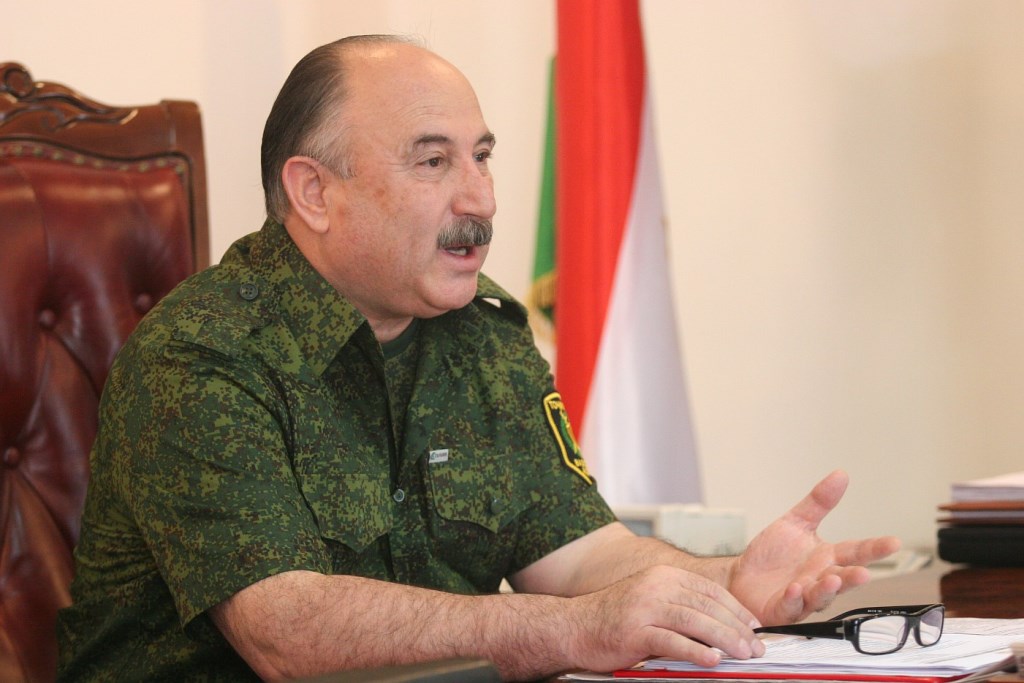
Colonel-General Izzatullo Sharifzoda, former head of Tajikistan’s Main Directorate for the Execution of Criminal Sentences (GUIN), has died at the age of 71. He passed away on November 3 from a heart attack at a hospital in Dushanbe, according to Sayof Mizrob, editor-in-chief of the weekly SSSR, who shared the news on Facebook.
Widely known by his nickname “Zorro,” Sharifzoda led the country’s prison system from 2006 to 2018. He was dismissed shortly after a deadly prison riot in Khujand in November 2018, officially “due to retirement.”
Sharifzoda was considered one of the most influential law enforcement figures in Tajikistan. He previously served as head of the Dushanbe police department (1997–2005) and also led the Interior Ministry’s fire protection service. It was during his tenure in the capital’s police force that he earned a reputation as a strict and principled leader who aggressively tackled organized crime. His signature black cloak and hat led to comparisons with the film character Zorro, a nickname that stuck.
Tajik writer and poet Guli Zard even authored a book about him titled The Tajik Zorro, describing him as a humble and fair man.
Firm control over prisons
As head of GUIN, Sharifzoda reportedly maintained strict control over the country’s prisons. Despite criticism from rights groups, he allowed journalists access to penitentiaries, giving the public a clearer view of prison conditions. He acknowledged the system’s shortcomings and emphasized that efforts were being made to address them. “No job is without flaws,” he said, adding that those responsible for mistreating prisoners had been punished.
‘No crime bosses in our prisons’
Sharifzoda repeatedly asserted that there were no “criminal bosses” or informal leaders in Tajikistan’s prisons, claiming full state control over the facilities. He contrasted Tajikistan’s penal system with those of neighboring countries, where, he claimed, prison staff often lacked authority within prison units.
However, in November 2018, just weeks before his retirement, a riot at Correctional Facility No. 3/3 in Khujand left 21 inmates and two staff members dead. Although officially retired, the incident cast a shadow over the final days of his leadership.
Friends and colleagues remember Izzatullo Sharifzoda as a skilled, demanding, and respected officer—a career law enforcement professional who left a lasting mark on Tajikistan’s internal affairs system.