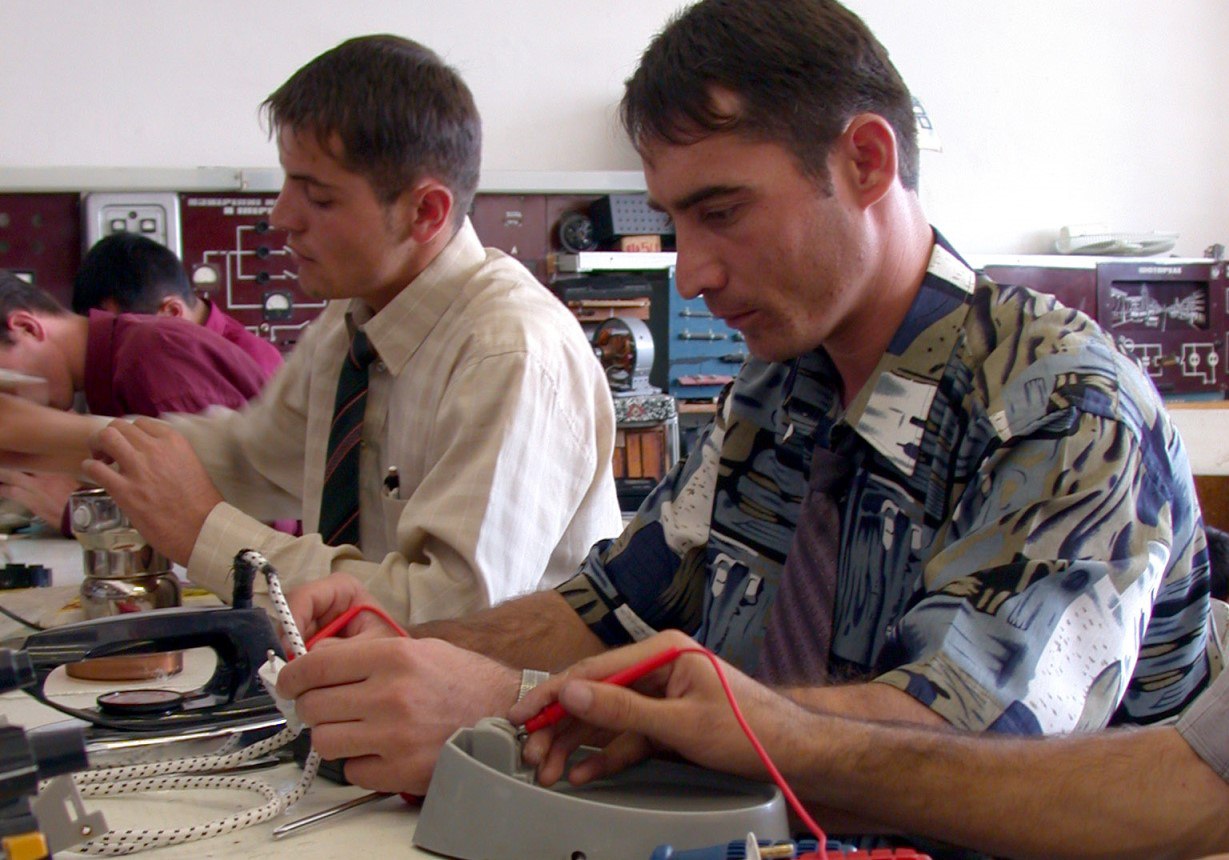
A four-year program has been adopted in Tajikistan to address the challenges facing vocational education, including colleges and professional lyceums.
In Tajikistan, "colleges" (often called secondary vocational education institutions) function within the secondary education system, providing specialized training after basic schooling, alongside lyceums, preparing students for work or further higher education.
The program targets several key issues such as a shortage of teachers, outdated textbooks, and the need for new educational facilities and repairs to existing ones.
Goals and objectives of the program
The main goal of the program is to improve the infrastructure of vocational education institutions, digitize the education system, expand access to vocational training for young people, and provide educational materials. One of the key aspects of the program is the employment of graduates, which includes close cooperation with employers and enhancing students' professional skills.
Problems needing attention
The document highlights several pressing issues, including the fact that only 50% of vocational lyceums currently have internet access, which is a major limitation. There is also a shortage of staff, with 270 teaching positions vacant. Additionally, 14 professional educational institutions are in critical condition, and 41 require major repairs. Equipment and educational materials in 80% of institutions are outdated, and technical classrooms are lacking in remote areas, which hinders the preparation of skilled professionals.
Digitalization and teacher training
The program also emphasizes the digitization of education and the improvement of the material and technical base of educational institutions. Plans include the creation of electronic libraries, repairs, and modernization of educational buildings, laboratories, and dormitories, as well as the provision of textbooks to students. Another key element is the professional development of school leaders and teachers through specialized courses.
Development of educational literature and provision of materials
The program includes a focus on developing and publishing educational literature, as current institutions are in dire need of a large quantity of books. To date, there is a requirement for 236,188 textbooks, 122,851 specialized books, and 113,337 general textbooks.
Funding and potential risks
The program is allocated 400 million somoni in the national budget, with 100 million somoni earmarked for implementation in 2026 alone. However, several risks to successful implementation exist, including insufficient funding, a shortage of skilled personnel, and a lack of the necessary material and technical resources.
Current situation in education
At present, Tajikistan has 65 vocational lyceums that prepare specialists in 14 fields, including energy, agriculture, architecture, and more. Additionally, 88 colleges operate, training professionals in 10 fields such as pedagogy, medicine, culture, economics, and law.