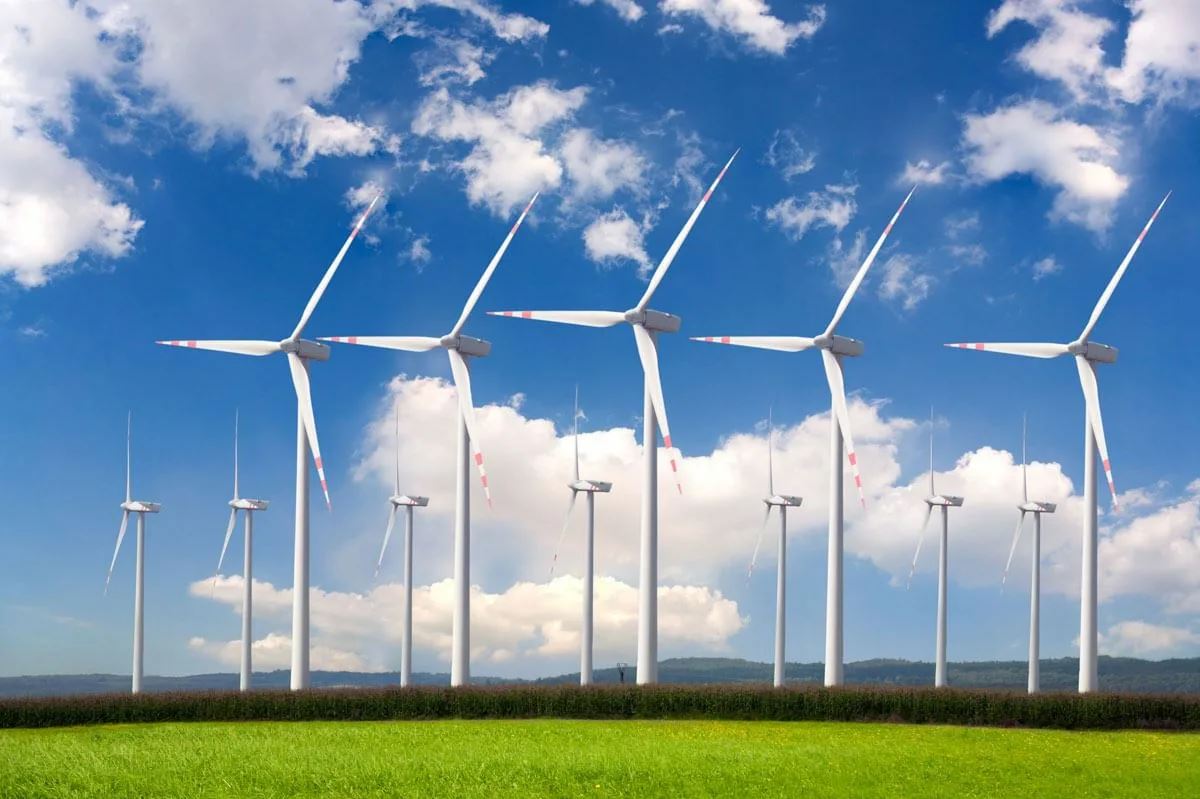
Uzbekistan’s solar and wind power stations generated a record 10 billion kWh of electricity by December 8, 2025, Fergana News reported on December 9, citing the press center of Uzbekistan’s Ministry of Energy.
The Ministry reports that the total installed capacity of solar and wind power facilities now exceeds 5,500 megawatts (MW). Since the beginning of the year, the combined output from all renewable energy sources, including hydropower, has surpassed 16 billion kWh—equivalent to the annual electricity consumption of 6.6 million households.
Remarkably, green energy production has surged by 1 billion kWh in just the last six weeks. At the end of October, total output stood at 9 billion kWh.
This surge in renewable generation has allowed Uzbekistan to avoid burning approximately 2.7 billion cubic meters of natural gas, thereby preventing the release of 4.4 million tons of harmful emissions into the atmosphere, the Ministry noted.
Officials emphasized that the rapid expansion of clean energy aligns with the strategic goals set by President Shavkat Mirziyoyev. Speaking at the “Sustainable Energy — A Reliable Step Toward the Future of the New Uzbekistan” conference on December 5, the president reiterated the government’s commitment to supplying electricity through environmentally friendly sources.
Earlier in December, President Mirziyoyev launched 42 energy projects worth a total of $11 billion and gave the green light to the construction of 21 more. These initiatives, he stated, will fully meet the country’s annual electricity demand.
Looking ahead, Uzbekistan aims to commission over 17,000 MW of new renewable energy capacity by 2030, raising the share of renewables in total electricity generation to 54%.
Uzbekistan is reportedly rapidly expanding its use of renewable sources — particularly hydropower and wind — as part of a broader drive to diversify its energy supply and strengthen energy security across Central Asia. According to the International Energy Agency, the country — long reliant on fossil fuels for nearly 80% of its electricity — is undergoing a fundamental transformation of its energy landscape.
Euronews reported on November 25 this year that Uzbekistan’s solar, wind and hydroelectric plants generated 2.89 billion kWh of electricity in July 2025 alone, representing 27% of total national output for that month. That is reportedly equivalent to the annual consumption of around 870,000 households.