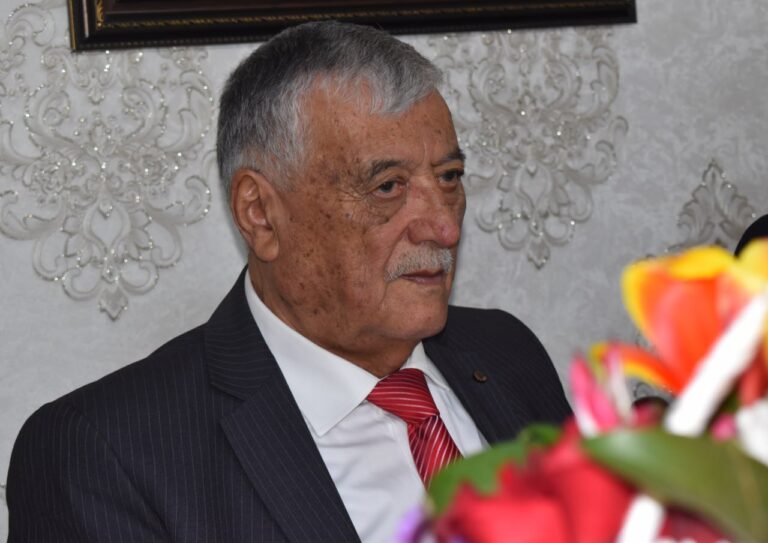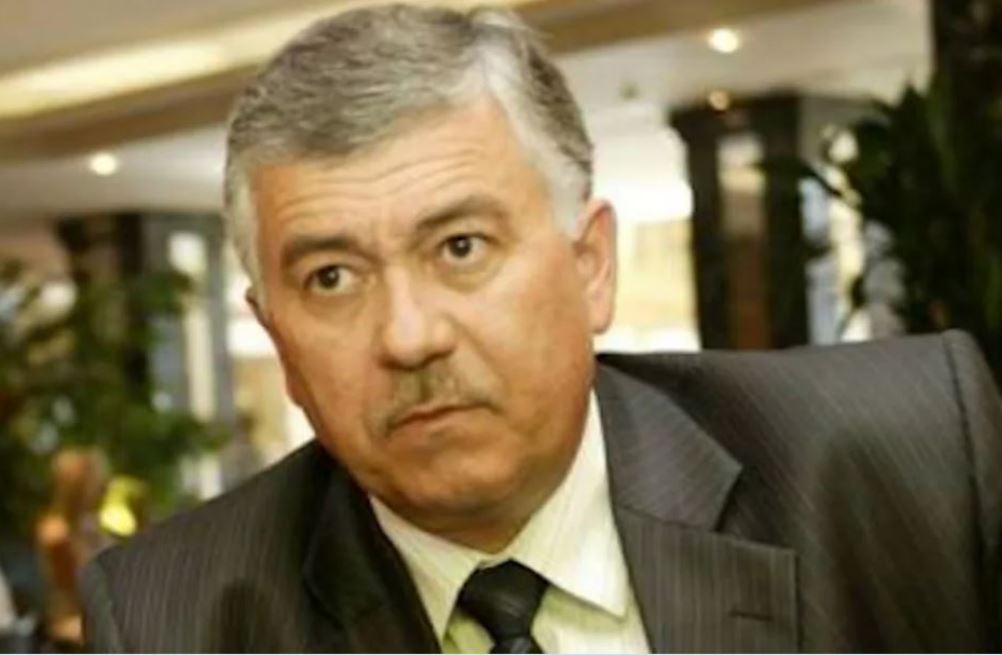
Mahmadruzi Iskandarov, the former leader of the Democratic Party of Tajikistan (DPT), was released from prison on December 27 after serving more than two decades behind bars.
Two independent sources confirmed to Asia-Plus that Iskandarov was freed but refrained from providing further details.
Radio Liberty’s Tajik Service, known locally as Radio Ozodi, citing Iskandarov’s brother Temur Toshev, reported on December 27 that he is now home and reunited with his family. According to Toshev, authorities released him on December 27 at around 5 a.m.
As of yet, official government bodies have not issued any statements regarding Iskandarov’s release. Attempts to reach the Main Directorate for the Execution of Criminal Sentences under the Ministry of Justice have been unsuccessful.
Iskandarov played a significant role during Tajikistan’s civil war as one of the commanders of the United Tajik Opposition. Following the 1997 peace agreement, he was integrated into the government and appointed head of Tojikgaz (the state-run natural gas distributor, now called Tojiktransgaz).
In 2003, he publicly opposed constitutional amendments proposed by the government and was subsequently dismissed from his post at Tojikgaz. He later moved to Russia, where he became an outspoken critic of the Tajik government and announced his intention to run for president in the 2006 elections.
In December 2004, Iskandarov was detained in Russia at the request of Tajik authorities but was later released. However, on April 15, 2005, he disappeared in the city of Korolyov near Moscow and soon after appeared in Dushanbe.
On October 5, 2005, the Supreme Court sentenced DPT leader Mahmadruzi Iskandarov to 23 years in prison. The sentence followed his conviction on charges of terrorism, the embezzlement of state funds, and the illegal storage of weapons. The court also imposed a 1.5 million-somoni ($470,000 at the exchange rate for that period) fine and stripped Iskandarov of all previous state honors and awards, including revoking his rank of major general. The court's ruling was nearly identical to the prosecution's earlier demand for a 25-year prison term and fine.
Throughout his imprisonment, Iskandarov maintained his innocence and repeatedly described the charges against him as politically motivated.
The Democratic Party of Tajikistan can trace its origins back to the last days of the Soviet Union. Registered on June 21, 1991 and banned by the Supreme Court on June 21, 1993, the Democratic Party of Tajikistan was reregistered on December 3, 1999.
At the end of 1990s, two factions laid claim to the Democratic Party of Tajikistan: the Almaty platform led by Mahmadruzi Iskandarov and the Tehran platform run by Azam Afzali. The Tehran platform later transformed itself into the Taraqqiyot (Progress) Party.
After the arrest and conviction of Mahmadruzi Iskandarov, the party split into two factions again and the Ministry of Justice recognized Masoud Sobirov as the legitimate leader of the Democratic Party of Tajikistan in October 2006.
An extraordinary congress of the party took place in Dushanbe on December 23, 2012 and Saidjafar Usmonzoda was elected as chairman of the party. On June 14 last year, Saidjafar Usmonzoda was detained on June 14 for allegedly “plotting to overthrow the government,” and Shaboz Abror was elected head the DPT.