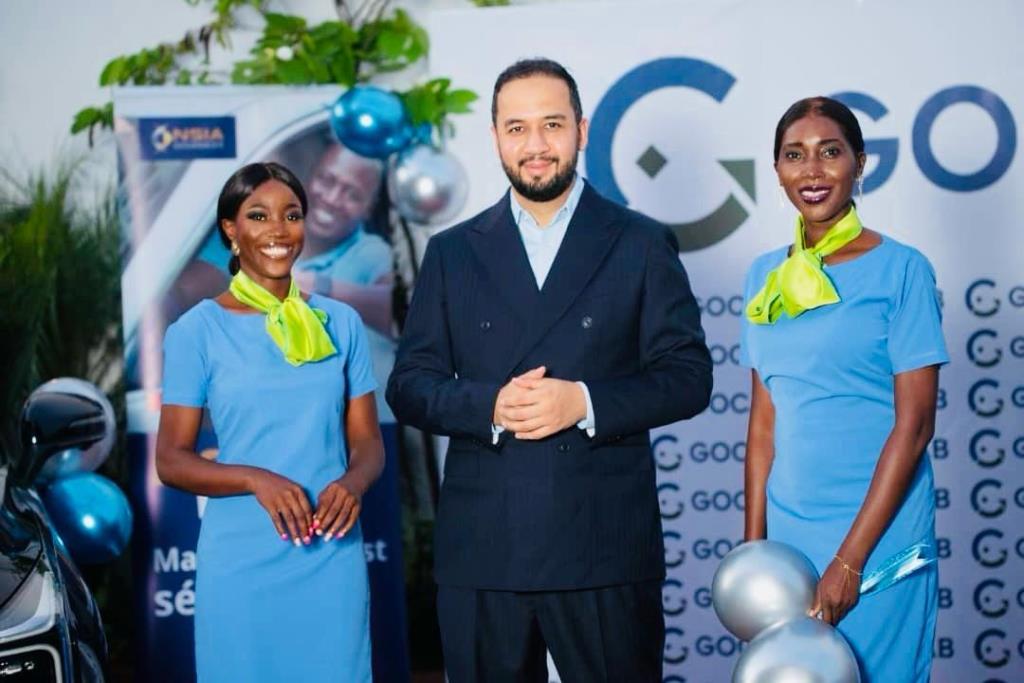
Tajik entrepreneur Azamat Sultanov, along with co-founder Hendrik Ketchemen, has raised $45 million in investment to scale their startup, GoCab, which is already making waves in Africa and transforming the mobility and financing market.
GoCab is an electric mobility platform that combines access to vehicles, driver financing, and a digital marketplace. The startup aims to address key transportation issues in Africa, such as the lack of financing for drivers and the environmental concerns of traditional transportation.
GoCab operates based on Islamic finance principles, with 1% of its profits directed to a waqf fund, said Sultanov, who is also a member of the supervisory board of Alif Bank and co-founder of the OBP "Peshraft."
A waqf fund in Islamic law refers to irrevocable property (land, buildings, business, securities) donated by an owner for charitable or religious purposes. The property becomes public, and its income is used to support mosques, schools, hospitals, and help the poor.
The essence of GoCab
Founded in 2024, GoCab is already operational in countries like Ivory Coast, Senegal, and Morocco, with plans for expansion into the Middle East and Latin America.
Through its innovative "Drive to Own" model, GoCab allows drivers to own a car or motorcycle, addressing the problem of financial inaccessibility. This enables drivers not only to earn a living but also to save money.
In its first 18 months, GoCab generated more than $17 million in annual revenue, with over 150 employees across 5 countries. The startup is currently funded by E3 Capital and Janngo Capital ($15 million in equity capital and $30 million in loans) to achieve its goal of selling 10,000 electric vehicles over the next two years.
Addressing two problems simultaneously
Africa was chosen as the launch market for GoCab due to its 1.4 billion people, all facing urgent mobility needs.
Azamat Sultanov draws on experience from Central Asia, including Tajikistan, where rapid growth and instability have pushed entrepreneurs to find innovative solutions for building sustainable businesses.
GoCab’s model addresses two critical issues: financial accessibility for drivers and the environmental sustainability of the transport system. This not only provides opportunities for vehicle ownership but also actively promotes electric vehicles, helping to reduce carbon emissions and improve the region's environmental situation.
A global team of over 150 employees
The GoCab team now consists of more than 150 people from countries such as Peru, Egypt, Dagestan, Benin, Saudi Arabia, Pakistan, Iraq, Burundi, Ukraine, Senegal, UAE, Portugal, Nigeria, China, DR Congo, Morocco, Cameroon, Mexico, Guinea, and the Philippines.
Additionally, Sultanov mentions that 5 Tajik nationals are part of the GoCab team.
"GoCab is, above all, a business with a mission to help ordinary people. We create jobs, and this mission has brought together an international team from 18 countries," says Azamat.